FabulousFusionFood's Nut-based Recipes 40th Page
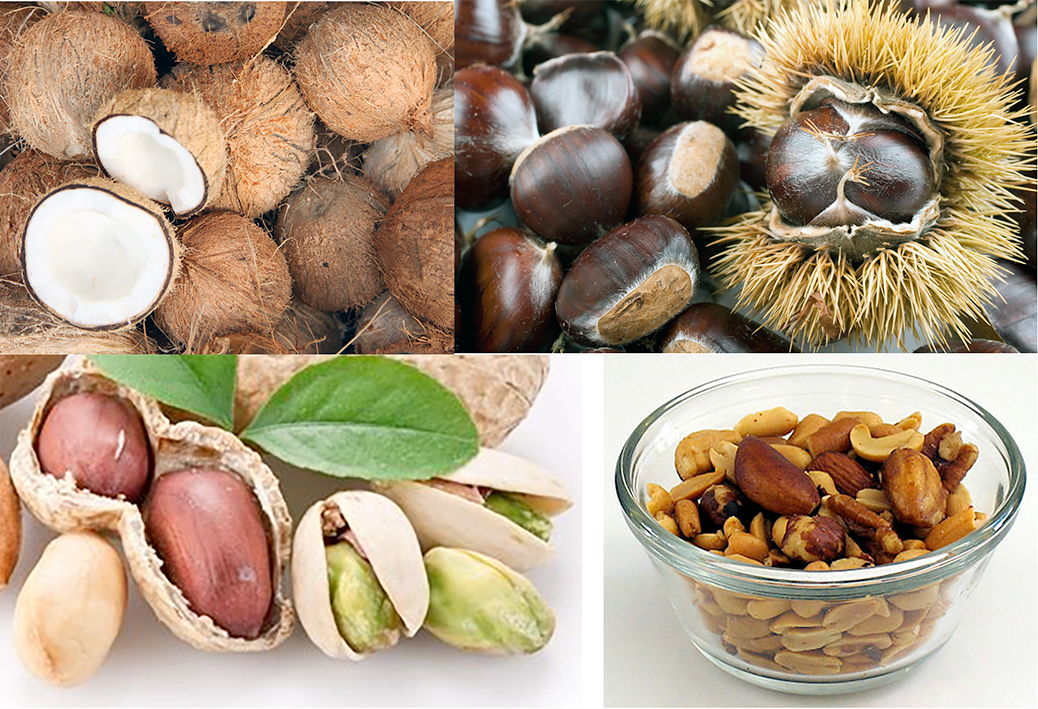 Different nuts. Clockwise: coconuts, sweet chestnuts, bowl of mixed nuts,
peanuts and pistachios.
Welcome to FabulousFusionFood's Nut-based Recipes Page —A nut is a fruit consisting of a hard or tough nutshell protecting a kernel which is usually edible. In general usage and in a culinary sense, many dry seeds are called nuts. In a botanical context, "nut" implies that the shell does not open to release the seed (indehiscent).
Most seeds come from fruit that naturally free themselves from the shell, but this is not the case in nuts such as hazelnuts, chestnuts, and acorns, which have hard shell walls and originate from a compound ovary. The general and original usage of the term is less restrictive, and many nuts (in the culinary sense), such as almonds, pistachios, and Brazil nuts, are not nuts in a botanical sense. Common usage of the term often refers to any hard-walled, edible kernel as a nut. Nuts are an energy-dense and nutrient-rich food source.
Botanically, a nut is a fruit with a woody pericarp developing from a syncarpous gynoecium. True nuts include, for example, chestnut, hazelnut and filbert. Culinarily, the term 'nut' is used much more widely, and includes examples of drupes (such as pecans and almonds) or seeds (such as pine nuts and peanuts).
Also widely known as nuts are dry drupes, which include pecans, almonds, macadamia (Macadamia integrifolia), candlenut (Aleurites moluccanus) and the water caltrop (Trapa bicornis). A drupe is an indehiscent fruit that has an outer fleshy part consisting of the exocarp, or skin, and mesocarp, or flesh, which surround a single pit or stone, the endocarp with a seed (kernel) inside. In a dry drupe, the outer parts dry up and the remaining husk is part of the ovary wall or pericarp, and the hard inner wall surrounding the seed represents the inner part of the pericarp.
Walnuts and hickories (Juglandaceae) have fruit that are difficult to classify. They are considered to be nuts under some definitions but are also referred to as drupaceous nuts.
In common use, a "tree nut" is, as the name implies, any nut coming from a tree. This most often comes up regarding food allergies; a person may be allergic specifically to peanuts (which are not tree nuts but legumes), whereas others may be allergic to the wider range of nuts that grow on trees.
The sweet potato arrived in Europe with the Columbian exchange. It is recorded, for example, in Elinor Fettiplace's Receipt Book, compiled in England in 1604.
Nuts are eaten by humans and wildlife. Because nuts generally have a high oil content, they are a significant energy source. Many seeds are edible by humans and used in cooking, eaten raw, sprouted, or roasted as a snack food, ground to make nut butters, or pressed for oil that is used in cooking and cosmetics.
Nuts used for food are a common source of food allergens. Reactions can range from mild symptoms to severe ones, a condition known as anaphylaxis, which can be life-threatening. The reaction is due to the release of histamine by the body in response to an allergen in the nuts, causing skin and other possible reactions. Many experts suggest that a person with an allergy to peanuts should avoid eating tree nuts, and vice versa.
The nuts linked to from this page are: acorn; almond; beech nuts; betel nut; brazil nut; bush mango; filbert; ginkgo nut; kola nut; candlenut; cashew; chestnut; coconut; hazelnut; macadamia; ogbono; palm nut; peanut; pecan; pine nut; pistachio; walnut.
The alphabetical list of all the nut-based recipes on this site follows, (limited to 100 recipes per page). There are 4197 recipes in total:
Page 40 of 42
| Tikvenik (Pumpkin-filled Filo Pastry) Origin: Bulgaria | Tom Brown Origin: Nigeria | Traditional Historic Bobotie Origin: South Africa |
| Tilapia au Four (Baked Tilapia) Origin: Chad | Tom Brown Porridge Origin: Ghana | Traditional Jerk Pork Origin: Jamaica |
| Timbales Milanaise (Milanese Timbales) Origin: Britain | Tomato and Almond Soup Origin: British | Traditional Mattar Keema Curry Origin: India |
| Tiopu Kuru (Breadfruit Stew) Origin: Cook Islands | Tomato and Peanut Relish Origin: Zambia | Traditional Mincemeat Origin: Britain |
| Tipsy Laird Origin: Scotland | Tombrown Origin: Cameroon | Traditional Thai Jungle Curry Origin: Thailand |
| Tiramisù #2 Origin: Italy | Tongabezi Chicken Curry Origin: Zambia | Tranches d'arbre à pain frites (Fried Breadfruit Slices) Origin: Wallis Futuna |
| Tirk doung (Tom Yam Goong 1) Origin: Cambodia | Tongan Taro Fritters Origin: Tonga | Traou Mad (Breton Macaroons) Origin: France |
| Tirk Trey Chu P'em (Sweet Fish Sauce) Origin: Cambodia | Topfenkuchen (Pot Cakes) Origin: Germany | Traybake Keralan Fish Curry Origin: Fusion |
| To bake an Olyve-Pye Origin: Britain | Topoi Origin: Rotuma | Tricolour Pilau Rice Origin: India |
| To Fricasey White Meat Origin: Britain | Torrejas Salvadoreñas Origin: El Salvador | Trieste Style Štruklji Origin: Slovenia |
| To make a boiled rice pudding Origin: Britain | Torta alle Noci (Italian Walnut Cake) Origin: Italy | Trifle to Die For Origin: England |
| To make a florentine of veal Origin: Britain | Torta di Castagne e Choccolato (Chocolate and Chestnut Torte) Origin: Italy | Trini Coconut Sweet Bread Origin: Trinidad |
| To Make a Marchpane Origin: Britain | Torta Galesa (Teisen Gymreig) Origin: Welsh | Trini Sugar Cake Origin: Trinidad |
| To make a quaking pudding Origin: Britain | Torta Navideña (Christmas Cake) Origin: Ecuador | Trinidad Chicken Pelau Origin: Trinidad |
| To make almond cheesecakes Origin: Britain | Torta Negra Galesa (Welsh Black Cake) Origin: Welsh (Patagonia) | Trinidad Crab and Callaloo Origin: Trinidad |
| To make an excellent aromaticall Hyppocras Origin: Britain | Torta Plava zaguna (Blue Lagoon Cake) Origin: Slovenia | Trinidad Paime Origin: Trinidad |
| To Make Cheeſe-cakes Origin: England | Tortas de Aceite (Sesame Seed and Aniseed Biscuits) Origin: Spain | Trinidadian Black Cake Origin: Trinidad |
| To make cheesecakes Origin: Britain | Tortellini di Natale (Christmas Tortellini) Origin: Italy | Trinidadian Curried Goat Origin: Trinidad |
| To make drie Gingerbread Origin: Britain | Torth Fraith (Mottled Bread) Origin: Welsh | Triopita (Greek Cheese Pie) Origin: Greece |
| To make jumballs Origin: Britain | Torth Frith Llandudno (Llandudno Fruit Cake) Origin: Welsh | Tripe and Onions Origin: England |
| To make mackeroons Origin: Britain | Tortilla de Calabaza (Egusi Seed Omelette) Origin: Equatorial Guinea | Tripe with Tatties Origin: Scotland |
| To make mince pies the best way Origin: Britain | Tortillas de Platanos (Plantain Tortillas) Origin: Costa Rica | Truchas de Bonaito (White Sweet Potato Pockets) Origin: Spain |
| To make Pancakes. Origin: England | Toto-kena Misy Anana sy Voanjo (Greens with Peanuts and Minced Beef) Origin: Madagascar | Tsebhi Shiro (Spicy Peanuts) Origin: Eritrea |
| To Make White Fricasey Origin: Britain | Tottenham Cake Origin: England | Tsiren Dakakken Nama (Spicy Mince Meat Kebabs) Origin: Nigeria |
| To mince veal Origin: British | Tourment d'Amour (Love's Torment) Origin: Guadeloupe | Tsoureki (Greek Easter Bread) Origin: Greece |
| To Sowce a Pigge (Collar of Brawn) Origin: England | Tourment d'Amour (Love's Torment) Origin: Saint Barthelemy | Tuna with Safran and Coconut Milk (Tuna with Cumin and Coconut Milk) Origin: Seychelles |
| Toasted Almond Ice Cream Origin: British | Tourta de Blea (Chard Pie) Origin: Monaco | Tunisian Vegetable Couscous Origin: Tunisia |
| Toasted Oat and Raisin Biscuits Origin: Britain | Tourtes parmeriennes (Parmesan Pies) Origin: France | Turbot in Kerala Red Curry Sauce Origin: India |
| Tobago Curry Conch with Dumplings Origin: Trinidad | Towcester Cheesecakes Origin: England | Turkey Leftovers Hotpot Origin: Britain |
| Tobago Curry Crab and Dumplings Origin: India | Towering Praline Carrot Cake Origin: American | Turkey Rendang Origin: Fusion |
| Toffee Apple Cupcakes Origin: British | Tozzetti della Tuscia (Hazelnut Biscotti) Origin: Italy | Turkey, Squash and Cranberry Ravioli Origin: Britain |
| Toffee Apple Slices Origin: China | Traditional Black Bun Origin: Scotland | Turkish Baharat Origin: Turkey |
| Tofu Katsu Curry Origin: Fusion | Traditional Brandy Butter Sauce Origin: Britain | |
| Tofu Laver and Leek Croquettes Origin: Ireland | Traditional Bread and Butter Pudding Origin: Britain |
Page 40 of 42