FabulousFusionFood's Fruit-based Recipes 64th Page
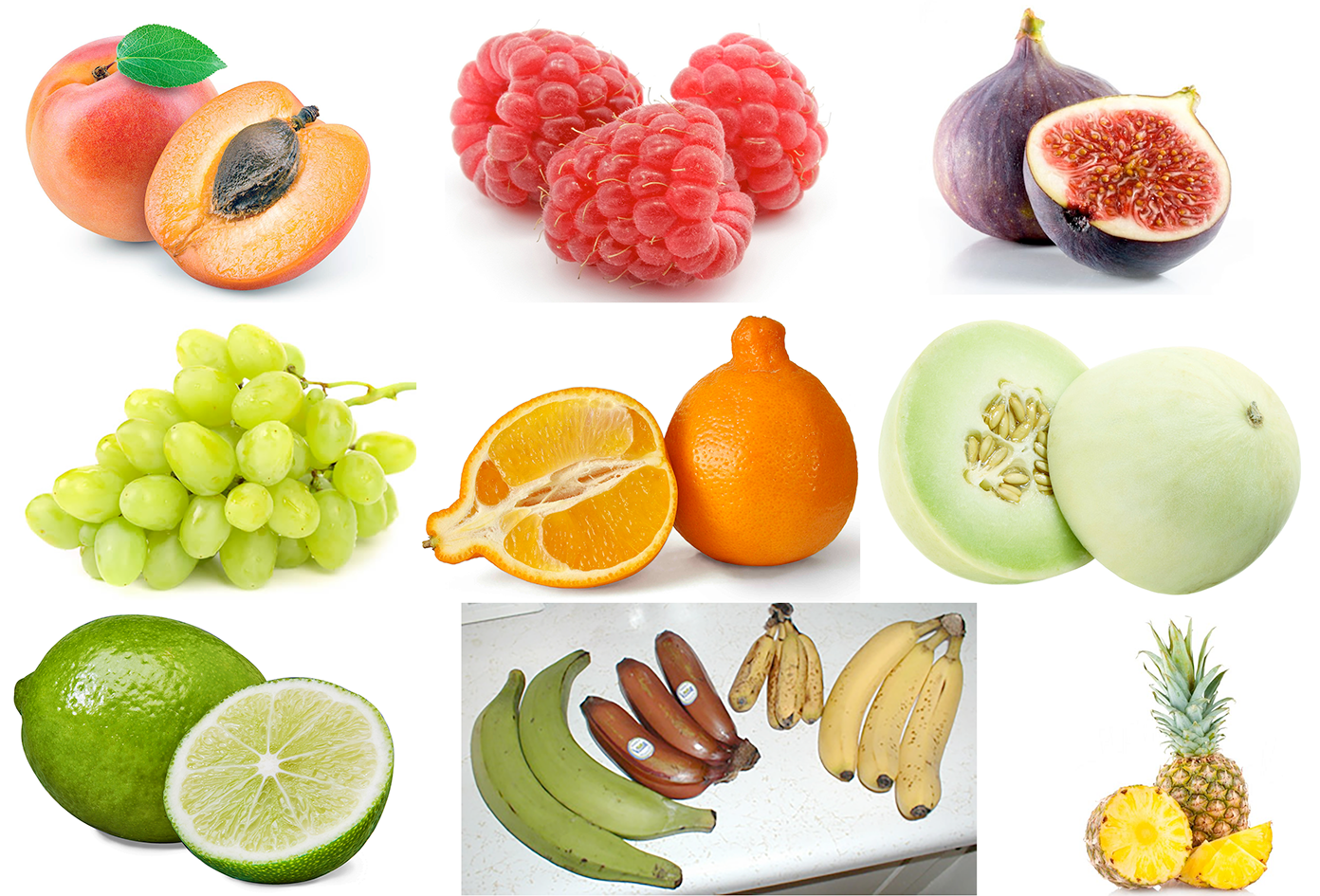 Examples of different fruit types (left to right): apricot, a simple fleshy fruit;
raspberry an aggregate fruit; fig a multiple fruit (top); grape a true berry;
tangelo a hybrid fruit; honeydew melon a pepo (hard-skinned) true berry
(centre); lime a Hesperidium (with rind) true berry; banana a leathery
berry and pineapple an accessory fruit (bottom).
Welcome to FabulousFusionFood's Fruit-based Recipes Page —In botany, a fruit is the seed-bearing structure in flowering plants (angiosperms) that is formed from the ovary after flowering.
Fruit are the means by which angiosperms disseminate their seeds. Edible fruits in particular have long propagated using the movements of humans and other animals in a symbiotic relationship that is the means for seed dispersal for the one group and nutrition for the other; humans, and many other animals, have become dependent on fruits as a source of food. Consequently, fruits account for a substantial fraction of the world's agricultural output, and some (such as the apple and the pomegranate) have acquired extensive cultural and symbolic meanings.
In common language and culinary usage, fruit normally means the seed-associated fleshy structures (or produce) of plants that typically are sweet (or sour) and edible in the raw state, such as apples, bananas, grapes, lemons, oranges, and strawberries. In botanical usage, the term fruit also includes many structures that are not commonly called as such in everyday language, such as nuts, bean pods, corn kernels, tomatoes, and wheat grains.
Many common language terms used for fruit and seeds differ from botanical classifications. For example, in botany, a fruit is a ripened ovary or carpel that contains seeds, e.g., an orange, pomegranate, tomato or a pumpkin. A nut is a type of fruit (and not a seed), and a seed is a ripened ovule.
In culinary language, a fruit is the sweet- or not sweet- (even sour-) tasting produce of a specific plant (e.g., a peach, pear or lemon); nuts are hard, oily, non-sweet plant produce in shells (e.g. hazelnut, acorn). Vegetables, so-called, typically are savory or non-sweet produce (e.g. zucchini, lettuce, broccoli, and tomato). But some may be sweet-tasting (sweet potato).
Examples of botanically classified fruit that are typically called vegetables include cucumber, pumpkin, and squash (all are cucurbits); beans, peanuts, and peas (all legumes); and corn, eggplant, bell pepper (or sweet pepper), and tomato. Many spices are fruits, botanically speaking, including black pepper, chili pepper, cumin and allspice. In contrast, rhubarb is often called a fruit when used in making pies, but the edible produce of rhubarb is actually the leaf stalk or petiole of the plant. Edible gymnosperm seeds are often given fruit names, e.g., ginkgo nuts and pine nuts.
Botanically, a cereal grain, such as corn, rice, or wheat is a kind of fruit (termed a caryopsis). However, the fruit wall is thin and fused to the seed coat, so almost all the edible grain-fruit is actually a seed.
he outer layer, often edible, of most fruits is called the pericarp. Typically formed from the ovary, it surrounds the seeds; in some species, however, other structural tissues contribute to or form the edible portion. The pericarp may be described in three layers from outer to inner, i.e., the epicarp, mesocarp and endocarp. Fruit that bear a prominent pointed terminal projection is said to be beaked
Consistent with the three modes of fruit development, plant scientists have classified fruits into three main groups: simple fruits, aggregate fruits, and multiple (or composite) fruits. The groupings reflect how the ovary and other flower organs are arranged and how the fruits develop, but they are not evolutionarily relevant as diverse plant taxa may be in the same group.
Simple fruit are the result of the ripening-to-fruit of a simple or compound ovary in a single flower with a single pistil. In contrast, a single flower with numerous pistils typically produces an aggregate fruit; and the merging of several flowers, or a 'multiple' of flowers, results in a 'multiple' fruit. A simple fruit is further classified as either dry or fleshy.
Berries are a type of simple fleshy fruit that issue from a single ovary. (The ovary itself may be compound, with several carpels.) The botanical term true berry includes grapes, currants, cucumbers, eggplants (aubergines), tomatoes, chilli peppers, and bananas, but excludes certain fruits that are called "-berry" by culinary custom or by common usage of the term – such as strawberries and raspberries. Berries may be formed from one or more carpels (i.e., from the simple or compound ovary) from the same, single flower. Seeds typically are embedded in the fleshy interior of the ovary.
Aggregate Fruit, also called an aggregation, or etaerio; develops from a single flower that presents numerous simple pistils. Each pistil contains one carpel; together, they form a fruitlet. The ultimate (fruiting) development of the aggregation of pistils is called an aggregate fruit, etaerio fruit, or simply an etaerio.
Hybrid fruit are created through the controlled speciation of fruits that creates new varieties and cross-breeds. Hybrids are grown using plant propagation to create new cultivars. This may introduce an entirely new type of fruit or improve the properties of an existing fruit.
Accessory Fruit Fruit may incorporate tissues derived from other floral parts besides the ovary, including the receptacle, hypanthium, petals, or sepals. Accessory fruits occur in all three classes of fruit development – simple, aggregate, and multiple. Accessory fruits are frequently designated by the hyphenated term showing both characters. For example, a pineapple is a multiple-accessory fruit, a blackberry is an aggregate-accessory fruit, and an apple is a simple-accessory fruit.
A large variety of fruits – fleshy (simple) fruits from apples to berries to watermelon; dry (simple) fruits including beans and rice and coconuts; aggregate fruits including strawberries, raspberries, blackberries, pawpaw; and multiple fruits such as pineapple, fig, mulberries – are commercially valuable as human food. They are eaten both fresh and as jams, marmalade and other fruit preserves. They are used extensively in manufactured and processed foods (cakes, cookies, baked goods, flavourings, ice cream, yogurt, canned vegetables, frozen vegetables and meals) and beverages such as fruit juices and alcoholic beverages (brandy, fruit beer, wine). Spices like vanilla, black pepper, paprika, and allspice are derived from berries. Olive fruit is pressed for olive oil and similar processing is applied to other oil-bearing fruits and vegetables. Some fruits are available all year round, while others (such as blackberries and apricots in the UK) are subject to seasonal availability.
Typically, many botanical fruits – "vegetables" in culinary parlance – (including tomato, green beans, leaf greens, bell pepper, cucumber, eggplant, okra, pumpkin, squash, zucchini) are bought and sold daily in fresh produce markets and greengroceries and carried back to kitchens, at home or restaurant, for preparation of meals.
The alphabetical list of all the fruit-based recipes on this site follows, (limited to 100 recipes per page). There are 6673 recipes in total:
Page 64 of 67
| Topfenkuchen (Pot Cakes) Origin: Germany | Traditional Lamb with Emerald Mint Sauce Origin: New Zealand | Tropical Chicken Pizza Origin: American |
| Topfenschmarren (Torn Curd Pancakes) Origin: Germany | Traditional Mattar Keema Curry Origin: India | Troskinti Raudoni Kopustai (Braised Red Cabbage with Sour Cream) Origin: Russia |
| Torrijas con Canela y Miel (Pan-grilled Steaks with Olive Sauce) Origin: Spain | Traditional Mince Pies Origin: Britain | Trota con Funghi (Trout with Mushrooms) Origin: Italy |
| Torta de Frango (Brazilian Chicken Pie) Origin: Brazil | Traditional Mincemeat Origin: Britain | Trout à L'Aurore Origin: British |
| Torta di Riso alla Carrarina (Tuscan Rice and Custard Torta) Origin: Italy | Traditional Pawpaw Salad Origin: Cook Islands | Truchas de Bonaito (White Sweet Potato Pockets) Origin: Spain |
| Torta Galesa (Teisen Gymreig) Origin: Welsh | Traditional Pumpkin Pie Origin: Britain | Tsebhi Derho (Spicy Chicken) Origin: Eritrea |
| Torta Macedonia (Fresh Fruit Salad Cake) Origin: Italy | Traditional Roast Grouse Origin: Scotland | Tsoureki (Greek Easter Bread) Origin: Greece |
| Torta Maria Louisa Colombiano Origin: Colombia | Traditional Roast Pheasant Origin: Britain | Tukasu (Mutton Stew with Dumplings) Origin: Mali |
| Torta Maria Luisa Salvadoreña (Salvadorean Torta Maria Luisa) Origin: El Salvador | Traditional Sachertorte Origin: Austria | Tulumba (Fried Pastries in Syrup) Origin: Albania |
| Torta Navideña (Christmas Cake) Origin: Ecuador | Traditional Scottish Gingerbread Origin: Scotland | Tulumba Taslisi (Tulumba Dessert) Origin: Turkey |
| Torta Negra Galesa (Welsh Black Cake) Origin: Welsh (Patagonia) | Traditional Thai Jungle Curry Origin: Thailand | Tulumbe Origin: North Macedonia |
| Torta Pasqua con la Pasta Frolla (Easter Tart with Pasta Frolla) Origin: Italy | Tranches d'arbre à pain frites (Fried Breadfruit Slices) Origin: Wallis Futuna | Tuna Ceviche Origin: Fusion |
| Torta Rustica di Mele (Italian Rustic Apple Cake) Origin: Italy | Träubleskuchen (Meringue-topped Redcurrant Cake) Origin: Germany | Tunu Ahi Ika Origin: Easter Island |
| Tortas de Aceite (Sesame Seed and Aniseed Biscuits) Origin: Spain | Traybake Chicken Nachos Origin: Britain | Turbot à la Parisienne Origin: British |
| Torth Amser Te (Tea Time Bread) Origin: Welsh | Traybake Keralan Fish Curry Origin: Fusion | Turbot in Kerala Red Curry Sauce Origin: India |
| Torth Fraith (Mottled Bread) Origin: Welsh | Treacle Rooibos Fruit Cake Origin: South Africa | Turkey and Cranberry Mini Pies Origin: Britain |
| Torth Frith Llandudno (Llandudno Fruit Cake) Origin: Welsh | Treacle Tart Origin: Britain | Turkey Curry with Yams Origin: Fusion |
| Tottenham Cake Origin: England | Treiffl Cyfoethog (Rich Trifle) Origin: Welsh | Turkey Keema Curry Origin: Britain |
| Touo du Niger (Nigerienne Touo) Origin: Niger | Trey Kho Manor (Caramelized Fish with Pineapple) Origin: Cambodia | Turkey Piccata on Grilled Rolls Origin: American |
| Tourchi Batata (Potato Salad with Cumin) Origin: Tunisia | Trieste Style Štruklji Origin: Slovenia | Turkey Rolls Origin: Britain |
| Tourment d'Amour (Love's Torment) Origin: Saint Barthelemy | Trifle to Die For Origin: England | Turkey Steaks with Redcurrant Glaze Origin: Britain |
| Tourta de Blea (Chard Pie) Origin: Monaco | Trini Coconut Sweet Bread Origin: Trinidad | Turkey, Squash and Cranberry Ravioli Origin: Britain |
| Tourteletes in fryture (Honey-basted Fig Pastries) Origin: England | Trini Curried Soup Origin: Trinidad | Turkish Delight Origin: Turkey |
| Tourtes parmeriennes (Parmesan Pies) Origin: France | Trini Hot Pepper Sauce Origin: Trinidad | Turkmen Kebap Origin: Turkmenistan |
| Towcester Cheesecakes Origin: England | Trini Sugar Cake Origin: Trinidad | Turks and Caicos Jerk Pork Origin: Turks Caicos |
| Towering Praline Carrot Cake Origin: American | Trini Sweet and Sour Mango Relish Origin: Trinidad | Turks and Caicos Jerk Seasoning Paste Origin: Turks Caicos |
| Towuk Shashlyk (Turkmenistan Chicken Shashlik) Origin: Turkmenistan | Trinidad Curried Pineapple Rice Origin: Trinidad | Turks and Caicos Mango Salsa Origin: Turks Caicos |
| Tozzetti della Tuscia (Hazelnut Biscotti) Origin: Italy | Trinidad Paime Origin: Trinidad | Türlü (Meat, Vegetable and Okra Stew) Origin: Armenia |
| Traditional Apple Pie Origin: British | Trinidadian Black Cake Origin: Trinidad | Turquía Mole Poblano (Turkey with Poblano Chocolate Mole) Origin: Mexico |
| Traditional Black Bun Origin: Scotland | Trinidadian Chicken Curry Origin: Trinidad | Tuscan Ricotta Cheesecake Origin: American |
| Traditional Bread and Butter Pudding Origin: Britain | Trinidadian Curried Goat Origin: Trinidad | Tutu (Cornmeal Porridge with Black-eyed Peas) Origin: Aruba |
| Traditional Chicken Liver Parfait Origin: Britain | Trinidadian Curry Duck Origin: Trinidad | Tvarahovy Kolác Treny (Czech Cheesecake) Origin: Czech |
| Traditional Fruit Cake Origin: Britain | Trinidadian Green Seasoning with Cuban Oregano Origin: Trinidad | |
| Traditional Historic Bobotie Origin: South Africa | Trinidadian Turkey Curry Origin: Trinidad |
Page 64 of 67