FabulousFusionFood's Pâté and Terrine Recipes Home Page
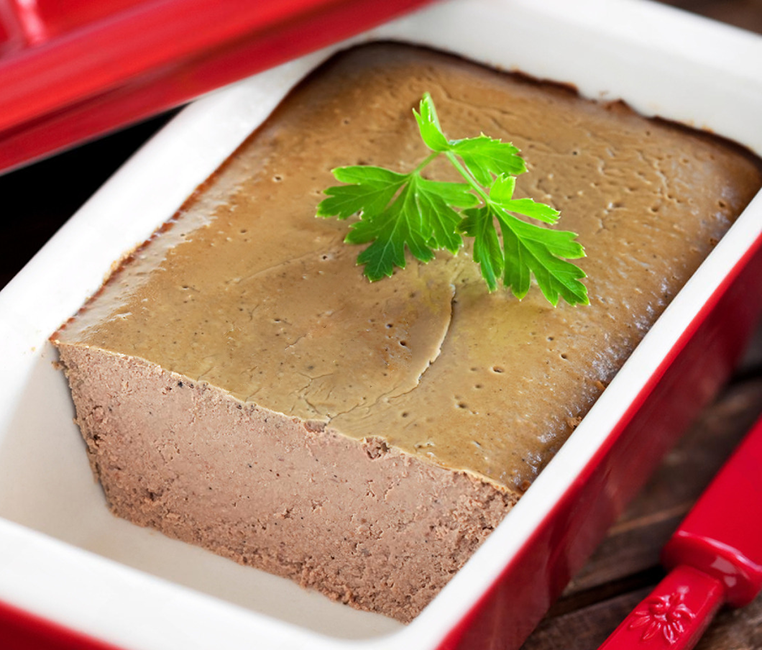 Chicken liver pâté in a terrine.
Welcome to FabulousFusionFood's Pâté and Terrine Recipes Page — A pâté is, technically a type of forcemeat and originally the dish was cooked in a pastry crust and called pâté en croute with the pastry, as in most early medieval dishes intended to protect the filling from the unregulated heat of an open fire. In more recent times it is more usually cooked without pastry in a terrine, and called pâté en terrine or simply terrine. Various ingredients are used, which may include meat from pork, poultry, fish or beef (or mushrooms); fat; vegetables; herbs; spices; wine; and brandy. In more recent years dessert-based terrines, typically based around chocolate have evolved.
Both the Dictionnaire de l'Académie française and the Oxford English Dictionary (OED) date the term back to the 12th century. The former gives the original meaning as a "culinary preparation consisting of minced meat or fish surrounded by dough and baked in the oven"; the OED's definition is 'a pie or pastry usually filled with finely minced meat, fish, vegetables, etc'. The French words pâte (pastry) and pâté are both derived from the Latin pasta meaning paste or dough (as is the English 'pastry'). By the 19th century the pastry case was often dispensed with. According to Larousse Gastronomique, when there is a pastry case the dish is pâté en croute and when there is not, and the mixture is cooked in a dish (called a terrine), it is pâté en terrine, often abbreviated to terrine or pâté, terms used interchangeably in both French and English usage. A patty is a similar dish, and its name comes from a 19th-century English corruption of the French word pâté.
Pâté was known to the Romans, who generally made it with pork, although other main ingredients might include marinated and spiced birds' tongues and where it was typically known as moretum (literally 'mortar food' from the practice of pounding to a paste in a mortar). Versions based on cheese and herbs or olives were also produced. In the Middle Ages, there were numerous recipes for pâtisseries (meats—pork, poultry, game or fish— cooked in pastry). Forcemeats, as in hare with white sauce would also count as types of pâté in this context (particularly in this recipe where it's made from a blend of finely-chopped chicken livers and hare brains with herbs and liquamen but bound with eggs).
Chicken liver parfait is a subtype of pâté. Instead of first cooking the livers in butter, for a parfait they are initially puréed when raw and then passed through a sieve or put in a blender before being mixed with, typically, eggs, fortified wine, shallots, thyme, garlic and cognac and cooked in a bain-marie until set. This allows for a smoother texture.
In Central and Eastern Europe, pâté from poultry liver is very popular and it is commonly known as pashtet (Russian: паштет, "pâté", Polish: pasztet, Czech: paštika, Croatian: pašteta). Liver from other animals (such as cow) can also be used. The liver is first cooked (boiled or fried) and mixed with butter or fat and seasonings such as fresh or fried onions, carrots, spices, and herbs. It can be further cooked (usually baked), but most often used without any other preparation. In Russia, the pâté is served on a plate or in a bowl, and is typically moulded into the shapes of animals, such as hedgehogs.
In Ashkenazi Jewish cuisine, a similar recipe is known as chopped liver, with schmaltz used instead of butter and hard-boiled eggs frequently added. Another common type of pâté in Jewish cuisine, also popular in Russia and Ukraine, is vorschmack, or gehakte herring (chopped herring). This is also a dish in South African cuisine. In Vietnamese cuisine, pâté is commonly used on bánh mì baguette-type sandwiches.
The alphabetical list of all the pâté and terrine recipes on this site follows, (limited to 100 recipes per page). There are 51 recipes in total:
Page 1 of 1
| Beef and Pistachio Terrine Origin: Britain | Mixtura cum Nucleis Pineis (Pine Nut, Cheese and Herb Pâté) Origin: Roman | Smoked Salmon and Cream Cheese Pâté Origin: Britain |
| Biltong Pâté Origin: South Africa | Moretum (Garlic and Herb Pâté) Origin: Roman | Smoked Trout Pâté Origin: Britain |
| Chicken Liver and Raisin Pâté Origin: South Africa | Mushroom Pâté Origin: Britain | Solomon-a-Gundy Origin: Jamaica |
| Chicken Liver Parfait Origin: Britain | Mushroom Pâté en Croûte Origin: Britain | Stilton and Port Pâté Origin: Britain |
| Chicken Liver Paté Origin: France | Nettle, Sorrel and Lentil Pâté Origin: Britain | Terrine de Congue aux Algues (Conger Terrine with Seaweed) Origin: France |
| Chocolate Brownie Terrine Origin: American | Olivarum Conditurae (Olive and Celery Tapenade) Origin: Roman | Terrine de la mer (Seafood terrine) Origin: France |
| Chopped Liver with Zhoug Origin: Jewish | Pâté Nadolig (Christmas Pâté) Origin: Welsh | Terrine de saumoun aux Quatre algues (Terrine of Salmon with Quatre Algues) Origin: France |
| Collumella's Moretum Origin: Roman | Pâté breton (Breton Pâté) Origin: France | Terrine fraise chocolat blanc (Strawberry and White Chocolate Terrine) Origin: France |
| Country Pork Terrine Origin: England | Pisam Vitellianam sive fabam (Peas or Broad Beans Beans in a Herb Sauce) Origin: Roman | Terrine Verte (Wild Greens Terrine) Origin: Switzerland |
| Festive Venison Wellington Origin: South Africa | Pistachio Nut Pâté Origin: Spain | Three-cheese Terrine Origin: Andorra |
| Fish Terrine Origin: Britain | Pork and Veal Terrine Origin: Britain | Tournedos Rossini (Fillet Rossini) Origin: France |
| Game Terrine Origin: Britain | Potato and Herb Terrine Origin: Ireland | Tournedos Rossini Origin: France |
| Mackerel and Seaweed Pâté Origin: Britain | Rillette de maquereau (Mackerel Rillette) Origin: France | Traditional Chicken Liver Parfait Origin: Britain |
| Manx Smoked Salmon with Kipper Pate Filling Origin: Manx | Saffron Milk Cap Pâté Origin: Britain | Tuna and Caramelized Onion Pâté Origin: Britain |
| Microwave French Country Pâté Origin: Britain | Smoked Mackerel Pâté II Origin: Britain | Tuna and Caramelized Onion Pâté Origin: Britain |
| Mitten of Pork Origin: Britain | Smoked Mackerel Pâté III Origin: Britain | Velvet Mushroom Pâté Origin: Britain |
| Mixtura cum Caseo (Soft Cheese and Herb Purée) Origin: Roman | Smoked Mackerel Pâté IV Origin: Britain | Venison Liver Pâté Origin: Britain |
Page 1 of 1