FabulousFusionFood's Vegetarian Recipes 38th Page
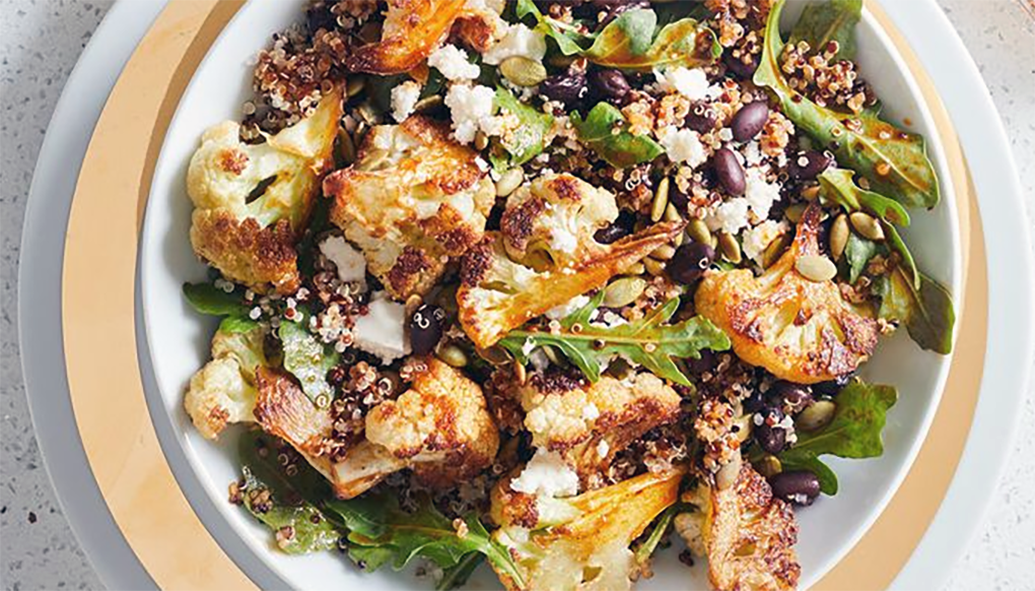 Image of a vegetarian dish based on cauliflower.
Welcome to FabulousFusionFood's Vegetarian Recipes Page — A vegetarian dish is one that eschews the addition of meat or meat products. As a practice, vegetarianism is the practice of abstaining from the consumption of meat (red meat, poultry, seafood, insects, and the flesh of any other animal). It may also include abstaining from eating all by-products of animal slaughter. A person who practices vegetarianism is known as a vegetarian
There are many variations of the vegetarian diet: an ovo-vegetarian diet includes eggs and a lacto-vegetarian diet includes dairy products, while a lacto-ovo vegetarian diet includes both. As the strictest of vegetarian diets, a vegan diet excludes all animal products, and can be accompanied by abstention from the use of animal-derived products, such as leather shoes.
The earliest record of vegetarianism comes from the 9th century BCE, inculcating tolerance towards all living beings. Parshwanatha and Mahavira, the 23rd and 24th tirthankaras in Jainism, respectively, revived and advocated ahimsa and Jain vegetarianism between the 8th and 6th centuries BCE; the most comprehensive and strictest form of vegetarianism. In Indian culture, vegetarianism has been closely connected with the attitude of nonviolence towards animals (called ahimsa in India) for millennia and was promoted by religious groups and philosophers. The Ācārāṅga Sūtra from 5th century BCE advocates Jain-vegetarianism; and forbids the monks from walking on grass in order to avoid inflicting pain on them and prevent small insects dwelling inside from getting killed. The ancient Indian work of the Tirukkuṟaḷ, dated before the 5th century CE, explicitly and unambiguously emphasizes shunning meat and non-killing as a common man's virtues.
Among the Hellenes, Egyptians, and others, vegetarianism had medical or ritual purification purposes. Vegetarianism was also practiced in ancient Greece and the earliest reliable evidence for vegetarian theory and practice in Greece dates from the 6th century BCE. The Orphics, a religious movement spreading in Greece at that time, also practiced and promoted vegetarianism. Greek teacher Pythagoras, who promoted the altruistic doctrine of metempsychosis, may have practiced vegetarianism, but is also recorded as eating meat. A fictionalized portrayal of Pythagoras appears in Ovid's Metamorphoses, in which he advocates a form of strict vegetarianism. It was through this portrayal that Pythagoras was best known to English-speakers throughout the early modern period and, prior to the coinage of the word "vegetarianism", vegetarians were referred to in English as "Pythagoreans".
The first written use of the term "vegetarian" originated in the early 19th century, when authors referred to a vegetable regimen diet. Historically, 'vegetable' could be used to refer to any type of edible vegetation. Modern dictionaries explain its origin as a compound of vegetable (adjective) and the suffix -arian (in the sense of agrarian). The term was popularized with the foundation of the Vegetarian Society in Manchester in 1847, although it may have appeared in print before 1847. The earliest occurrences of the term seem to be related to Alcott House—a school on the north side of Ham Common, London—which was opened in July 1838 by James Pierrepont Greaves.
Western vegetarian diets are typically high in carotenoids, but relatively low in omega-3 fatty acids and vitamin B12. Vegans can have particularly low intake of vitamin B and calcium if they do not eat enough items such as collard greens, leafy greens, tempeh and tofu (soy). In contrast, high levels of dietary fibre, folic acid, vitamins C and E, and magnesium, and low consumption of saturated fat are all considered to be beneficial aspects of a vegetarian diet.
The alphabetical list of all the vegetarian recipes on this site follows, (limited to 100 recipes per page). There are 4093 recipes in total:
Page 38 of 41
| Tchektchouka de Médéa Origin: Algeria | The Broon's Clapshot Origin: Scotland | To make a shorte paest for tart Origin: British |
| Tea-scented Eggs Origin: China | The Most Kindely Way to Preserve Plums, Cherries, Gooseberries, &c. Origin: England | To make an excellent aromaticall Hyppocras Origin: Britain |
| Teganitai (Pancakes with Sesame Seeds) Origin: Roman | The Perfect Vanilla Ice Cream Origin: Britain | To make drie Gingerbread Origin: Britain |
| Teisen Ceulfwyd Bro Gŵyr (Gower Peninsula Dowset) Origin: Welsh | The Poor Author's Pudding Origin: Britain | To Make Nouilles Origin: Britain |
| Teisen De (Tea-time Cake) Origin: Welsh | The Publisher's Pudding Origin: Britain | To make Pancakes. Origin: England |
| Teisen Dros Nos (Overnight Cake) Origin: Welsh | The Ultimate Chips Origin: Britain | To make Syrup of Violets Origin: Britain |
| Teisen Fêl (Honey Cake) Origin: Welsh | The Ultimate Chocolate Cake Origin: Britain | To make Verjuyce. Origin: Britain |
| Teisen Fferm (Farmhouse Cake) Origin: Welsh | Thengai Chammanthi (Kerala Coconut Chammanthi) Origin: India | To Make Whey Origin: Poland |
| Teisen Frau Noswaith Lawen (Pan-fried Parsnips and Mushrooms with a Garlic and Parsley Crust) Origin: Welsh | Thiove Origin: Mozambique | To pickle any kind of Flowers. Origin: Britain |
| Teisen Fyrbryd Llus ac Almonau (Bilberry, and Almond Snacking Cake) Origin: Welsh | Thistle Root Gobo (Japanese-style Braised Thistle Root) Origin: Britain | To pickle Samphire, Broom-buds, Kitkeys, Crucifix Pease, Purslane, or the like Otherways. Origin: Britain |
| Teisen Lap Margarîn (Margarine 'Teisen Lap') Origin: Welsh | Thoran Origin: India | To Preserve Broom Capers Origin: Britain |
| Teisen Mêl a Sinsir (Honey and Ginger Cake) Origin: Welsh | Three-cornered Leek Giardiniera Origin: Britain | To Preserve Cucumbers Origin: Britain |
| Teisen Reis (Boiled Rice Cake) Origin: Welsh | Three-cornered Leek Kookoo Sabzi (Seasoned Vegetable Frittata with Three-cornered Leeks) Origin: Fusion | Toasted Garlic Breadcrumbs Origin: Britain |
| Teisen Sbeis Eirin a Chnau (Spiced Plum and Nut Cake) Origin: Welsh (Patagonia) | Three-cornered Leek Pesto Origin: Britain | Tobago Curry Crab and Dumplings Origin: India |
| Teisennau Cri Gwyl Santes Dwynwen (St Dwynwen's Day Pikelets) Origin: Welsh | Three-cornered Leek Purée Origin: Britain | Toffee Apple Cupcakes Origin: British |
| Teisennau Jam Spwng (Welsh Cheese Cakes) Origin: Welsh | Thukaree Riha (Maldives Vegetable Curry) Origin: Maldives | Toffee Apple Slices Origin: China |
| Teisennu Briwsionu Cyffug Mêl Penfro (Pembrokeshire honey fudge crumblies) Origin: Welsh | Tiger Nut Flour Origin: African Fusion | Toffee Fruit Kebabs Origin: Britain |
| Tempeh Stroganoff with Parasol Mushrooms Origin: American | Tiger Nut Snacks Origin: Nigeria | Tofu and Vegetable Stir-fry Origin: Australia |
| Tempura Origin: Japan | Tiger-Nut Juice Origin: Ghana | Tofu Katsu Curry Origin: Fusion |
| Tempura Reedmace Flower Heads Origin: Britain | Tikka Masala Spice Blend Origin: Anglo-Indian | Tofu Laver and Leek Croquettes Origin: Ireland |
| Terrine Mauritanienne (Mauritanian Terrine) Origin: Mauritania | Tikvenik (Pumpkin-filled Filo Pastry) Origin: Bulgaria | Tom Brown Porridge Origin: Ghana |
| Terrine Verte (Wild Greens Terrine) Origin: Switzerland | Tilslørte Bondepiker Origin: Norway | Tom Yum Het Mangsawirat (Mushroom and Lemongrass Soup) Origin: Thailand |
| Terung Saus Santan (Fried Aubergines with Coconut Milk) Origin: Papua | Timbales Milanaise (Milanese Timbales) Origin: Britain | Tomato and Caramelized Onion Tarte Tatin Origin: Britain |
| Tesen Aval (Cornish Apple Cake) Origin: England | Ting Origin: Botswana | Tomato and Egg Curry Origin: India |
| Texas Caviar Origin: American | Tiramisu Origin: Italy | Tomato and Herb Salsa Origin: Britain |
| Tfina Camounia (Potatoes and Bean Stew) Origin: Tunisia | Tirana Romaine Salad Origin: Albania | Tomato and Red Bell Pepper Soup Origin: Britain |
| Thai Green Curry Paste Origin: Thailand | Tirk Trey Chu P'em (Sweet Fish Sauce) Origin: Cambodia | Tomato Basil Salad with Mozzarella Cheese Origin: British |
| Thai Green Curry with Chicken of the Woods Origin: Britain | Tkemali Sauce Origin: Georgia | Tomato Coulis Origin: France |
| Thai Red Jackfruit Curry Origin: Fusion | To Candy Carrot Roots Origin: Britain | Tomato Relish Origin: Britain |
| Thai Spring Roll Wrappers Origin: Thailand | To Candy Flowers for Sallets, as Violets, Cowslips, Clove-gilliflowers, Roses, Primroses, Borrage, Bugloss, &c. Origin: Britain | Tomato Smoor Origin: South Africa |
| Thai Yellow Curry Paste Origin: Thailand | To Drie Apricocks, Peaches, Pippins or Pearplums Origin: England | Tomato Soup Origin: Britain |
| Thai-style Curry Powder Origin: Thailand | To Fry Bread to Serve with Soup Origin: Britain | Tombrown Origin: Cameroon |
| Thai-style Nettle and Oyster Mushroom Curry Origin: Britain | To make a Quaking Pudding Origin: Britain | |
| The 'Complete Meal' Flatbread Origin: Fusion | To make a Sack Posset Origin: Britain |
Page 38 of 41