FabulousFusionFood's Vegetarian Recipes 2nd Page
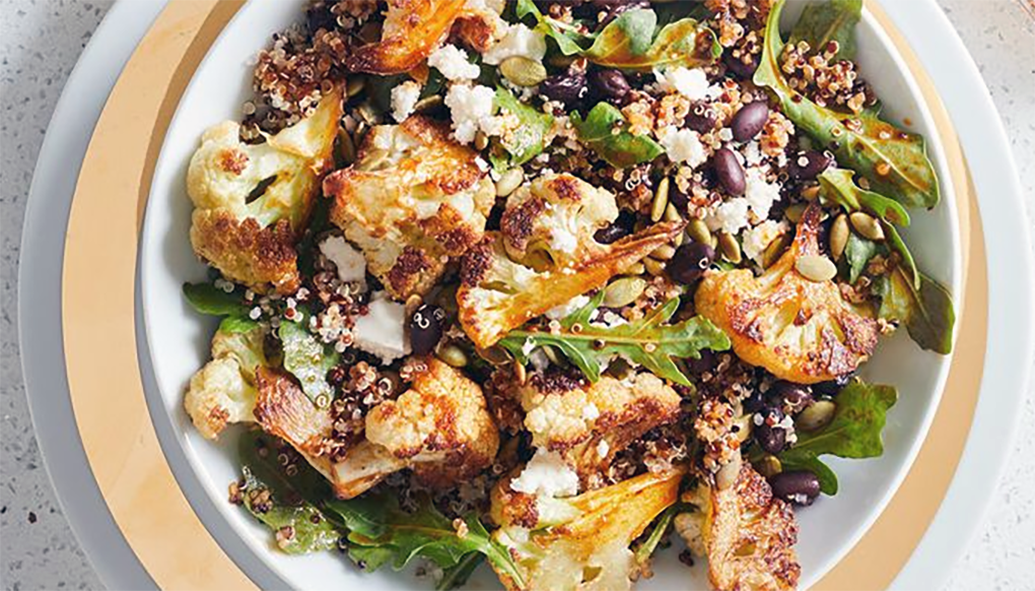 Image of a vegetarian dish based on cauliflower.
Welcome to FabulousFusionFood's Vegetarian Recipes Page — A vegetarian dish is one that eschews the addition of meat or meat products. As a practice, vegetarianism is the practice of abstaining from the consumption of meat (red meat, poultry, seafood, insects, and the flesh of any other animal). It may also include abstaining from eating all by-products of animal slaughter. A person who practices vegetarianism is known as a vegetarian
There are many variations of the vegetarian diet: an ovo-vegetarian diet includes eggs and a lacto-vegetarian diet includes dairy products, while a lacto-ovo vegetarian diet includes both. As the strictest of vegetarian diets, a vegan diet excludes all animal products, and can be accompanied by abstention from the use of animal-derived products, such as leather shoes.
The earliest record of vegetarianism comes from the 9th century BCE, inculcating tolerance towards all living beings. Parshwanatha and Mahavira, the 23rd and 24th tirthankaras in Jainism, respectively, revived and advocated ahimsa and Jain vegetarianism between the 8th and 6th centuries BCE; the most comprehensive and strictest form of vegetarianism. In Indian culture, vegetarianism has been closely connected with the attitude of nonviolence towards animals (called ahimsa in India) for millennia and was promoted by religious groups and philosophers. The Ācārāṅga Sūtra from 5th century BCE advocates Jain-vegetarianism; and forbids the monks from walking on grass in order to avoid inflicting pain on them and prevent small insects dwelling inside from getting killed. The ancient Indian work of the Tirukkuṟaḷ, dated before the 5th century CE, explicitly and unambiguously emphasizes shunning meat and non-killing as a common man's virtues.
Among the Hellenes, Egyptians, and others, vegetarianism had medical or ritual purification purposes. Vegetarianism was also practiced in ancient Greece and the earliest reliable evidence for vegetarian theory and practice in Greece dates from the 6th century BCE. The Orphics, a religious movement spreading in Greece at that time, also practiced and promoted vegetarianism. Greek teacher Pythagoras, who promoted the altruistic doctrine of metempsychosis, may have practiced vegetarianism, but is also recorded as eating meat. A fictionalized portrayal of Pythagoras appears in Ovid's Metamorphoses, in which he advocates a form of strict vegetarianism. It was through this portrayal that Pythagoras was best known to English-speakers throughout the early modern period and, prior to the coinage of the word "vegetarianism", vegetarians were referred to in English as "Pythagoreans".
The first written use of the term "vegetarian" originated in the early 19th century, when authors referred to a vegetable regimen diet. Historically, 'vegetable' could be used to refer to any type of edible vegetation. Modern dictionaries explain its origin as a compound of vegetable (adjective) and the suffix -arian (in the sense of agrarian). The term was popularized with the foundation of the Vegetarian Society in Manchester in 1847, although it may have appeared in print before 1847. The earliest occurrences of the term seem to be related to Alcott House—a school on the north side of Ham Common, London—which was opened in July 1838 by James Pierrepont Greaves.
Western vegetarian diets are typically high in carotenoids, but relatively low in omega-3 fatty acids and vitamin B12. Vegans can have particularly low intake of vitamin B and calcium if they do not eat enough items such as collard greens, leafy greens, tempeh and tofu (soy). In contrast, high levels of dietary fibre, folic acid, vitamins C and E, and magnesium, and low consumption of saturated fat are all considered to be beneficial aspects of a vegetarian diet.
The alphabetical list of all the vegetarian recipes on this site follows, (limited to 100 recipes per page). There are 4093 recipes in total:
Page 2 of 41
| Aliter Tubera III (Truffles, Another Way III) Origin: Roman | Amala and Ewedu Origin: Nigeria | Antiguan Johnny Cakes Origin: Antigua |
| Aliter Tubera IV (Truffles, Another Way IV) Origin: Roman | Amaranth Porridge with Fruity Green Tea Compote Origin: Fusion | Antiguan Rotis Origin: Antigua |
| Aliter Tubera V (Truffles, Another Way V) Origin: Roman | Amashaza mu gitoke (Peas with Plantains) Origin: Uganda | Antipasto Rice Origin: Italy |
| All-purpose Tamale Seasoning Blend Origin: Mexico | Amb Halad Ka Achar (Zedoary Pickle) Origin: India | ANZAC Biscuits Origin: New Zealand |
| Alloco de Cameroun (Cameroonian Alloco) Origin: Cameroon | Ambrevades au Curry (Pigeon Pea and Coconut Curry) Origin: Comoros | Apache Acorn Cakes Origin: America |
| Almogrote Gomero (Cheese and Tomato Paste) Origin: Spain | Ambrocal Origin: Seychelles | Apas (Rice Flour Rotis) Origin: India |
| Almond Cake Origin: Ireland | Amchar Masala Origin: Trinidad | Apfel-Rosinen Risotto (Apple and Raisin Risotto) Origin: Namibia |
| Almond Cheesecakes Origin: Ireland | Amish Apple Grunt Origin: Amish | Apios et Porros (Celery and Leeks) Origin: Roman |
| Almond Jelly in Ginger Sauce Origin: China | Amiwo (Beninese Maize Porridge) Origin: Benin | Appa (Hoppers) Origin: Sri Lanka |
| Almond Mylk (Almond Milk) Origin: England | Amour Caché (Hidden Love Cake) Origin: Martinique | Apple and Cinnamon Muffins Origin: Britain |
| Aloco Camerounais (Cameroonian Aloco) Origin: Cameroon | Amrywiaeth ar Fara Brith (A Variation on 'Bara Brith') Origin: Welsh | Apple and Mint Jelly Origin: Britain |
| Aloo Anardana Origin: India | Anamikto Siropi (Mixed Fruit Squash) Origin: Cyprus | Apple and Pear Harvest Pie Origin: South Africa |
| Aloo Badun (Potato Badun) Origin: Sri Lanka | Ananas con Vinho do Porto (Pineapple in Port Wine) Origin: Mozambique | Apple Cake Origin: Britain |
| Aloo Bhaji Origin: India | Anardana goli II Origin: India | Apple Cake Origin: Ireland |
| Aloo Bharta (Indian Mashed Potatoes) Origin: Anglo-Indian | Anardana Pakora in Mustard Oil Origin: India | Apple Cake Cupcakes Origin: British |
| Aloo Dhaniya (Balti Potatoes and Coriander) Origin: India | Ancient Egyptian Flatbread Origin: Egypt | Apple Cheesecakes Origin: Ireland |
| Aloo Gobi Origin: Britain | Ancient Egyptian Tigernut Sweetmeats Origin: Egypt | Apple Coleslaw Origin: Britain |
| Aloo Kari (Curried Potatoes) Origin: India | Ancient Roman Pizza Origin: Roman | Apple Crumble Origin: Britain |
| Aloo ki Bhujia (Pakistani Potato Curry) Origin: Pakistan | Andhra Pappu Charu (Andhra-style Lentil Puree Curry) Origin: India | Apple Juice Caramels Origin: Britain |
| Aloo Masala (Potato Masala) Origin: India | Angelica Muffins Origin: Britain | Apple Kesari with Nutmeg Origin: India |
| Aloo Muttar Origin: Britain | Angelica Shortbread Origin: Britain | Apple Meringue Pie Origin: British |
| Aloo Palya (Potato Curry) Origin: India | Anglo-Saxon Honey Oat Cakes Origin: England | Apple Muse Origin: England |
| Aloo Paratha (Potato-stuffed Paratha) Origin: India | Angu de Banana (Banana Mash) Origin: Sao Tome | Apple Nut Cobbler Origin: Britain |
| Aloo Pie Origin: Trinidad | Anguilla Fried Plantains Origin: Anguilla | Apple Pear Flapjacks Origin: Canada |
| Aloo Sabzi Kari (Potato Curry) Origin: India | Anise Rosquitos Origin: Gibraltar | Apple Teabread Origin: Ireland |
| Alpine Dock and Spruce Tip Crumble Origin: Britain | Anjera (Somali Flatbreads) Origin: Somalia | Apple, Pear and Cinnamon Crumble Origin: Britain |
| Altdeutsche Brotchen (Old-German Muffins) Origin: Germany | Anko (Japanese Red Paste) Origin: Japan | Apricot Betty Origin: Britain |
| Alu Achari Origin: India | Anna Potatoes Origin: Britain | Apricot Blatjang Origin: South Africa |
| Alu Bhindi (Okra and Potato Curry) Origin: Fiji | Another Walnut Catsup Origin: Britain | Apricot Jam Origin: Britain |
| Alu Kesel (Sri Lankan Ash Plantain Curry) Origin: Sri Lanka | Antiguan Callaloo Origin: Antigua | Apricot Pinwheels Origin: Britain |
| Alu Tarkari (Potato Curry) Origin: Nepal | Antiguan Chop-up Origin: Antigua | Arán Breac (Speckled Bread) Origin: Ireland |
| Alu Tarkari (Suriname Potato Masala) Origin: Suriname | Antiguan Curry Powder Origin: Antigua | Arbi ki Bhaji (Taro Curry) Origin: India |
| Am Ke Achar (Fijian Mango Pickle) Origin: Fiji | Antiguan Green Seasoning Origin: Antigua | |
| Amala Origin: Nigeria | Antiguan Hot Sauce Origin: Antigua |
Page 2 of 41