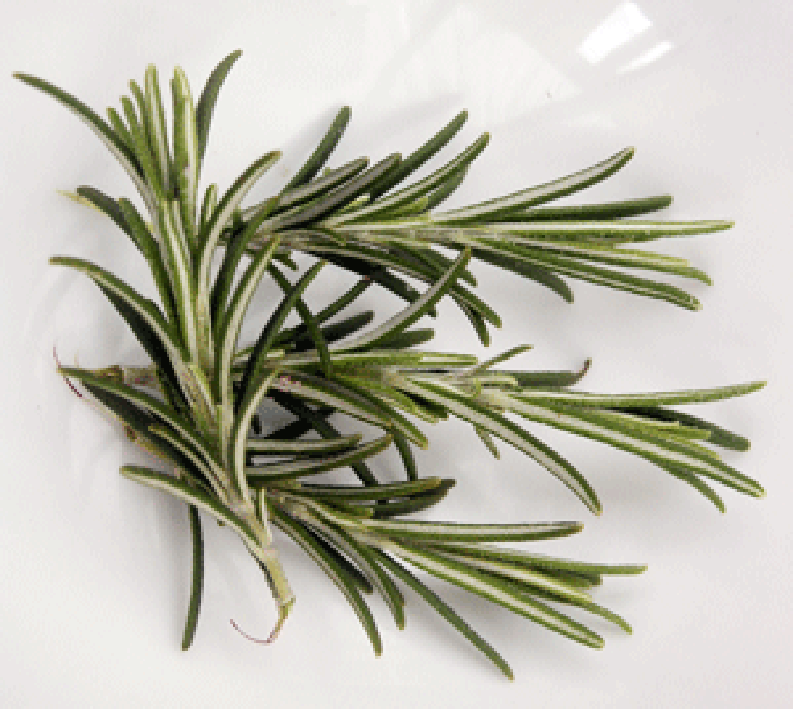
 Sprigs of rosemary
Rosmarinus
officinalis..
Sprigs of rosemary
Rosmarinus
officinalis..
Welcome to the summary page for FabulousFusionFood's Herb guide to Rosemary along with all the Rosemary containing recipes presented on this site, with 286 recipes in total.
This is a continuation of an entire series of pages that will, I hope, allow my visitors to better navigate this site. As well as displaying recipes by name, country and region of origin I am now planning a whole series of pages where recipes can be located by meal type and main ingredient. This page gives information about Rosemary and a listing of all the Rosemary-based recipes added to this site.
These recipes, all contain Rosemary as a major herb flavouring.
Rosemary, Rosmarinus officinalis is a woody perennial which in its upright forms can grow to about 1.5 m tall (though there are dwarf varieties). The leaves are highly fragrant, evergreen and needle like. Despite its appearance rosemary is actually a member of the Lamiaceae or mint family of plants and is native to the Mediterranean region of Europe. The leaves can be used dry or fresh and have a bitter rather astringent taste that complement fatty foods such as lamb or oily fish. The plant is a native of the Mediterranean and is used commonly in both Italian and Greek cuisines.
It is a perennial woody herb that can grow, maximally, to 1.5m in height. The individual branches bear evergreen, needle-like leaves that can grow to a few centimetres long and which are highly aromatic, green above, and white below, with dense short woolly hair. During Spring and Early summer the flowers appear in clusters at the base of the leaves and can be white, pink, purple or blue in colour.
It is commonly grown in gardens both as an ornamental and culinary plant. The cultivar Miss Jessop's Upright is particularly suited to culinary use. Tuscan Blue with its more upright form provides good leaves and long stems are also useful, when stripped of their leaves, to make barbecue skewers. Most rosemary cultivars are sensitive to waterlogging and are frost sensitive (though frost-resistant cultivars such as Arp are now available. If growing rosemary you should mix plenty of grit with the soil to ensure sufficient drainage.
The leaves have a resinous scent with a camphorous quality and a bitter overtone that is not unpleasant. Typically they contain from 1 to 2.5% essential oil, of which 1,8-cineol, camphor, borneol, α-pinene and bornyl acetate are the main components. The leaves also contain variable amounts of tannin, which contributes to their bitter qualities. When burnt, the leaves give off a mustard-like smell and an aroma similar to burning wood, which can be used to flavour foods while barbecuing
The modern English name, rosemary derives from the Classical Latin name of the plant (rosmarinus), which is interpreted as being composed of the components ros (dew_ and marinus (of the sea). Thus rosemary can be interpreted as meaning 'dew of the sea'. This may refer to rosemary's ability to thrive in arid conditions, with the only water source sustaining them being the mists rolling in from the sea. It should be noted that, according to Greek legend rosemary was the plant around the goddess Aphrodite as she rose from the sea, born of Ouranos's semen. Thus the name rosmarinus may be a false folk etymology from an earlier name of Greek origin now lost to us.
A similar false etymology originated in the Middle Ages from the legend that Mary, the mother of Christ supposedly spread her blue cloak over a white-blossomed rosemary bush when she was resting, and the flowers turned blue. From this it came to be believed that ros marinus actually meant the 'Rose of Mary'.
As well as being used in roasting and cooking (chopped rosemary leaves are wonderful if mixed with thyme and sprinkled over new potatoes before roasting) a herbal tea can also be made from the leaves and the wood gives off a distinctive mustardy smell when burnt (just try using rosemary wood as skewers for barbecued kebabs). Rosemary is also a very useful food preservative and can be used infused in oil or vinegar for pickling. Though it is typically used with lamb and mutton, rosemary goes wonderfully well with fatty meats (try with pork and oily fish) and works with game meats of all kinds.
The recipes given below contain rosemary as an important or dominant component. However, you can also access all the recipes on this site that contain rosemary as an ingredient.
This is a continuation of an entire series of pages that will, I hope, allow my visitors to better navigate this site. As well as displaying recipes by name, country and region of origin I am now planning a whole series of pages where recipes can be located by meal type and main ingredient. This page gives information about Rosemary and a listing of all the Rosemary-based recipes added to this site.
These recipes, all contain Rosemary as a major herb flavouring.
Rosemary, Rosmarinus officinalis is a woody perennial which in its upright forms can grow to about 1.5 m tall (though there are dwarf varieties). The leaves are highly fragrant, evergreen and needle like. Despite its appearance rosemary is actually a member of the Lamiaceae or mint family of plants and is native to the Mediterranean region of Europe. The leaves can be used dry or fresh and have a bitter rather astringent taste that complement fatty foods such as lamb or oily fish. The plant is a native of the Mediterranean and is used commonly in both Italian and Greek cuisines.
It is a perennial woody herb that can grow, maximally, to 1.5m in height. The individual branches bear evergreen, needle-like leaves that can grow to a few centimetres long and which are highly aromatic, green above, and white below, with dense short woolly hair. During Spring and Early summer the flowers appear in clusters at the base of the leaves and can be white, pink, purple or blue in colour.
It is commonly grown in gardens both as an ornamental and culinary plant. The cultivar Miss Jessop's Upright is particularly suited to culinary use. Tuscan Blue with its more upright form provides good leaves and long stems are also useful, when stripped of their leaves, to make barbecue skewers. Most rosemary cultivars are sensitive to waterlogging and are frost sensitive (though frost-resistant cultivars such as Arp are now available. If growing rosemary you should mix plenty of grit with the soil to ensure sufficient drainage.
The leaves have a resinous scent with a camphorous quality and a bitter overtone that is not unpleasant. Typically they contain from 1 to 2.5% essential oil, of which 1,8-cineol, camphor, borneol, α-pinene and bornyl acetate are the main components. The leaves also contain variable amounts of tannin, which contributes to their bitter qualities. When burnt, the leaves give off a mustard-like smell and an aroma similar to burning wood, which can be used to flavour foods while barbecuing
The modern English name, rosemary derives from the Classical Latin name of the plant (rosmarinus), which is interpreted as being composed of the components ros (dew_ and marinus (of the sea). Thus rosemary can be interpreted as meaning 'dew of the sea'. This may refer to rosemary's ability to thrive in arid conditions, with the only water source sustaining them being the mists rolling in from the sea. It should be noted that, according to Greek legend rosemary was the plant around the goddess Aphrodite as she rose from the sea, born of Ouranos's semen. Thus the name rosmarinus may be a false folk etymology from an earlier name of Greek origin now lost to us.
A similar false etymology originated in the Middle Ages from the legend that Mary, the mother of Christ supposedly spread her blue cloak over a white-blossomed rosemary bush when she was resting, and the flowers turned blue. From this it came to be believed that ros marinus actually meant the 'Rose of Mary'.
As well as being used in roasting and cooking (chopped rosemary leaves are wonderful if mixed with thyme and sprinkled over new potatoes before roasting) a herbal tea can also be made from the leaves and the wood gives off a distinctive mustardy smell when burnt (just try using rosemary wood as skewers for barbecued kebabs). Rosemary is also a very useful food preservative and can be used infused in oil or vinegar for pickling. Though it is typically used with lamb and mutton, rosemary goes wonderfully well with fatty meats (try with pork and oily fish) and works with game meats of all kinds.
The recipes given below contain rosemary as an important or dominant component. However, you can also access all the recipes on this site that contain rosemary as an ingredient.
The alphabetical list of all Rosemary recipes on this site follows, (limited to 100 recipes per page). There are 286 recipes in total:
Page 1 of 3
| Abbacchio alla Cacciatora Origin: Italy | Apple, Chestnut and Mugwort Stuffing for Roast Goose Origin: Britain | Char-grilled Shiitake Mushrooms Origin: American |
| Abbacchio alla scottadito (Barbecued Milk-fed Lamb Chops) Origin: Italy | Asado de Tenera (Roast Veal) Origin: Spain | Chicken Baked with Potatoes and Garlic Origin: Ireland |
| Abbacchio alla scottadito (Barbecued Milk-fed Lamb Chops) Origin: Vatican City | Baianas (Baian Beans) Origin: Roman | Chinese-spiced Goose Origin: Fusion |
| Abbachio al Forno (Italian Roast Baby Lamb) Origin: Italy | Bajan Curry Goat Origin: Barbados | Chuleta de Chancho a la Naranja (Pork Chop with Orange) Origin: Ecuador |
| Ad Digestionem (An Aid to Digestion) Origin: Roman | Baked Lamb with Potatoes and Artichokes Origin: Ireland | Cig Oen Cymreig â Mêl (Honeyed Welsh Lamb) Origin: Welsh |
| African Chicken Wings Origin: African Fusion | Balloc Broth Origin: England | Cig Oen Mewn Mêl a Seidr (Lamb in Honey and Cider) Origin: Welsh |
| Agneau Provençal au Jus Menthe Verte (Roast Lamb Provençal with Mint Gravy) Origin: France | Barbecued Balsamic Veal Chops Origin: American | Cig Oen Rhost (Roast Lamb) Origin: Welsh |
| Air Fried Beef Brisket Origin: Britain | Barbecued Bourbon Tri-tip Origin: American | Civet de Sanglier aux Champignons, Châtaignes et Chorizo (Wild Boar Stew with Mushrooms, Chestnuts and Chorizo Sausage) Origin: France |
| Air Fryer Beef Wellington Origin: Britain | Barbecued Butterflied Leg of Lamb Origin: Australia | Cochinillo (Suckling Pig) Origin: Spain |
| Air Fryer Lamb Chops Origin: Britain | Barbecued Garlic Potato Wedges Origin: Britain | Coes Oen gyda Rhosmari a Mwstad (Roast Leg of Lamb with Rosemary and Mustard) Origin: Welsh |
| Air Fryer Pancakes Origin: Britain | Barbecued Leg of Lamb with Olives Origin: Australia | Comlek (Rabbit Casserole) Origin: Albania |
| Aliater ius in mullos assos (Red Mullet in Fennel and Mint Sauce) Origin: Roman | Barbecued, Marinated, Portobello Mushrooms Origin: British | Conchiclam de Pisa Simplici (A Dish of Plain Peas) Origin: Roman |
| Alitas de pollo picante (Spicy Chicken Wings) Origin: Ecuador | Basic Focaccia Origin: Italy | Confiture de Poivrons (Confit of Peppers) Origin: Monaco |
| Aliter Dulcia III (Another Sweet III) Origin: Roman | Beans with Artichokes and Olives Origin: Britain | Conger in sawce (Conger Eels in Sauce) Origin: England |
| Aliter Fabaciae (Green Beans, Another Way) Origin: Roman | Bermuda Chicken Origin: Bermuda | Coq-au-Vin II Origin: France |
| Aliter in Apro III (Wild Boar, Another Way III) Origin: Roman | Blanquette de Porc (Pork in White Sauce) Origin: France | County Cork Irish Stew Origin: Ireland |
| Aliter In Aprum Assum Iura Ferventia Facies Sic (Hot Sauce for Roast Wild Boar, Another Way) Origin: Roman | Blanquette de Veau (Veal in White Sauce) Origin: France | Cranberry-rosemary Stuffed Pork Loin Origin: America |
| Aliter in Locusta (Another Sauce for Lobster) Origin: Roman | Blossom-stuffed Pork Tenderloin Origin: American | Crépinettes Origin: Seychelles |
| Aliter Ius Frigidum in Aprum Elixum (Cold Sauce for Boiled Wild Boar, Another Way) Origin: Roman | Boboli Pizza Crust Origin: Italy | Cucurbitas iure Colocasorium (Gourds Cooked as Broad Beans) Origin: Roman |
| Aliter Ius in Mullos Assos (Another Sauce for Baked Red Mullet) Origin: Roman | Boeuf en Daube Origin: France | Cymas et Cauliculos (Baby Greens in a Celery Mint Sauce) Origin: Roman |
| Aliter Ius in Murena Elixa II (Another, Sauce for Poached Moray Eel II) Origin: Roman | Bourguignon de cerf (Venison Bourguignon) Origin: France | Dauphinoise with an African Twist Origin: Fusion |
| Aliter Lenticulam (Lentils, Another Way) Origin: Roman | Bourguignon de cerf (Venison Bourguignon) Origin: New Caledonia | Diri Ak Pwa (Haitian Rice and Beans) Origin: Haiti |
| Aliter Leporem Elixum (Another, Boiled Hare) Origin: Roman | Braised Greek-style Lamb Chops Origin: Fusion | Dulcia Piperata (Peppered Sweets) Origin: Roman |
| Aliter Leporem ex Suo Iure (Another, Hare in its Own Gravy) Origin: Roman | Braised Lamb Shanks with Cannellini Beans Origin: Britain | Elleniké arnié aiga Paschast (Greek Easter Lamb or Kid) Origin: Greece |
| Aliter Pisa Sive Faba (Peas or Beans, Another Way) Origin: Roman | Braised Pigeons with Cherries Origin: Zambia | Embamma in Cervinam Assam (Marinade for Roast Venison) Origin: Roman |
| Aliter Sphondylos II (Parsnips, Another Way II) Origin: Roman | Brined and Roasted Turkey Origin: America | Embractum Baianum (Baian Stew) Origin: Roman |
| Aliter Sphondylos III (Parsnips, Another Way III) Origin: Roman | Byrgers Rwdan, Rhosmari ac Oen (Swede, Lamb and Rosemary Burgers) Origin: Welsh | Fania Origin: Uruguay |
| Aliter Tubera II (Truffles, Another Way II) Origin: Roman | Caprese Salad with Edible Flowers Origin: American | Fat Hen Quiche Origin: Britain |
| Aliter Tubera III (Truffles, Another Way III) Origin: Roman | Capretto al Forno (Oven-roasted Kid Goat) Origin: Italy | Ffowlyn Morganwg Rhost gyda Chaws a Pherlysiau (Roast Glamorgan Chicken with Cheese and Herbs) Origin: Welsh |
| Aliter Tubera V (Truffles, Another Way V) Origin: Roman | Carbonade Flamande Origin: Belgium | Fiddlehead Pasta Primavera Origin: American |
| Alubias blancas con calamar y aceite de romero (White Beans with Squid and Rosemary Oil) Origin: Spain | Carlin Pea, Pearl Barley and Tomato Stew Origin: Britain | Fierkelsjhelli (Suckling Pig in Aspic) Origin: Luxembourg |
| Anserem Elixum Calidum ex Iure Frigido Apiciano (Boiled Goose, Served Hot with Cold Apician Sauce) Origin: Roman | Cennin wedi eu Llenwi gyda Oen a Rhosmari (Welsh Lamb and Rosemary Stuffed Leeks) Origin: Welsh | Fläskfilé med sås och ugnsstekta grönsaker (Pork Fillet with Sauce and Roast Vegetables) Origin: Sweden |
| Apelsin och rosmarinlax (Orange and Rosemary Salmon) Origin: Sweden | Cervinae Conditura (Sauce for Venison) Origin: Roman | |
| Aper ita conditur (Seasoned Wild Boar) Origin: Roman | Chanterelle and Rosemary Galette Origin: Britain |
Page 1 of 3