FabulousFusionFood's Vegetarian Recipes 43th Page
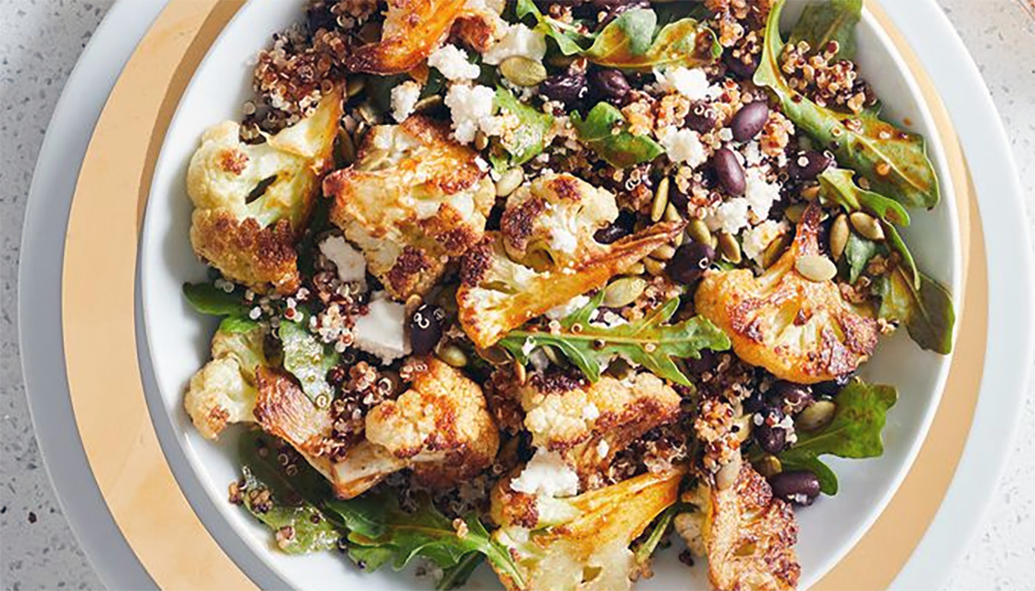 Image of a vegetarian dish based on cauliflower.
Welcome to FabulousFusionFood's Vegetarian Recipes Page — A vegetarian dish is one that eschews the addition of meat or meat products. As a practice, vegetarianism is the practice of abstaining from the consumption of meat (red meat, poultry, seafood, insects, and the flesh of any other animal). It may also include abstaining from eating all by-products of animal slaughter. A person who practices vegetarianism is known as a vegetarian
There are many variations of the vegetarian diet: an ovo-vegetarian diet includes eggs and a lacto-vegetarian diet includes dairy products, while a lacto-ovo vegetarian diet includes both. As the strictest of vegetarian diets, a vegan diet excludes all animal products, and can be accompanied by abstention from the use of animal-derived products, such as leather shoes.
The earliest record of vegetarianism comes from the 9th century BCE, inculcating tolerance towards all living beings. Parshwanatha and Mahavira, the 23rd and 24th tirthankaras in Jainism, respectively, revived and advocated ahimsa and Jain vegetarianism between the 8th and 6th centuries BCE; the most comprehensive and strictest form of vegetarianism. In Indian culture, vegetarianism has been closely connected with the attitude of nonviolence towards animals (called ahimsa in India) for millennia and was promoted by religious groups and philosophers. The Ācārāṅga Sūtra from 5th century BCE advocates Jain-vegetarianism; and forbids the monks from walking on grass in order to avoid inflicting pain on them and prevent small insects dwelling inside from getting killed. The ancient Indian work of the Tirukkuṟaḷ, dated before the 5th century CE, explicitly and unambiguously emphasizes shunning meat and non-killing as a common man's virtues.
Among the Hellenes, Egyptians, and others, vegetarianism had medical or ritual purification purposes. Vegetarianism was also practiced in ancient Greece and the earliest reliable evidence for vegetarian theory and practice in Greece dates from the 6th century BCE. The Orphics, a religious movement spreading in Greece at that time, also practiced and promoted vegetarianism. Greek teacher Pythagoras, who promoted the altruistic doctrine of metempsychosis, may have practiced vegetarianism, but is also recorded as eating meat. A fictionalized portrayal of Pythagoras appears in Ovid's Metamorphoses, in which he advocates a form of strict vegetarianism. It was through this portrayal that Pythagoras was best known to English-speakers throughout the early modern period and, prior to the coinage of the word "vegetarianism", vegetarians were referred to in English as "Pythagoreans".
The first written use of the term "vegetarian" originated in the early 19th century, when authors referred to a vegetable regimen diet. Historically, 'vegetable' could be used to refer to any type of edible vegetation. Modern dictionaries explain its origin as a compound of vegetable (adjective) and the suffix -arian (in the sense of agrarian). The term was popularized with the foundation of the Vegetarian Society in Manchester in 1847, although it may have appeared in print before 1847. The earliest occurrences of the term seem to be related to Alcott House—a school on the north side of Ham Common, London—which was opened in July 1838 by James Pierrepont Greaves.
Western vegetarian diets are typically high in carotenoids, but relatively low in omega-3 fatty acids and vitamin B12. Vegans can have particularly low intake of vitamin B and calcium if they do not eat enough items such as collard greens, leafy greens, tempeh and tofu (soy). In contrast, high levels of dietary fibre, folic acid, vitamins C and E, and magnesium, and low consumption of saturated fat are all considered to be beneficial aspects of a vegetarian diet.
The alphabetical list of all the vegetarian recipes on this site follows, (limited to 100 recipes per page). There are 4308 recipes in total:
Page 43 of 44
| Watermelon Otai Origin: New Zealand | Wild Mushroom Compote Origin: Britain | Yam Balls Origin: West Africa |
| Watermelon Otai Origin: Samoa | Wild Mushroom Omelette Origin: Britain | Yam Curry Origin: Vanuatu |
| Watermelon Otai Origin: Tonga | Wild Mushroom Pizza Origin: Britain | Yam with Greens, Onion, and Okra Origin: Nigeria |
| Waykaab (Milk with Okra Powder) Origin: Sudan | Wild Mushroom Stew Origin: Britain | Yaniqueque (Johnny Cakes) Origin: Dominican Republic |
| West African Couscous Origin: West Africa | Wild Mushroom Stuffed Potato Cakes Origin: Britain | Yapese Sweet Potato Fritters Origin: Federated States Micronesia |
| West Indian Pumpkin Curry Origin: Caribbean | Wild Mustard and Spinach Curry with Oak Moss Tempering Origin: India | Yapese Taro Fritters Origin: Federated States Micronesia |
| Wheat Dumpling Skins Origin: Fusion | Wild Plum Ketchup Origin: Fusion | Yarmouth Biscuits Origin: England |
| Wheat Flour Chapati Origin: India | Wild Rice Soup Origin: Britain | Yataklete Kilkil (Spiced Vegetables) Origin: Ethiopia |
| Whipod (White Pot) Origin: Welsh | Wild Spring Greens Gnocchi Origin: Fusion | Yataklete Kilkili (Ethiopian Ginger Vegetables) Origin: Ethiopia |
| White Béchamel Sauce Origin: Britain | Wild Spring Greens Soup Origin: British | Yeasted Barm Brack Origin: Ireland |
| White Bakewell Fudge Origin: Britain | Wild Spring Salad Origin: Britain | Yeasted Oaten Loaf Origin: Ireland |
| White Bread Mix Origin: Suriname | Wimbledon Cake Origin: Britain | Yellow Curry with Swiss Chard and Tofu Origin: Fusion |
| White Foam Soup Origin: Britain | Winter Parsnip Stew Origin: Czech | Yellow Man Origin: Northern Ireland |
| White Lentil Soup Origin: Scotland | Winter Rice Pudding with Dried Fruit Origin: China | Yellow Split Pea Bhuna Kedgeree Origin: Anglo-Indian |
| White Melted Butter Origin: British | Winter Squash, Tomato and Cheese Gratin Origin: Britain | Yemiser W'et (Spicy Lentil Stew) Origin: Ethiopia |
| White Soda Bread Origin: Ireland | Wisteria Beer Origin: America | Yerushalmi Kugel (Jerusalem Kugel) Origin: Israel |
| Whole Naartjie Preserve Origin: South Africa | Wisteria Cordial Origin: Britain | Yesil Marcimek Çorbası (Green Lentil Soup) Origin: Turkey |
| Wholegrain Lachha Paratha Origin: India | Wisteria Flower Jam Origin: Britain | Yetakelt W'et (Spiced Vegetable Stew) Origin: Djibouti |
| Wholewheat South African Plum Crisp Origin: South Africa | Wisteria Flower Omelette Origin: Britain | Yi Mein (Longevity Noodles) Origin: China |
| Wigilijna Zupa Grzybowa (Polish Christmas Mushroom Soup) Origin: Poland | Wisteria, Chickweed and Pea Flower Spring Rolls Origin: America | Yoghurt and Honey Pancakes with Citrus Fruit Origin: Britain |
| Wild Apple Jelly Origin: Britain | Wisteria, Linden and White Wine Lollies Origin: Britain | Yoghurt Chutney Dipping Sauce Origin: Zimbabwe |
| Wild Carrot and Water Mint Soup Origin: Britain | Wok-smoked Mushrooms Origin: Britain | Yoghurt Mint Dip Origin: Britain |
| Wild Carrot Flower Fritters Origin: Britain | Wonton Soup Origin: China | Yoghurty Flapjacks Origin: Britain |
| Wild Garlic and Mushroom Lasagne Origin: Britain | Wy Cymreig (Welsh Egg) Origin: Welsh | Yorkshire Oatcakes Origin: England |
| Wild Garlic and Nettle Soup Origin: Britain | Wyau Hwyaden Mewn Caws (Duck Eggs in Cheese) Origin: Welsh | Yorkshire Pudding with Sausages, Onions and Carrots Origin: Ascension |
| Wild Garlic and Wild Mustard Greens Pesto Origin: Britain | Wyau Hwyaden, Dull Ynys Môn (Anglesey-style Duck Eggs) Origin: Welsh | Yufka Flatbread Origin: Turkey |
| Wild Greens Garlic Bread Origin: Britain | Wyau Ynys Môn (Anglesey Eggs) Origin: Welsh | Yuletide Fruit Bread Origin: England |
| Wild Greens Gnocci in Tomato Sauce Origin: Britain | Xerém (Cape Verdean Pap) Origin: Cape Verde | Yum Yum Cakes Origin: England |
| Wild Greens Kimchi Origin: Fusion | Xima (Cornmeal Porridge) Origin: Sao Tome | Zaatar Mankoushe (Lebanese Zaatar Pizza) Origin: Lebanon |
| Wild Greens Pasta Primavera Origin: British | Xima (Cornmeal Porridge) Origin: Mozambique | Zagorski Štrukli (Zagorje Cheese Strukli) Origin: Croatia |
| Wild Greens Saag Paneer Origin: Fusion | Yaji Spice (Suya Spice Blend) Origin: Nigeria | Zagrebački krumpir (Zagreb Potatoes) Origin: Croatia |
| Wild Herb Casserole Origin: Britain | Yalanchy Sarma (Armenian Stuffed Vine Leaves) Origin: Armenia | Zahlouk Origin: Morocco |
| Wild Mushroom and Leek Bake Origin: Britain | Yalanci Dolma (Stuffed Vine Leaves) Origin: Northern Cyprus | |
| Wild Mushroom and Miso Broth Origin: Britain | Yam and Beans Origin: Nigeria |
Page 43 of 44