FabulousFusionFood's Spice Guide for Star Anise Home Page
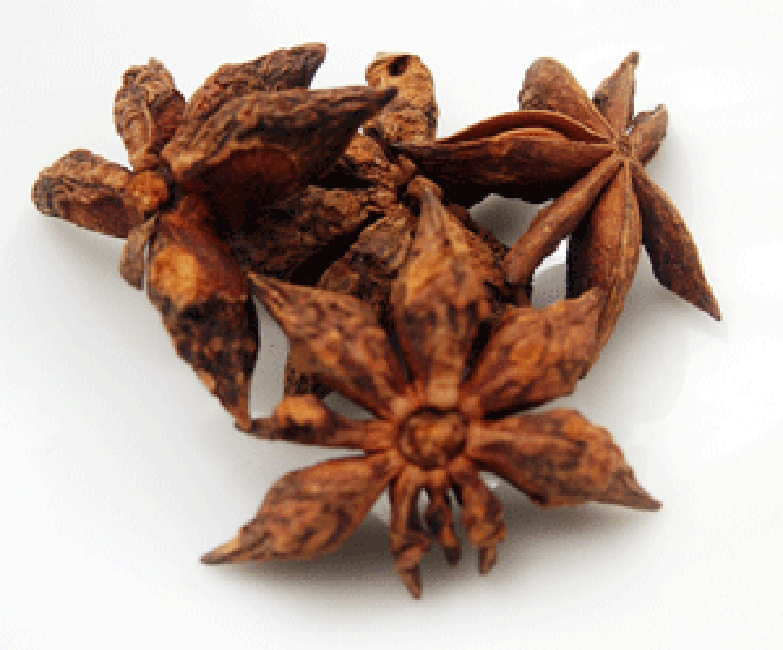 Star anise fruit,
seed pericarp of
llicium
verum.
Star anise fruit,
seed pericarp of
llicium
verum.
Welcome to the summary page for FabulousFusionFood's Spice guide to Star Anise along with all the Star Anise containing recipes presented on this site, with 153 recipes in total.
This is a continuation of an entire series of pages that will, I hope, allow my visitors to better navigate this site. As well as displaying recipes by name, country and region of origin I am now planning a whole series of pages where recipes can be located by meal type and main ingredient. This page gives a listing of all the spice-based recipes added to this site.
These recipes, all contain Star Anise as a major flavouring.
Star Anise is the star-shaped pericarp (the outer part of a fruit, excluding the seeds) of llicium verum, a small native evergreen tree of southwest China (also known as Chinese star anise, Indian anise, Badian anise [is is known as bājiǎo, 八角, literally 'eight-corners' in Mandarin). The fruit is borne by a small evergreen tree that is believed to be native to southwestern China ad which is a member of the Schisandraceae family of flowering plants. The plant is grown in Southern China and Vietnam, but has been brought into cultivation and is no longer known in the wild state. The star-shaped fruit are harvested just before ripening (and thus still contain their seeds). The dried fruit resembles an eight-pointed star and has a flavour that closely resembles that of anise (hence the English and Chinese names). It forms on of the key components of Chinese five spice powder and is also one of the ingredients used to make the broth for the Vietnamese noodle soup called phở. Star anise is widely used in Chinese cuisine and it is used in some South Asia and Indonesia recipes (though to a lesser extent).
Star anise contains anethole as the main aromatic constituent of its essential oil (which is also the flavour ingredient of anise seed) and it is sometimes used in Western cooking as a cheaper alternative to anise (it can be distinguished from aniseed by the presence of traces of 1,4 cineol in the essential oil). Interestingly, star anise is now the main source of the chemical compound shikimic acid (extracted from the seeds), a primary ingredient used to create the anti-flu drug Tamiflu, which is regarded as the most promising drug to mitigate the severity of bird flu (H5N1); though there is evidence that some strains of bird flue have already developed resistance against this drug.
The archaic English name of badian anise, which is used in some historic recipes, is actually derived from the Persian name of star anise, badiyan [بادیان], which may itself be a corruption of the Chinese, bājiǎo. Star anise is used in almost all the traditional cuisines of China, but elsewhere it is favoured only in the cookery of north Vinetnam, though it is occasionally used in Iranian, Pakistani and Northern Indian dishes. It is also added to the garam masala spice blend of the Kerala province of southern India.
This is a continuation of an entire series of pages that will, I hope, allow my visitors to better navigate this site. As well as displaying recipes by name, country and region of origin I am now planning a whole series of pages where recipes can be located by meal type and main ingredient. This page gives a listing of all the spice-based recipes added to this site.
These recipes, all contain Star Anise as a major flavouring.
Star Anise is the star-shaped pericarp (the outer part of a fruit, excluding the seeds) of llicium verum, a small native evergreen tree of southwest China (also known as Chinese star anise, Indian anise, Badian anise [is is known as bājiǎo, 八角, literally 'eight-corners' in Mandarin). The fruit is borne by a small evergreen tree that is believed to be native to southwestern China ad which is a member of the Schisandraceae family of flowering plants. The plant is grown in Southern China and Vietnam, but has been brought into cultivation and is no longer known in the wild state. The star-shaped fruit are harvested just before ripening (and thus still contain their seeds). The dried fruit resembles an eight-pointed star and has a flavour that closely resembles that of anise (hence the English and Chinese names). It forms on of the key components of Chinese five spice powder and is also one of the ingredients used to make the broth for the Vietnamese noodle soup called phở. Star anise is widely used in Chinese cuisine and it is used in some South Asia and Indonesia recipes (though to a lesser extent).
Star anise contains anethole as the main aromatic constituent of its essential oil (which is also the flavour ingredient of anise seed) and it is sometimes used in Western cooking as a cheaper alternative to anise (it can be distinguished from aniseed by the presence of traces of 1,4 cineol in the essential oil). Interestingly, star anise is now the main source of the chemical compound shikimic acid (extracted from the seeds), a primary ingredient used to create the anti-flu drug Tamiflu, which is regarded as the most promising drug to mitigate the severity of bird flu (H5N1); though there is evidence that some strains of bird flue have already developed resistance against this drug.
The archaic English name of badian anise, which is used in some historic recipes, is actually derived from the Persian name of star anise, badiyan [بادیان], which may itself be a corruption of the Chinese, bājiǎo. Star anise is used in almost all the traditional cuisines of China, but elsewhere it is favoured only in the cookery of north Vinetnam, though it is occasionally used in Iranian, Pakistani and Northern Indian dishes. It is also added to the garam masala spice blend of the Kerala province of southern India.
The alphabetical list of all Star Anise recipes on this site follows, (limited to 100 recipes per page). There are 153 recipes in total:
Page 1 of 2
| Advieh (Iranian Spice Mix) Origin: Iran | Chinese Takeaway-style Tofu and Vegetable Curry Origin: Britain | Hong Shao Rou (Red-braised pork belly) Origin: Britain |
| Advieh Khoresh (Persian Stew Blend) Origin: Iran | Chinese-style Rib Stock Origin: Fusion | Hunan Braised Duck Origin: China |
| Afalau Sur Bach wedi Piclo (Pickled Crabapples) Origin: Welsh | Cornish Seaside Chowder with Saffron Origin: England | Jamaican Mutton and Lime Leaf Origin: Jamaica |
| Air Fryer Crispy Sichuan Duck Origin: Britain | Crocodile Sandakkan Origin: Malaysia | Japanese Curry Powder Origin: Japan |
| Angels on Horseback with Prunes Origin: Britain | Curry Mouan (Chicken Curry) Origin: Cambodia | Japanese Knotweed and Pineapple Marmalade Origin: Britain |
| Bột Cary (Vietnamese Curry Powder) Origin: Vietnam | Curry Trey Ruah (Curried Snapper) Origin: Cambodia | Japanese Knotweed Jam Origin: Britain |
| Bak Kut Teh (Spicy Sparerib Soup) Origin: Malaysia | Durban Bunny Chow Origin: South Africa | Kaapse Kerrievis (Cape Malay Pickled Fish) Origin: South Africa |
| Bangladeshi Beef Shatkora Origin: Bangladesh | Durban Vegetable Curry Origin: South Africa | Kaapse Kerrievis (Cape Malay Pickled Fish) Origin: South Africa |
| Barszcz Wigilijny (Polish Christmas Eve Borscht) Origin: Poland | Eirin Gwlanog wedi Piclo (Pickled Peaches) Origin: Welsh | Kalderetang Manok (Chicken Caldereta) Origin: Philippines |
| Bhojpur Mutton Curry Origin: India | Eirin Mair wedi Piclo (Pickled Gooseberries) Origin: Welsh | Kari Ayam (Malaysian Chicken Curry) Origin: Malaysia |
| BIR Chicken Chettinad Origin: Britain | Eirin wedi Piclo (Pickled Plums) Origin: Welsh | Kari Ikan (Malaysian Fish Curry) Origin: Malaysia |
| BIR Lamb Chettinad Origin: Britain | Fakalate (Coconut Dumplings) Origin: Tonga | Kari Kambing (Mutton or Goat Curry) Origin: Indonesia |
| Biriani de Poulet (Chicken Biriani) Origin: Mauritius | Fijian Chicken Palau Origin: Fiji | Katsu-karē (Cutlet Curry with Black Curry Sauce) Origin: Japan |
| Biryani Masala Origin: Pakistan | Fijian Goat Curry 2 Origin: Fiji | Kecap Manis Origin: Indonesia |
| Blackened Chicken Legs Origin: Fusion | Fijian Palao Masala Origin: Fiji | Kerala Masala Powder Origin: India |
| Blackened Duck Legs Origin: Fusion | Five-spice Pickled Vegetable Achara Origin: Philippines | Keralan Garam Masala Origin: India |
| Blackened Pork Chops Origin: Fusion | Fruity Brown Sauce Origin: Britain | Kohlapuri Chicken (Maharashtra Chicken Curry) Origin: India |
| Bo Kho (Spicy Beef Stew) Origin: Vietnam | Full-flavoured Fish Stock Origin: Britain | Kombdi Masala Origin: India |
| Bo-Kaap Kerrie Poeier (Cape Malay Curry Powder) Origin: South Africa | Gaeng Karee Gai (Yellow Curry With Chicken) Origin: Thailand | Lime Pickle Origin: India |
| Braised Asian-flavoured Pork with Simmered Wild Greens Origin: British | Garlic Chilli Chicken Origin: Britain | Lo Sui (Chinese Master Sauce) Origin: China |
| Bricyll wedi Piclo (Pickled Apricots) Origin: Welsh | Gellyg wedi Piclo (Pickled Pears) Origin: Welsh | Lu Rou Fan (Taiwanese Braised Pork Rice Bowl) Origin: Taiwan |
| Bronnau Hwyaden gyda Saws Eirin Dinbych Sbeislyd (Duck Breasts with Spiced Denbigh Plum Sauce) Origin: Welsh | Ghanaian Cabbage Stew Origin: Ghana | Mála spíosrach (Irish Spice Bag) Origin: Ireland |
| Brown Sauce Origin: Britain | Ghanaian Tooloo Beefy (Ghanaian Cured Beef) Origin: Ghana | Malay Chicken Kurma Origin: Malaysia |
| Burdock Pickles Origin: Britain | Goda Masala Origin: India | Malaysian Chicken Curry Origin: Malaysia |
| Cameroonian Jellof Rice Origin: Cameroon | Groenvyekonfyt (Green Fig Preserve) Origin: South Africa | Malaysian Chicken Curry Origin: Malaysia |
| Cari (Vietnamese Curry Powder) Origin: Vietnam | Gujarati-style Chicken Curry Origin: India | Malaysian Chicken Curry Origin: Cocos Islands |
| Cheese Baklava Origin: Syria | Gulai Kambing (Sumatran Goat Curry) Origin: Martinique | Malaysian Chicken Curry Origin: Christmas Island |
| Chicken Ceylon Curry Origin: Britain | Gurnard in Tamarind Sauce Origin: Fusion | Malaysian Kurma Powder Origin: Malaysia |
| Chicken Mappas Origin: India | Hakka Salt-baked Chicken Origin: China | Malaysian Meat Curry Powder Origin: Malaysia |
| Chilli Crisp Origin: Korea | Henan Hu La Tang (Hot Pepper Soup) Origin: China | Malvani Masala Origin: India |
| Chinese Chilli and Garlic Paste Origin: China | Home-made Chilli Oil Origin: China | Mango wedi Piclo (Pickled Mangoes) Origin: Welsh |
| Chinese Crispy Duck Origin: China | Hong Kong Snake Soup Origin: Hong Kong | Massaman Beef Curry Origin: Thailand |
| Chinese Five Spice Origin: China | Hong Kong Style Braised Beef Brisket in Chu Hou Paste Origin: Hong Kong | |
| Chinese Takeaway Chicken and Bell Pepper Curry Origin: Britain | Hong Shao Rou (Red-cooked Pork Belly) Origin: China |
Page 1 of 2