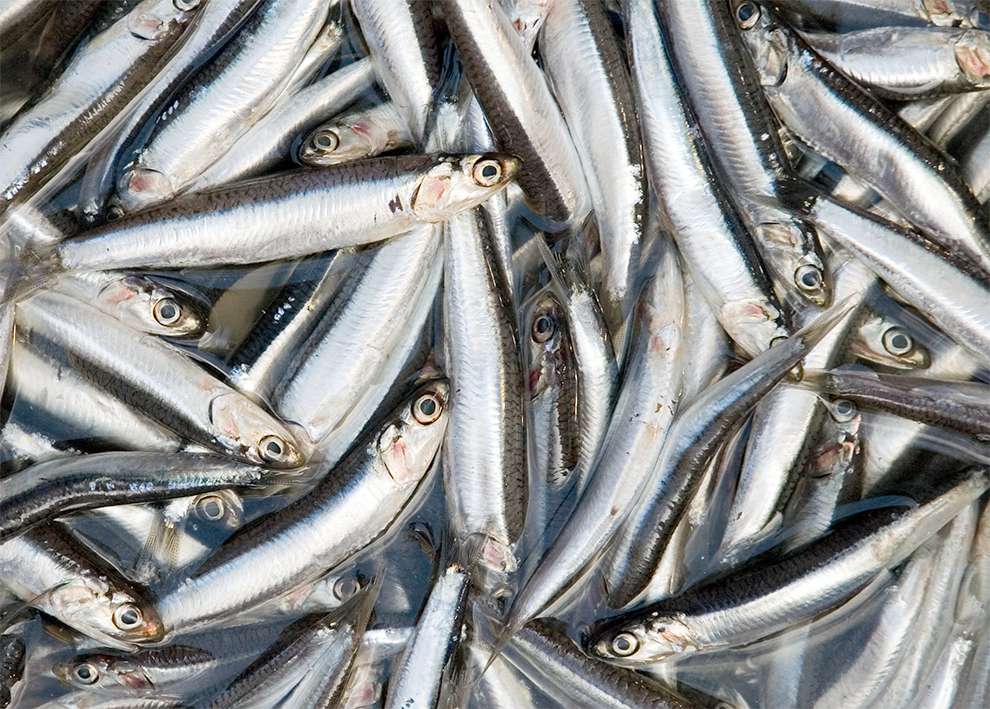
 Freshly-caught anchovies.
Welcome to the summary page for FabulousFusionFood's Cook's Guide entry for Anchovies along with all the recipes employing Anchovies presented on this site, with 107 recipes in total.
This is a continuation of an entire series of pages that will, I hope, allow my visitors to better navigate this site. As well as displaying recipes by name, country and region of origin I am now planning a whole series of pages where recipes can be located by meal type and main ingredient. This page gives a listing of all the Anchovies recipes added to this site.
These recipes, all contain Anchovies as a major wild food ingredient.
Anchovies are members of a small but common schooling saltwater fish (belonging to the family: Engraulidae) that tend to be found in temperate waters of the world's oceans. Anchovies are abundant in the Mediterranean, and are regularly caught on the coasts of Sicily, Italy, France and Spain. Anchovies vary in size and can be bought either fresh or cured. Fresh anchovies look and taste similar to sardines. There are 144 species in 17 genera, found in the Atlantic, Indian, and Pacific Oceans.
Seventeen genera in the family Eugraulidae are typically classed as anchovies, these being Amazonsprattus, Anchovia, Cetengraulis, Encrasicholina, Jurengraulis, Lycothrissa, Pseudosetipinna, Setipinna, Thryssa, Anchoa, Anchoviella, Coilia, Engraulis, Lycengraulis, Papuengraulis, Pterengraulis and Stolephorus. Engraulis is the type genus for anchovies and it includes all the commercially significant members, including the European anchovy, Engraulis encrasicolus
In terms of physical characteristics, anchovies are small, green fish with blue reflections due to a silver longitudinal stripe that runs from the base of the caudal fin. They range from 2cm to 40cm in adult length, and the body shape is variable with more slender fish in northern populations. The snout is blunt with tiny, sharp teeth in both jaws. The snout contains a unique rostral organ, believed to be sensory in nature, although its exact function is unknown. The mouth is larger than that of herrings and silversides, two fish anchovies closely resemble in other respects. The anchovy eats plankton and fry (recently-hatched fish).
Cured anchovies were originally left whole and packed in salt, but now they tend to be boned, cleaned and preserved in salt or oil and sold in tins or jars. The type packed in oil need to be drained before use. You may want to soak the salted variety in milk for a while to get rid of any excess saltiness. Supermarkets have a limited range but delis tend to sell a wider range. It is the maturation period for anchovies that are brined that gives them their characteristic strong flavour and saltiness. Fresh anchovies taste like any other small fish. In Roman times, anchovies were the base for the fermented fish sauce garum. Garum had a sufficiently long shelf life for long-distance commerce, and was produced in industrial quantities. Anchovies were also eaten raw as an aphrodisiac.
Cured anchovies are very salty and should effectively be used as a spice in that they add both saltiness and umami to a meal.
Anchovies are also pounded with vinegar, spices and oil to make the condiment, anchovy essence.
The alphabetical list of all Anchovies recipes on this site follows, (limited to 100 recipes per page). There are 107 recipes in total:
Page 1 of 2
| A forced cabbage Origin: British | Fish in Vine Leaves Origin: Greece | Patina de Apua Fricta (A Dish of Fried Anchovies) Origin: Roman |
| Abbacchio alla Cacciatora Origin: Italy | Fish Pie with Tench and Eels Origin: British | Pizza Quattro Stagioni (Four Seasons Pizza) Origin: Italy |
| Admiral Sauce Origin: Britain | Forcemeat Balls for Fish Soups Origin: British | Potato Salad with Herb Sauce Origin: Ireland |
| Anchovies Origin: British | Forcemeat for Baked Pike Origin: British | Potato Salad with Thyme, Watercress and Lovage Origin: Britain |
| Anchovy Butter Origin: British | Foufou Dessi (White Sauce for Fufu) Origin: Togo | Potted Anchovies Origin: British |
| Anchovy Butter or Paste Origin: Britain | Francatelli's Anchovy Toast Origin: British | Prince of Wales' Canapés Origin: British |
| Anchovy Paste Origin: Britain | Fried Anchovies Origin: British | Quin's Sauce Origin: British |
| Another Walnut Catsup Origin: Britain | Gentleman's Relish Origin: Britain | Radicchio Leaves Stuffed with Field Mushrooms Origin: Britain |
| Ansjovisfisk (Fish with Anchovies) Origin: Sweden | Gnocchi alla Puttanesca al Forno (Puttanesca Baked Gnocchi) Origin: Italy | Raviolis Soup Origin: British |
| Arjoli Dip Origin: Malta | Hamboro' Salad Origin: British | Reform Sauce Origin: England |
| Aunu Senebre Origin: Papua | Harvey's Sauce Origin: Britain | Roasted Kalettes with Basa Fillets and Anchovies Origin: Britain |
| Aunu Senebre Origin: Papua New Guinea | Home-made Anchovy Essence Origin: Britain | Rock Samphire Salsa Verde Origin: Britain |
| Barbel Origin: British | Impala Origin: eSwatini | Sabah Tempoyak (Durian Tempoyak) Origin: Malaysia |
| Beef Cecils Origin: British | Korean Style Dashi Origin: Korea | Salamongundy (To Make Salamongundy) Origin: British |
| Bouillabaisse with Rouille and Croutons Origin: France | Lobster Soup Origin: British | Salamongundy Another Way Origin: British |
| Bretby Sandwiches Origin: British | Magic Lamb Origin: Namibia | Salmagundi with Herby Rack of Lamb Origin: Britain |
| Bucatini con Rana Pescatrice (Bucatini with Monkfish) Origin: Italy | Microwave Spaghetti with Bacon and Pesto Sauce Origin: Britain | Salmon à la Tartare Origin: British |
| Budu Sauce (Fermented Anchovy Sauce) Origin: East Timor | Montpelier Butter Origin: France | Sauce for a boiled turkey Origin: British |
| Budu Sauce (Grilled Tamarind Fish) Origin: Malaysia | Mrs Beeton's Anchovy Sauce Origin: Britain | Sauce Verde Origin: Italy |
| Burrida Ligure (Genoese Fish Stew) Origin: Italy | Mrs Beeton's Fish Forcemeat Origin: British | Scotch Woodcock Origin: Scotland |
| Buttered Crab Origin: England | Naengi-guk (Shepherd's Purse Soup) Origin: Korea | Sfincione Palermitano (Palermo Pizza) Origin: Italy |
| Butterflied Lamb Shoulder with Salsa Verde Origin: Britain | Naruto (Japanese Fish Cakes) Origin: Japan | Slow-roasted Lamb Shanks with Tomatoes and Olives Origin: Australia |
| Caesar Salad Origin: Mexico | Nasi Lemak Origin: Malaysia | South African Potato Salad Origin: South Africa |
| Caponata Origin: Italy | Nasi Lemak Origin: Cocos Islands | Speedy Italian Pizzas Origin: Britain |
| Carne de Porco em Vinho D'alhos (Pork in Vinegar) Origin: Portugal | Nasi Lemak Origin: Singapore | Squid Salad with Chicory, Anchovies and Sun-dried Tomatoes Origin: Britain |
| Carne Porco Vinho D'alhos (Pork in Garlic and Wine) Origin: Portugal | Nasi Lemak Origin: Christmas Island | Steak Sauce Origin: American |
| Confiture de Poivrons (Confit of Peppers) Origin: Monaco | NjaNjaMoto (Smelt in Njangsa Sauce) Origin: Cameroon | Tapenade Monegasque (Monaco-style Tapenade) Origin: Monaco |
| Crayfish Soup Origin: British | Olives Origin: British | The Prince of Wales' Sauce Origin: Britain |
| Crispy Bay Bolete Caps Origin: Britain | Osso Bucco con L'Arancio (Osso Bucco with Orange) Origin: Italy | To boil a Capon or Hen with Oysters Origin: British |
| Dashi Keema Karē (Dashi Keema Curry) Origin: Japan | Pan Bagnat (Monaco-style Sandwiches) Origin: Monaco | To Dress a Hen, Mutton or Lamb the Indian Way Origin: England |
| Daube de chevreuil (Venison Daube) Origin: France | Pan-fried Sea Bass with Citrus-dressed Broccoli Origin: Fusion | To force a large fowl Origin: British |
| Daube de Provençale (Provençal Daube) Origin: France | Pasta with Mixed Wild Mushroom Sauce Origin: Britain | To Make Catchup to Keep Twenty Years Origin: British |
| Dhiafora Khorta sto Fourno (Mixed oven-baked Vegetables) Origin: Cyprus | Pastizzi ta' l-Incov (Anchovy Pastizzi) Origin: Malta | |
| Epicurean Butter Origin: British | Patina de Apua (A Dish of Anchovies) Origin: Roman |
Page 1 of 2