FabulousFusionFood's Spice Guide for Niger Seeds Home Page
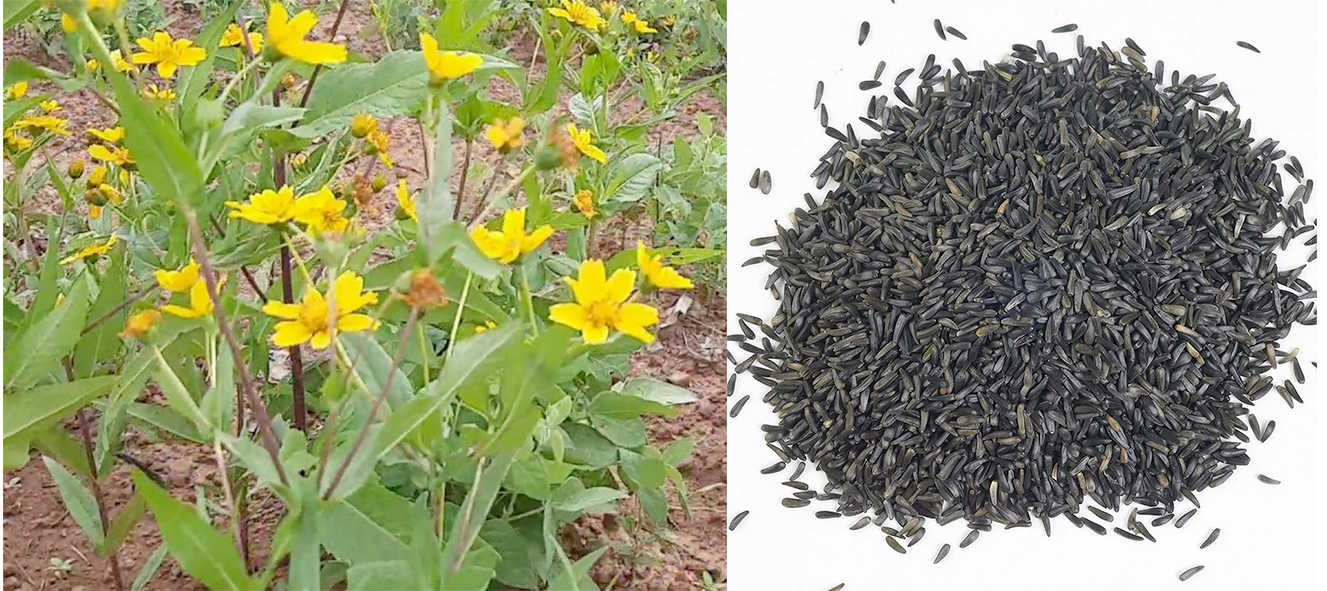 Niger plant,
Guizotia abyssinica
left and niger
seeds, the dried
fruit right.
Niger plant,
Guizotia abyssinica
left and niger
seeds, the dried
fruit right.
Welcome to the summary page for FabulousFusionFood's Spice guide to Niger Seeds along with all the Niger Seeds containing recipes presented on this site, with 3 recipes in total.
This is a continuation of an entire series of pages that will, I hope, allow my visitors to better navigate this site. As well as displaying recipes by name, country and region of origin I am now planning a whole series of pages where recipes can be located by meal type and main ingredient. This page gives a listing of all the spice-based recipes added to this site.
These recipes, all contain Niger Seeds as a major flavouring.
Niger seeds represents the seeds of Guizotia abyssinica (also known as noog/nug (Ethio-Semitic and Eritrean ኑግ nūg or ኒህዩግ nihyug); ramtil or ramtilla; niger or nyger seed (all pronounced /ˈnaɪdʒər/ NY-jər); inga seed; and blackseed) is an erect, stout, branched annual herb, grown for its edible oil and seed. Its cultivation originated in the Eritrean and Ethiopian highlands, and has spread to other parts of Ethiopia. It is a member of the Asteraceae family of flowering plants. Niger seeds resemble sunflower seeds in shape, but are smaller in size and black. It bears a fairly thick, adherent seed coat and can be stored for up to a year without deterioration. Niger seed contains proteins, oil and soluble sugars. Niger seeds are used as bird feed worldwide. Commercial niger seed is grown in Africa, India and other areas of southeast Asia. Noog is considered semi-domesticated as the plant is self-starile and requires bees to cross-pollinate.
Niger seeds, (also Nyger Seed, Nyjer Seed or noug) is a small black seed from the Guizotia flower Guizotia abyssinica, a pretty and dainty yellow bloom that is native to Africa. Its cultivation originated in the Eritrean and Ethiopian highlands, and has spread to other parts of Ethiopia, Mali and India. Niger seed yields about 30–35% of its weight in oil which is clear, slow-drying, and edible. Niger seeds are used for human consumption in the southern parts of India. In Karnataka, Andhra Pradesh and Maharashtra, niger seeds (called valisalu/valasulu in Telugu, uchellu/gurellu in Kannada, and karale in Marathi) are used to make a dry chutney, which is used as an accompaniment with breads such as chapati. They are also used as a spice in some curries, as here.
The flowers, leaves, seeds and roots are used as herbal medicines in India, Malaysia, etc. and in nag champa incense sticks. Nagkesar oil is extracted from the seeds. The seeds, known as 'surli nuts' are edible. They need to be well-cooked and contain up to 76% oil. When heated the seeds are highly aromatic, which is why they are included in some spice blends, particularly bottle masala. Niger seeds become very aromatic when heated, which is why they are valued in some cultures as a spice.
This is a continuation of an entire series of pages that will, I hope, allow my visitors to better navigate this site. As well as displaying recipes by name, country and region of origin I am now planning a whole series of pages where recipes can be located by meal type and main ingredient. This page gives a listing of all the spice-based recipes added to this site.
These recipes, all contain Niger Seeds as a major flavouring.
Niger seeds represents the seeds of Guizotia abyssinica (also known as noog/nug (Ethio-Semitic and Eritrean ኑግ nūg or ኒህዩግ nihyug); ramtil or ramtilla; niger or nyger seed (all pronounced /ˈnaɪdʒər/ NY-jər); inga seed; and blackseed) is an erect, stout, branched annual herb, grown for its edible oil and seed. Its cultivation originated in the Eritrean and Ethiopian highlands, and has spread to other parts of Ethiopia. It is a member of the Asteraceae family of flowering plants. Niger seeds resemble sunflower seeds in shape, but are smaller in size and black. It bears a fairly thick, adherent seed coat and can be stored for up to a year without deterioration. Niger seed contains proteins, oil and soluble sugars. Niger seeds are used as bird feed worldwide. Commercial niger seed is grown in Africa, India and other areas of southeast Asia. Noog is considered semi-domesticated as the plant is self-starile and requires bees to cross-pollinate.
Niger seeds, (also Nyger Seed, Nyjer Seed or noug) is a small black seed from the Guizotia flower Guizotia abyssinica, a pretty and dainty yellow bloom that is native to Africa. Its cultivation originated in the Eritrean and Ethiopian highlands, and has spread to other parts of Ethiopia, Mali and India. Niger seed yields about 30–35% of its weight in oil which is clear, slow-drying, and edible. Niger seeds are used for human consumption in the southern parts of India. In Karnataka, Andhra Pradesh and Maharashtra, niger seeds (called valisalu/valasulu in Telugu, uchellu/gurellu in Kannada, and karale in Marathi) are used to make a dry chutney, which is used as an accompaniment with breads such as chapati. They are also used as a spice in some curries, as here.
The flowers, leaves, seeds and roots are used as herbal medicines in India, Malaysia, etc. and in nag champa incense sticks. Nagkesar oil is extracted from the seeds. The seeds, known as 'surli nuts' are edible. They need to be well-cooked and contain up to 76% oil. When heated the seeds are highly aromatic, which is why they are included in some spice blends, particularly bottle masala. Niger seeds become very aromatic when heated, which is why they are valued in some cultures as a spice.
The alphabetical list of all Niger Seeds recipes on this site follows, (limited to 100 recipes per page). There are 3 recipes in total:
Page 1 of 1
| Goda Masala Origin: India | Masale Baath (Maharashtrian Spicy Vegetable Rice) Origin: India | Matki Chi Rassa Bhaji (Maharashtrian Style Moth Beans) Origin: India |
Page 1 of 1