FabulousFusionFood's Spice Guide for Nagkesar Home Page
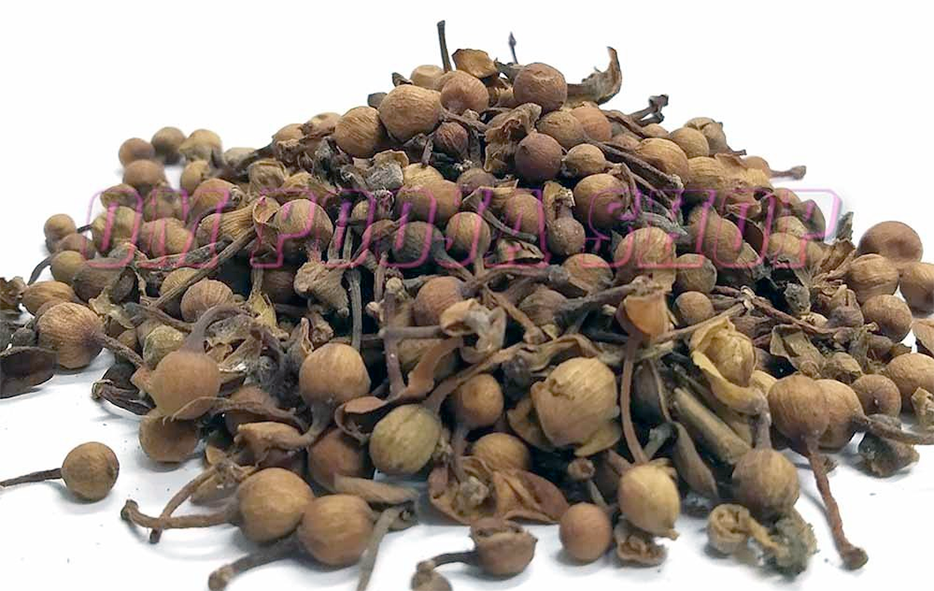 Mugwort seeds, the
dried fruit of
Artemisia
vulgaris.
Mugwort seeds, the
dried fruit of
Artemisia
vulgaris.
Welcome to the summary page for FabulousFusionFood's Spice guide to Nagkesar along with all the Nagkesar containing recipes presented on this site, with 8 recipes in total.
This is a continuation of an entire series of pages that will, I hope, allow my visitors to better navigate this site. As well as displaying recipes by name, country and region of origin I am now planning a whole series of pages where recipes can be located by meal type and main ingredient. This page gives a listing of all the spice-based recipes added to this site.
These recipes, all contain Nagkesar as a major flavouring.
Nagkesar represents the seeds of Mesua ferrea (also known as Ceylon ironwood, cobra saffron, Indian rose chestnut, ironwood tree, mesua, poached egg tree) is a species in the family Calophyllaceae native to the Indomalayan realm. This slow-growing tree is named after the heaviness and hardness of its timber. It is widely cultivated as an ornamental for its graceful shape, greyish-green foliage with a striking pink to red flush of drooping young leaves, and its large, fragrant white flowers. It is the national tree of Sri Lanka, as well as the state tree of Mizoram and state flower of Tripura in India. The tree is native to East Asia - India, Bhutan, Myanmar, Thailand, Malaysia, Vietnam, Indonesia and the Philippines.
The tree can grow over 30m tall, often buttressed at the base with a trunk up to 2m in diameter. The bark of younger trees has an ash grey colour with flaky peelings, while of old trees the bark is dark ash-grey with a red-brown blaze. It has simple, opposite, narrow, oblong to lanceolate, blue-grey to dark green leaves that are 7–15cm long and 1.5–3.5cm wide, with a whitish underside. The emerging young leaves are red to yellowish pink and drooping. The branches are slender, terete and glabrous. The bisexual flowers are 4–7.5cm in diameter, with four white petals and a centre of numerous orange yellow stamens. The fruit is an ovoid to globose capsule with one to two seeds.
The flowers, leaves, seeds and roots are used as herbal medicines in India, Malaysia, etc. and in nag champa incense sticks. Nagkesar oil is extracted from the seeds. The seeds, known as 'surli nuts' are edible. They need to be well-cooked and contain up to 76% oil. When heated the seeds are highly aromatic, which is why they are included in some spice blends, particularly bottle masala.
This is a continuation of an entire series of pages that will, I hope, allow my visitors to better navigate this site. As well as displaying recipes by name, country and region of origin I am now planning a whole series of pages where recipes can be located by meal type and main ingredient. This page gives a listing of all the spice-based recipes added to this site.
These recipes, all contain Nagkesar as a major flavouring.
Nagkesar represents the seeds of Mesua ferrea (also known as Ceylon ironwood, cobra saffron, Indian rose chestnut, ironwood tree, mesua, poached egg tree) is a species in the family Calophyllaceae native to the Indomalayan realm. This slow-growing tree is named after the heaviness and hardness of its timber. It is widely cultivated as an ornamental for its graceful shape, greyish-green foliage with a striking pink to red flush of drooping young leaves, and its large, fragrant white flowers. It is the national tree of Sri Lanka, as well as the state tree of Mizoram and state flower of Tripura in India. The tree is native to East Asia - India, Bhutan, Myanmar, Thailand, Malaysia, Vietnam, Indonesia and the Philippines.
The tree can grow over 30m tall, often buttressed at the base with a trunk up to 2m in diameter. The bark of younger trees has an ash grey colour with flaky peelings, while of old trees the bark is dark ash-grey with a red-brown blaze. It has simple, opposite, narrow, oblong to lanceolate, blue-grey to dark green leaves that are 7–15cm long and 1.5–3.5cm wide, with a whitish underside. The emerging young leaves are red to yellowish pink and drooping. The branches are slender, terete and glabrous. The bisexual flowers are 4–7.5cm in diameter, with four white petals and a centre of numerous orange yellow stamens. The fruit is an ovoid to globose capsule with one to two seeds.
The flowers, leaves, seeds and roots are used as herbal medicines in India, Malaysia, etc. and in nag champa incense sticks. Nagkesar oil is extracted from the seeds. The seeds, known as 'surli nuts' are edible. They need to be well-cooked and contain up to 76% oil. When heated the seeds are highly aromatic, which is why they are included in some spice blends, particularly bottle masala.
The alphabetical list of all Nagkesar recipes on this site follows, (limited to 100 recipes per page). There are 8 recipes in total:
Page 1 of 1
| Bottle Masala Origin: India | Bottle Masala Meatball Curry Origin: India | Matki Chi Rassa Bhaji (Maharashtrian Style Moth Beans) Origin: India |
| Bottle Masala Chicken Curry Origin: India | Goda Masala Origin: India | Zavla (Dried Prawn Curry) Origin: India |
| Bottle Masala Chicken Curry Origin: Britain | Masale Baath (Maharashtrian Spicy Vegetable Rice) Origin: India |
Page 1 of 1