FabulousFusionFood's Spice Guide for Galingale Home Page
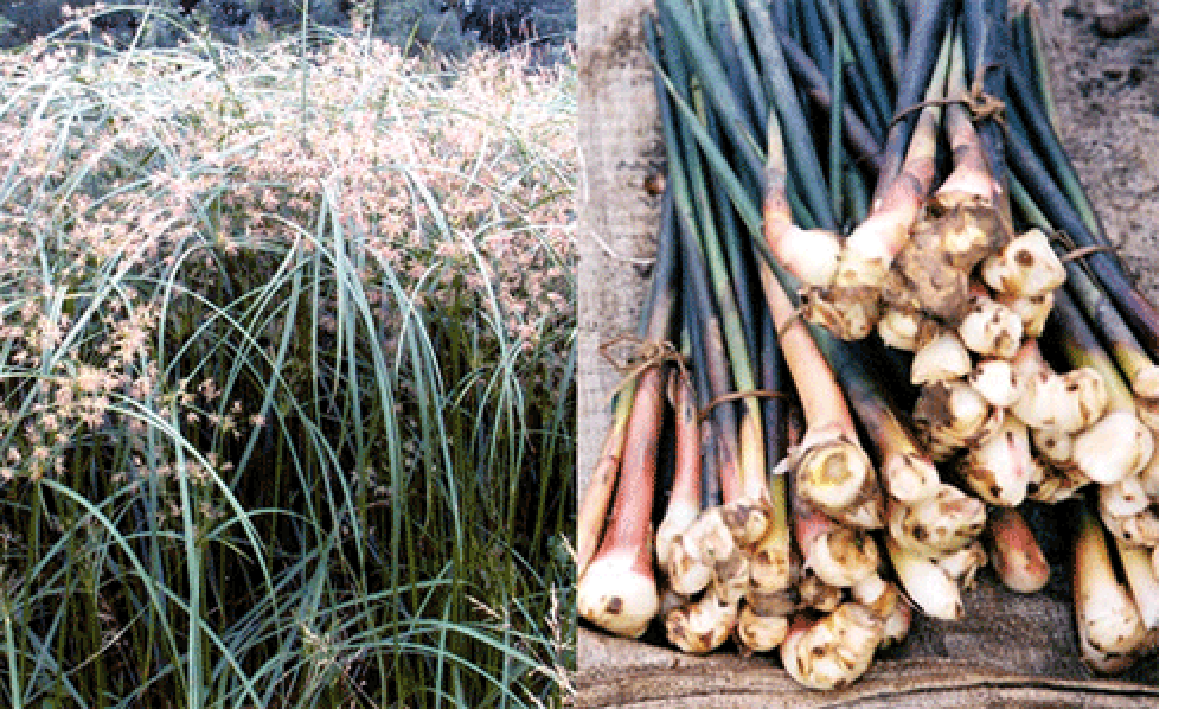 The wild (left) and
harvested (right)
galingale
Cyperus
longus plant.
The wild (left) and
harvested (right)
galingale
Cyperus
longus plant.
Welcome to the summary page for FabulousFusionFood's Spice guide to Galingale along with all the Galingale containing recipes presented on this site, with 31 recipes in total.
This is a continuation of an entire series of pages that will, I hope, allow my visitors to better navigate this site. As well as displaying recipes by name, country and region of origin I am now planning a whole series of pages where recipes can be located by meal type and main ingredient. This page gives a listing of all the spice-based recipes added to this site.
These recipes, all contain Galingale as a major flavouring.
Galingale, Cyperus longus (also known as Sweet Galingale) is a monocot perennial flowering plant and member of the Cyperaceae (sedge) family. Superficially, galingale resembles a grass or rush that prefers wet ground and is closely related to the Egyptian papyrus. It is native to Britain and the Mediterranean and grows by water and in marshy places. It quickly grows to 2m in height and has large, attractive inflorescences.
The tuberous roots are edible and have an aromatic violet-like tone. They were a critical ingredient of many Medieval recipes and were used in dishes where today we would use ginger or galangal. Sweet Galingale is one of those plants that has fallen out of culinary use in Europe; though it and its close relatives are still used in Asia. This plant is common in the wild in the UK. However, if you have a damp corner in your garden then this is a plant that's well worth growing (it has rather beautiful flowers) and you can add the tuberous roots to your repertoire of spices. Indeed, it is an essential addition to your store cupboard if you want to create authentic Medieval recipes and the roots can be dried or pickled for storage.
This is a continuation of an entire series of pages that will, I hope, allow my visitors to better navigate this site. As well as displaying recipes by name, country and region of origin I am now planning a whole series of pages where recipes can be located by meal type and main ingredient. This page gives a listing of all the spice-based recipes added to this site.
These recipes, all contain Galingale as a major flavouring.
Galingale, Cyperus longus (also known as Sweet Galingale) is a monocot perennial flowering plant and member of the Cyperaceae (sedge) family. Superficially, galingale resembles a grass or rush that prefers wet ground and is closely related to the Egyptian papyrus. It is native to Britain and the Mediterranean and grows by water and in marshy places. It quickly grows to 2m in height and has large, attractive inflorescences.
The tuberous roots are edible and have an aromatic violet-like tone. They were a critical ingredient of many Medieval recipes and were used in dishes where today we would use ginger or galangal. Sweet Galingale is one of those plants that has fallen out of culinary use in Europe; though it and its close relatives are still used in Asia. This plant is common in the wild in the UK. However, if you have a damp corner in your garden then this is a plant that's well worth growing (it has rather beautiful flowers) and you can add the tuberous roots to your repertoire of spices. Indeed, it is an essential addition to your store cupboard if you want to create authentic Medieval recipes and the roots can be dried or pickled for storage.
The alphabetical list of all Galingale recipes on this site follows, (limited to 100 recipes per page). There are 31 recipes in total:
Page 1 of 1
| A Potage of Roysons (A Pudding of Raisins) Origin: England | Galyntine Origin: England | Rapey (Fig Stew) Origin: England |
| Aliter Assaturas (Another Sauce for Roast Meat) Origin: Roman | Gode Powder Origin: England | Sambal Kacang (Indonesian Peanut Sauce) Origin: Indonesia |
| Aliter assaturas (Roast Meats, Another Way) Origin: Roman | Hakka Salt-baked Chicken Origin: China | Sauce Madame Origin: England |
| Balloc Broth Origin: England | Hypocras Origin: France | Sauge (Sage Sauce) Origin: England |
| Chyryse Origin: England | Laumproys in Galyntyne (Lampreys in Galingale Sauce) Origin: England | Sawse Madame Origin: Britain |
| Clarrey (Claret) Origin: England | Mortrews Blank (Meat in White Sauce) Origin: England | Sowpes of Galentyne (Sops of Galingale) Origin: England |
| Coconut Caramel Fudge with Wild Flour Origin: Britain | Ofellas Apicianas (Starters, Apician Style) Origin: Roman | Stone Age Venison and Bulrush Stew Origin: Ancient |
| Comadore (Fruit Pie Delicacies) Origin: England | Oleum Liburnicum Sic Facies (Liburnian Oil is Made Thus) Origin: Roman | Syrip for a Capon or Faysant (Sauce for Capon or Pheasant) Origin: England |
| Crustardes of Flessh Origin: England | Peeres in Confyt (Pears in Confit) Origin: England | Vyne Grace Origin: England |
| Flaumpens Origin: England | Pokerounce Origin: England | |
| Galintine (Galantyne) Origin: England |
Page 1 of 1