FabulousFusionFood's Spice Guide for Galangal Home Page
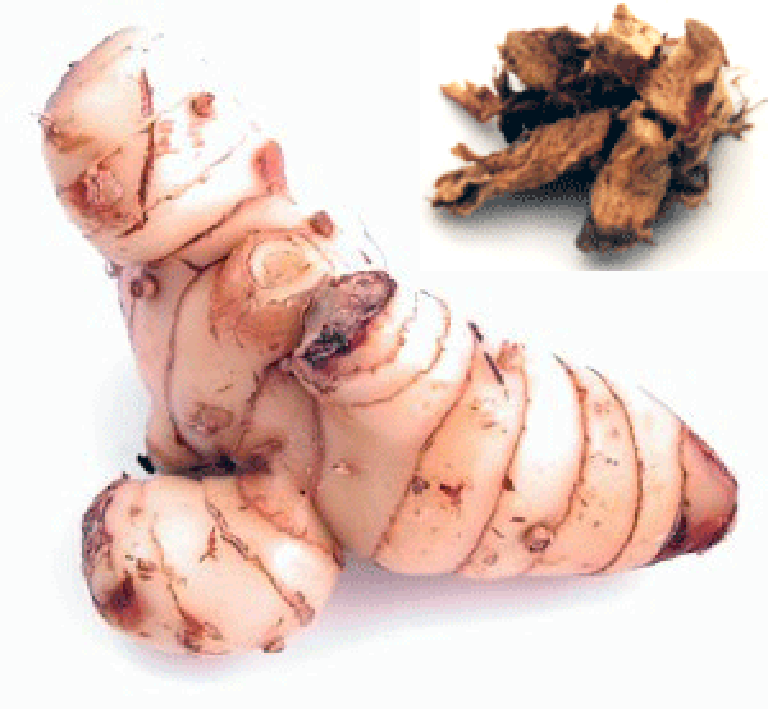 The fresh and dried
(inset) root of
galangal Alpinia
galanga.
The fresh and dried
(inset) root of
galangal Alpinia
galanga.
Welcome to the summary page for FabulousFusionFood's Spice guide to Galangal along with all the Galangal containing recipes presented on this site, with 97 recipes in total.
This is a continuation of an entire series of pages that will, I hope, allow my visitors to better navigate this site. As well as displaying recipes by name, country and region of origin I am now planning a whole series of pages where recipes can be located by meal type and main ingredient. This page gives a listing of all the spice-based recipes added to this site.
These recipes, all contain Galangal as a major flavouring.
As a spice, Galangal (also known as blue ginger, galingale, galanga or Thai ginger) represents the rhizome of Alpinia galanga or greater galangal; though, confusingly the name cal also appply to one of three other plants all from the family Zingiberaceae (the Ginger family): Alpinia officinarum or lesser galangal; Kaempferia galanga, also called lesser galangal or sand ginger; Boesenbergia pandurata, also called Chinese ginger or fingerroot. In Europe galangal (obtained as a dried powder from the East) was a major ingredient in Medieval foods but subsequently fell into disuse (however, it is also often confused with galingale, the root of Cyperus longus, which was also a common Medieval spice.
Though galangal resembles ginger in appearance (it is actually paler and has pale blue rings). In it's raw form, it has a soapy, earthy aroma and a pine-like flavour with a faint hint of citrus. Though the raw form of galangal is becoming available it is easier to attain in powdered or dried form (see the inset image). These days galangal is most widely known from Thai cuisine where it is an essential ingredient in many recipes.
In terms of flavour, galangal has a warm, sweet and spicy flavour, with fresh galangal possessing a pine-like fragrance; dried galanga is more spicy and sweet–aromatic, almost like cinnamon. The rhizome contains up to 1.5% essential oil (1,8 cineol, α-pinene, eugenol, camphor, methyl cinnamate and sesquiterpenes). In dried galanga, the essential oil has quantitatively different composition than in fresh one. Whereas α-pinene, 1,8-cineol, α-bergamotene, trans-β-farnesene and β-bisabolene seem to contribute to the taste of fresh galanga equally, the dried rhizome shows lesser variety in aroma components (cineol and farnesene, mostly). The resin causing the pungent taste (formerly called galangol or alpinol) consists of several diarylheptanoids and phenylalkanones (the latter are also found in ginger and grains of paradise).
This is a very popular spice in South East Asia (particularly Thailand) but is also used in Malaysian, Indonesian, Cambodian, Vietnamese and Southern Chinese cuisines. In these cuisines, fresh galangal is invariably used (dried or powdered galangal only being substituted when the fresh is not available).
Galangal is native to South East Asia, probably southern China; it is now cultivated in Indochina, Thailand, Malaysia and Indonesia.
This is a continuation of an entire series of pages that will, I hope, allow my visitors to better navigate this site. As well as displaying recipes by name, country and region of origin I am now planning a whole series of pages where recipes can be located by meal type and main ingredient. This page gives a listing of all the spice-based recipes added to this site.
These recipes, all contain Galangal as a major flavouring.
As a spice, Galangal (also known as blue ginger, galingale, galanga or Thai ginger) represents the rhizome of Alpinia galanga or greater galangal; though, confusingly the name cal also appply to one of three other plants all from the family Zingiberaceae (the Ginger family): Alpinia officinarum or lesser galangal; Kaempferia galanga, also called lesser galangal or sand ginger; Boesenbergia pandurata, also called Chinese ginger or fingerroot. In Europe galangal (obtained as a dried powder from the East) was a major ingredient in Medieval foods but subsequently fell into disuse (however, it is also often confused with galingale, the root of Cyperus longus, which was also a common Medieval spice.
Though galangal resembles ginger in appearance (it is actually paler and has pale blue rings). In it's raw form, it has a soapy, earthy aroma and a pine-like flavour with a faint hint of citrus. Though the raw form of galangal is becoming available it is easier to attain in powdered or dried form (see the inset image). These days galangal is most widely known from Thai cuisine where it is an essential ingredient in many recipes.
In terms of flavour, galangal has a warm, sweet and spicy flavour, with fresh galangal possessing a pine-like fragrance; dried galanga is more spicy and sweet–aromatic, almost like cinnamon. The rhizome contains up to 1.5% essential oil (1,8 cineol, α-pinene, eugenol, camphor, methyl cinnamate and sesquiterpenes). In dried galanga, the essential oil has quantitatively different composition than in fresh one. Whereas α-pinene, 1,8-cineol, α-bergamotene, trans-β-farnesene and β-bisabolene seem to contribute to the taste of fresh galanga equally, the dried rhizome shows lesser variety in aroma components (cineol and farnesene, mostly). The resin causing the pungent taste (formerly called galangol or alpinol) consists of several diarylheptanoids and phenylalkanones (the latter are also found in ginger and grains of paradise).
This is a very popular spice in South East Asia (particularly Thailand) but is also used in Malaysian, Indonesian, Cambodian, Vietnamese and Southern Chinese cuisines. In these cuisines, fresh galangal is invariably used (dried or powdered galangal only being substituted when the fresh is not available).
Galangal is native to South East Asia, probably southern China; it is now cultivated in Indochina, Thailand, Malaysia and Indonesia.
The alphabetical list of all Galangal recipes on this site follows, (limited to 100 recipes per page). There are 97 recipes in total:
Page 1 of 1
| Ayam Bumbu Rujak (Chicken with Rujak Gravy) Origin: Indonesia | Laksa Paste Origin: Malaysia | Slow Cooker Duck and Potato Massaman Curry Origin: Britain |
| Ayam Goreng (Malaysian Fried Chicken) Origin: Malaysia | Laksa Paste II Origin: Malaysia | Slow-cooked Ox Cheek Rendang Origin: Singapore |
| Brewet of Almayn (Bruet of Almonds) Origin: England | Lemongrass Curry Origin: Cambodia | Somlah Machou Khmer (Sour Soup with Tomato and Lotus Roots) Origin: Cambodia |
| Bumbu Kuning (Base Indonesian Yellow Spice Paste) Origin: Indonesia | Malaysian Fish Curry Powder Origin: Malaysia | Somlar Kari Saek Mouan (Chicken Red Curry) Origin: Cambodia |
| Burmese Curry Paste Origin: Myanmar | Malaysian Goat Rendang Origin: Malaysia | Somlar Mochu Sachko (Sour Beef Stew) Origin: Cambodia |
| Christmas Island Crab Rendang Origin: Christmas Island | Malaysian Kapitan Chicken Origin: Malaysia | Sos Nasi Trafasie (Suriname Stir-fry Sauce) Origin: Suriname |
| Chu Chee Curry Paste Origin: Thailand | Malaysian Laksa Origin: Malaysia | Sousi Pa (Fish with Coconut Cream) Origin: Laos |
| Coconut Curry Salmon Origin: Fusion | Malaysian Lamb Rendang Origin: Malaysia | Surinamese Nasi Goreng Origin: Suriname |
| Cocos Islands Ayam Goreng (Malaysian-style Fried Chicken) Origin: Cocos Islands | Malaysian Peanut Sauce Origin: Malaysia | Thai Chilli Ice Cream Origin: Fusion |
| Cocos Islands Turmeric Rice Origin: Cocos Islands | Massaman Curry Paste Origin: Thailand | Thai Chilli Sorbet Origin: Fusion |
| Curry de Lotte Bretonne (Breton Monkfish Curry) Origin: France | Nam Ya Curry Paste Origin: Thailand | Thai Coconut and Rainbow-Pepper Chicken Soup Origin: Thailand |
| Curry Mouan (Chicken Curry) Origin: Cambodia | Nila Bumbu Acar (Sour Spicy Carp) Origin: Indonesia | Thai Green Curry of Prawn and Fish Origin: Thailand |
| Curry Trey Ruah (Curried Snapper) Origin: Cambodia | Nom Banh Chok Origin: Cambodia | Thai Green Curry Paste Origin: Thailand |
| Daging Bumbu Bali Origin: Indonesia | Noodle Curry Paste Origin: Laos | Thai Green Curry Paste Origin: Thailand |
| Fragrant Coconut Rice Origin: Thailand | Num Pa-chok Tirk Ka-chuii (Khmer Noodle Soup with Fingerroot) Origin: Cambodia | Thai Green Curry Paste II Origin: Thailand |
| Gaeng Ki Lek (Northern Thai Pork and Ki Lek Curry with Fingerroot) Origin: Thailand | Nyonya Curry Paste Origin: Singapore | Thai Hake Bites Origin: South Africa |
| Gaeng Ki Lek (Northern Thai Pork and Ki Lek Curry with Fingerroot) Origin: Thailand | Ofellas Apicianas (Starters, Apician Style) Origin: Roman | Thai Mango Fish Curry Origin: Thailand |
| Gaeng Pa (Jungle Curry Paste) Origin: Thailand | Oleum Liburnicum Sic Facies (Liburnian Oil is Made Thus) Origin: Roman | Thai Pork Curry in the Burmese Style Origin: Myanmar |
| Ginger, Chicken and Coconut Soup Origin: Fusion | Opor Ayam (Java Chicken Curry) Origin: Indonesia | Thai Red Curry Paste Origin: Thailand |
| Guai Daun Singlong Tumbuk (Grilled Fish with Greens) Origin: Sumatra | Opor Ayam Jawa (Javanese Coconut Curry Chicke) Origin: Indonesia | Thai Shrimp Soup Origin: Thailand |
| Gulai Kambing (Sumatran Goat Curry) Origin: Martinique | Otak-otak (Spicy Grilled Nyonya Fish Cakes) Origin: Malaysia | Thai Yellow Curry Paste Origin: Thailand |
| Indonesian Black Squid Curry Origin: Indonesia | Panang Curry Paste Origin: Thailand | Tharoi Thongba (Water Snail Curry) Origin: India |
| Java Chicken Origin: Fusion | Papeda Kuah Kuning (Papuan Sago with Turmeric Fish Soup) Origin: Papua | Tom Yam Goong 2 Origin: Thailand |
| Kaeng Khiao Wan (Thai Green Curry) Origin: Thailand | Penang-style Nyonya Fish Curry Origin: Malaysia | Tom Yum Gai (Hot and Sour Chicken Soup) Origin: Thailand |
| Kaeng Phet Pet Yang (Thai Red Roast Duck Curry) Origin: Thailand | Prik Gaeng Panang (Panang Red Curry Paste) Origin: Thailand | Tom Yum Het Mangsawirat (Mushroom and Lemongrass Soup) Origin: Thailand |
| Kare Ayam Jawa (Javanese Chicken Curry) Origin: Indonesia | Pur Fayte Ypocras (To Make Hippocras) Origin: England | Tom Yum Pla (Hot and Sour Fish Soup) Origin: Thailand |
| Kari Ikan (Fish Curry) Origin: Malaysia | Ras el hanout Origin: North Africa | Udang Masak Lemak Nenas (Pineapple Prawn Curry) Origin: Malaysia |
| Kari Ikan (Malaysian Fish Curry) Origin: Malaysia | Rendang Daging (Malaysian Beef Rendang) Origin: Malaysia | Urap Sayur (Blanched Vegetable Salad with Spiced Coconut Topping) Origin: Indonesia |
| Khao Pune (Chicken Curry Noodles) Origin: Laos | Resalsike (Royal Fruit Stew) Origin: England | Vermouth di Torino (Turin Vermouth) Origin: Italy |
| Khnom Jin Namya (Catfish Curry over Noodles) Origin: Thailand | Sauce Madame Origin: England | West Sumatran Fish Curry Origin: Sumatra |
| Kroeung Samlor (Khmer Yellow Kroeung) Origin: Cambodia | Scallop and Prawn Chu Chee Origin: Thailand | White Curry Origin: Fusion |
| Laj Ntses (Fish Larb) Origin: Laos | Shi San Xiang Fen (Thirteen Spice Powder) Origin: China | |
| Laksa Paste Origin: Singapore |
Page 1 of 1