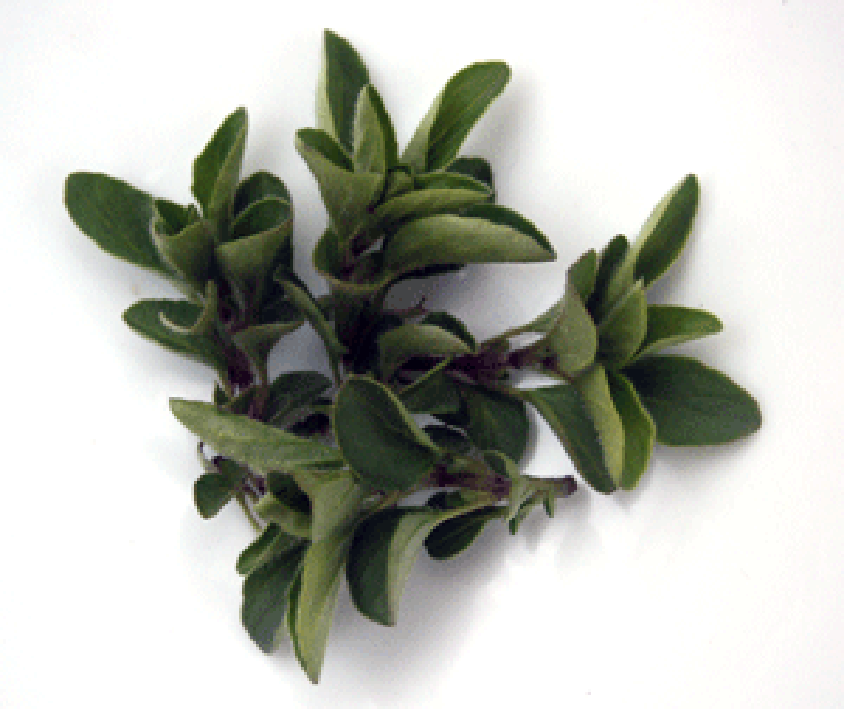
 Sprigs of marjoram
Origanum
majorana.
Sprigs of marjoram
Origanum
majorana.
Welcome to the summary page for FabulousFusionFood's Herb guide to Marjoram along with all the Marjoram containing recipes presented on this site, with 79 recipes in total.
This is a continuation of an entire series of pages that will, I hope, allow my visitors to better navigate this site. As well as displaying recipes by name, country and region of origin I am now planning a whole series of pages where recipes can be located by meal type and main ingredient. This page gives information about Marjoram and a listing of all the Marjoram-based recipes added to this site.
These recipes, all contain Marjoram as a major herb flavouring.
Marjoram, Origanum majorana (also known as Sweet Marjoram or Knotted Marjoram), is a perennial herb that's member of the Lamiaceae (mint) family. It has a low creeping nature and makes an excellent undershrub and bears aromatic leaves with sweet pine and citrus flavours. Sometimes known as Sweet Marjoram, Knotted Marjoram or Majorana hortensis the plant's name derives from the Medieval Latin majorana via the Old French majorane.
The leaves can be used either fresh or dry and marjoram is an essential ingredient in herb combinations such as French Herbes de Prevence and Middle Eastern Za'atar. It is related to Oregano (see below) but they are distinct species.
The content of aromatic oil in the leaves depends on the season but typically ranges from 0.75% to 3.5%. The main aroma component is a bicyclic monoterpene alcohol, cis-sabinene hydrate (max. 40%); furthermore, α-terpinene, 4-terpineol, α-terpineol, terpinenyl-4-acetate and 1,8-cineol are found in significant amounts. Interestingly, though marjoram is closely related to oregano, the phenolic compounds that are characteristic of oregano's flavour and taste are entirely absent in marjoram.
Marjoram makes a wonderful sweet addition to pasta sauces and can be mixed with other herbs for stuffing fish or chicken breasts.
The recipes given below contain marjoram as an important or dominant component. However, you can also access all the recipes on this site that contain marjoram as an ingredient.
This is a continuation of an entire series of pages that will, I hope, allow my visitors to better navigate this site. As well as displaying recipes by name, country and region of origin I am now planning a whole series of pages where recipes can be located by meal type and main ingredient. This page gives information about Marjoram and a listing of all the Marjoram-based recipes added to this site.
These recipes, all contain Marjoram as a major herb flavouring.
Marjoram, Origanum majorana (also known as Sweet Marjoram or Knotted Marjoram), is a perennial herb that's member of the Lamiaceae (mint) family. It has a low creeping nature and makes an excellent undershrub and bears aromatic leaves with sweet pine and citrus flavours. Sometimes known as Sweet Marjoram, Knotted Marjoram or Majorana hortensis the plant's name derives from the Medieval Latin majorana via the Old French majorane.
The leaves can be used either fresh or dry and marjoram is an essential ingredient in herb combinations such as French Herbes de Prevence and Middle Eastern Za'atar. It is related to Oregano (see below) but they are distinct species.
The content of aromatic oil in the leaves depends on the season but typically ranges from 0.75% to 3.5%. The main aroma component is a bicyclic monoterpene alcohol, cis-sabinene hydrate (max. 40%); furthermore, α-terpinene, 4-terpineol, α-terpineol, terpinenyl-4-acetate and 1,8-cineol are found in significant amounts. Interestingly, though marjoram is closely related to oregano, the phenolic compounds that are characteristic of oregano's flavour and taste are entirely absent in marjoram.
Marjoram makes a wonderful sweet addition to pasta sauces and can be mixed with other herbs for stuffing fish or chicken breasts.
The recipes given below contain marjoram as an important or dominant component. However, you can also access all the recipes on this site that contain marjoram as an ingredient.
The alphabetical list of all Marjoram recipes on this site follows, (limited to 100 recipes per page). There are 79 recipes in total:
Page 1 of 1
| Aljota (Fish Soup) Origin: Malta | Honey Mushroom Stuffing Origin: American | Rholiau Lleden gyda Saws Madarch Hufennog (Flatfish Rolls with Creamy Mushroom Sauce) Origin: Welsh |
| Amia (Roman Fish in Vine Leaves) Origin: Roman | Idrijski žlikrofi (Slovenian Potato-filled Dumplings) Origin: Slovenia | Rieslingspaschtèit (Riesling Wine and Meat Pie) Origin: Luxembourg |
| Amiæ (Barbecued Fish) Origin: Roman | Insalata di Riso (Rice Salad) Origin: Italy | Roast Lamb Offal Sausages Origin: Albania |
| Antipasto Chef's Salad Origin: Britain | Italian Herbs Origin: American | Saffron Milk Cap Pâté Origin: Britain |
| Aspic Jelly Origin: Britain | Italian Seasoning Origin: Italy | Salmagundi with Herby Rack of Lamb Origin: Britain |
| Bacon Koftas Origin: Britain | Kamba i Bob Jahnija (Bell Pepper and Bean Stew) Origin: Bulgaria | Salutiamoci (Courgette and Onion Lacto-fermented Pickles with Dulse) Origin: Italy |
| Bajan Curry Powder Origin: Barbados | Khmeli-Suneli Origin: Georgia | Sao Tomean Calulu Origin: Sao Tome |
| Bajan Green Seasoning Origin: Barbados | Kuba (Mushroom and Barley Casserole) Origin: Czech | Sawse Madame Origin: Britain |
| Barszcz Wigilijny (Polish Christmas Eve Borscht) Origin: Poland | Majoranas Tokany (Beef with Marjoram) Origin: Hungary | Seasoning Pudding Origin: Manx |
| Bayrisches Bratensäuglingshwein (Bavarian Roast Suckling Pig) Origin: Germany | Marinara Pizza Origin: Italy | Skilpadjie (Afrikaans Faggots) Origin: South Africa |
| Bigilla (Broad Bean Dip) Origin: Malta | Marjoram Jelly Origin: Britain | Snyboontjies Bredie (Green Bean Bredie) Origin: South Africa |
| Bigos (Polish Hunter's Stew) Origin: Poland | Mexican Crockpot Chili Origin: American | South African Braai Chicken Spice Origin: South Africa |
| Bigos (Lithuanian Hunter's Stew) Origin: Lithuania | Mititei (Romanian Minced Meat Sausages) Origin: Romania | St Kitts Jerk Seasoning Origin: Saint Kitts |
| Cabbage Bredie Origin: South Africa | Mongolian Spice Origin: Mongolia | Tartes of Flesh (Meat Pie) Origin: England |
| Carlin Pease Pudding Origin: Britain | Montserratian Goat Water Origin: Montserrat | Tinga de Pollo (Chicken Tinga) Origin: Mexico |
| Chmeli-Suneli Origin: Kyrgyzstan | North-Africa Style Breast of Lamb Origin: Fusion | To make a Haggas Pudding. Origin: Britain |
| Cornish Cutting Pie Origin: England | Nuernberger Rostbratwuerste (Nuremberg Grilled Sausage) Origin: Germany | To Sowce a Pigge (Collar of Brawn) Origin: England |
| Cumberland Sausage Origin: England | Pasta Soup with Chicken Livers Origin: Britain | Tomato and Lettuce Soup Origin: Britain |
| Czech Liver Dumplings Origin: Czech | Pasta with Daylily Flower Buds and Mushrooms Origin: American | Turkey Rolls Origin: Britain |
| Doner Spice Mix Origin: Germany | Pease Pottage Origin: Britain | Ukrainian Sausage from Lviv Origin: Ukraine |
| Easter Tansy Origin: Britain | Peiouns y Stewed (Stewed Pigeons) Origin: England | Verde Sawse (Green Sauce) Origin: England |
| Frankfurter Sausage Origin: Germany | Pigeon Peas and Rice Origin: Barbados | White Fish with Fennel Origin: Britain |
| Fried Lamb's Kidneys with Guinness and Mushroom Sauce Origin: Ireland | Planked Trout Origin: American | Wild Marjoram Scones Origin: Britain |
| Frytour of Erebes (Herb Fritters) Origin: England | Poultry Seasoning Origin: American | Zuppa di Cipolle al Pecorino (Italian Onion and Pecorino Soup) Origin: Italy |
| Gonos (Fried Whitebait) Origin: Roman | Pudding and Souse Origin: Barbados | Žuvies kukuliai (Fish Dumplings) Origin: Lithuania |
| Goosegrass and Wild Greens Soup Origin: Britain | Pur Fayte Ypocras (To Make Hippocras) Origin: England | |
| Herbes de Provence Origin: France | Rainkohl und Grünkern-Suppe (Nipplewort and Green Spelt Soup) Origin: Germany |
Page 1 of 1