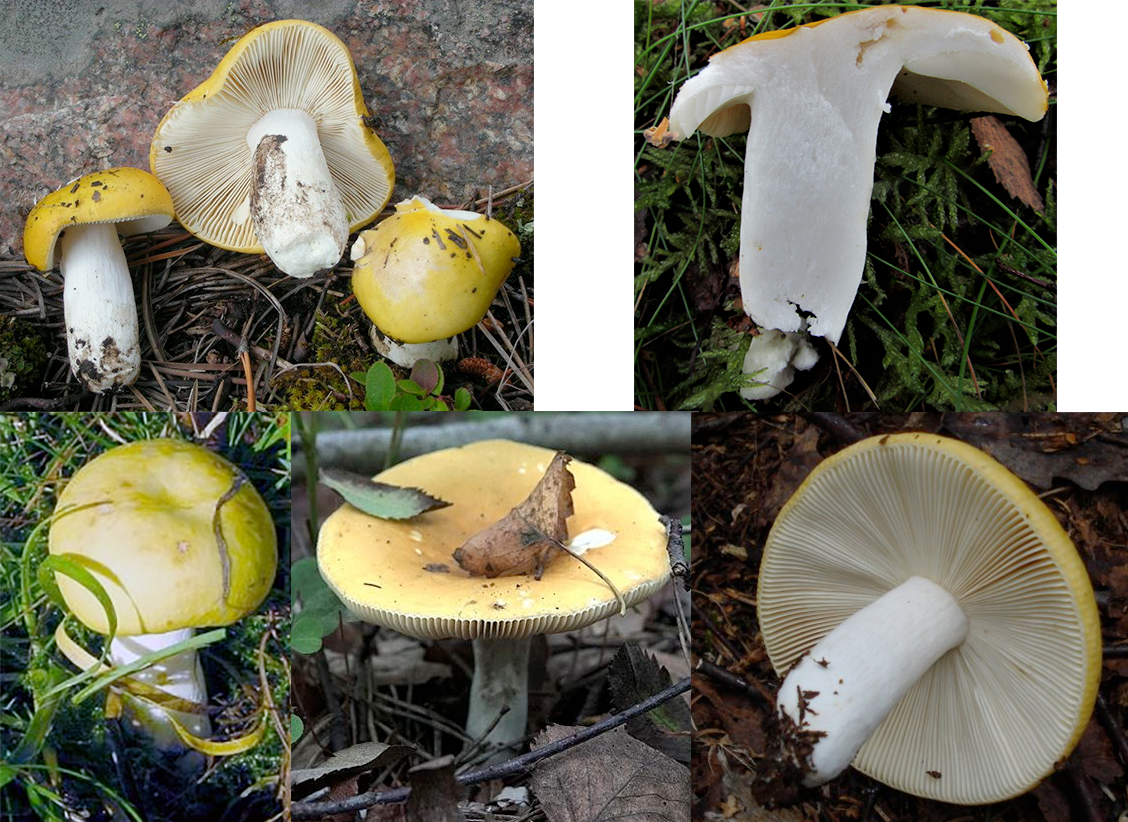
 The image, above, shows an various images of the Yellow Swamp
Brittlegill (Russula claroflava) mushrooms showing a
young closed cap example, a mature example with trumpet shaped
cap, three samples near a wall, one mushroom sliced in half and
two on their sides showing the stipes (stems) and gills..
| Common Name: Yellow Swamp Brittlegill |
| Scientific Name: Russula claroflava |
| Other Names: Yellow Russula, Yellow Swamp Russula, Tegyll Brau Melyn y Gors (CY) |
| Family: Russulaceae |
| Range: Native to Europe and North America. |
Physical Characteristics
 Russula claroflava is s a basidiomycete mushroom, with an egg yellow cap growing to 4–12cm in diameter and 5#x2013;8 cm tall. It appears in summer and autumn, usually with birch (Betula), or aspen (Populus), on heaths and moors, preferring damp places near ponds or lakes, often occurring in sphagnum.
|
| Edible Parts: Caps and Stipes |
 Spore Print: Ochre Spore Print: Ochre
|
 Cap: Flat or Convex Cap: Flat or Convex
|
 Hymenium: Free Hymenium: Free
|
 Pores: Gills on hymenium Pores: Gills on hymenium
|
 Stipe: Bare Stipe: Bare
|
 Edibility Rating: 4 Edibility Rating: 4 
|
 Known Hazards: None known Known Hazards: None known
|
Monthly Availability: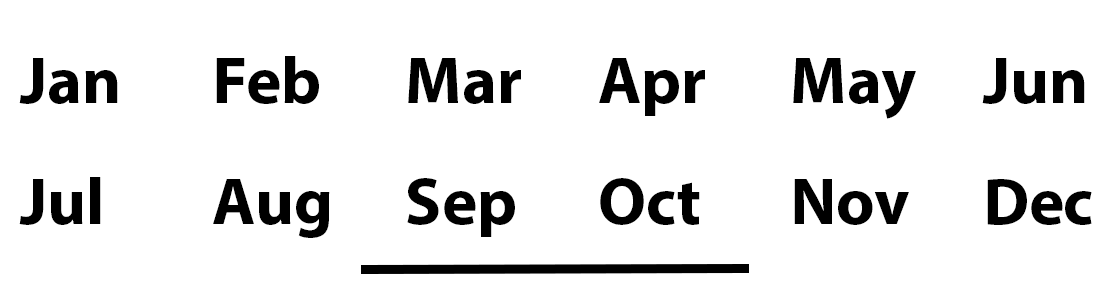
|
Welcome to the summary page for FabulousFusionFood's Wild Food guide to Yellow Swamp Brittlegill along with all the Yellow Swamp Brittlegill containing recipes presented on this site, with 11 recipes in total.
These recipes, all contain Yellow Swamp Brittlegill as a major wild food ingredient.
Yellow Swamp Brittlegill, Russula claroflava (also known as Yellow Russula, Yellow Swamp Russula) is a choice edible species of basidomycete fungus and is a member of the Russulaceae (brittlegill) family of mushrooms with an ochre spore print. It is widespread in Europe and North America and grows in slightly acidic, but nutrient-rich soil. Like all Russulas, it is a mycorrhizal fungus. It is found most commonly in damp beech and aspen woodland.
The cap is 4–12cm in diameter, convex flattening out with a depression in the centre. Bright egg yellow and usually shiny. Sticky to the touch. The gills are white and attached to the stem. Crowded. Bruising grey. Brittle to the touch. The stem is white, 5#x2013;8 long and not tapering with no skirt. Should snap like a piece of chalk. The flesh is white, bruising to grey.
This is an excellent eating mushroom and is amonges the nuttiest of the brittlegills with a slight heat to it.
Possible confusion: The Ochre Brittlegill (Russula ochroleuca), but this is edible, if a bit acrid, and has a duller yellow cap.
The Geranium Brittlegill (Russula fellea), is dirtier yellow with a smell of geraniums and is very hot when placed on the tongue.
For other edible mushrooms, see the guide to edible mushrooms
[2]. Huxley, A. The New RHS Dictionary of Gardening. 1999
[3]. Tanaka, T. Tanaka's Cyclopaedia of Edible Plants of the World.
[4]. Lim T.K. Edible Medicinal And Non-Medicinal Plants, Vols 1–12.
[5]. Thomas, G. S. Perennial Garden Plants, 2004
[6]. Milner, E. Trees of Britain and Ireland, 2011
[7]. Rose, F. & O'Reilly, C. The Wild Flower Key (Revised Edition) — How to identify wild plants, trees and shrubs in Britain and Ireland, 2006
[8]. Streeter, D. & Garrard, I. The Wild Flowers of the British Isles, 1983
[9]. Clapham, A.R.; Tutin, T.G. & Moore, D.M. Flora of the British Isles, 1987
[10]. Phillips, R. Mushrooms, 2006
[11]. Jordan, P. & Wheeler, S. The Complete Book of Mushrooms: An Illustrated Encyclopedia of Edible Mushrooms, 2011
[12]. Bunker, F. Seaweeds of Britain and Ireland, Second Edition, 2017
[13]. Facciola, S. Cornucopia II — A Source Book of Edible Plants, 1998
[14]. Hartford, R. Edible and Medicinal Wild Plants of Britain and Ireland: A Foraging and Photographic Identification Guide
(Note that the above book links are Amazon Affiliate links)
These recipes, all contain Yellow Swamp Brittlegill as a major wild food ingredient.
Yellow Swamp Brittlegill, Russula claroflava (also known as Yellow Russula, Yellow Swamp Russula) is a choice edible species of basidomycete fungus and is a member of the Russulaceae (brittlegill) family of mushrooms with an ochre spore print. It is widespread in Europe and North America and grows in slightly acidic, but nutrient-rich soil. Like all Russulas, it is a mycorrhizal fungus. It is found most commonly in damp beech and aspen woodland.
The cap is 4–12cm in diameter, convex flattening out with a depression in the centre. Bright egg yellow and usually shiny. Sticky to the touch. The gills are white and attached to the stem. Crowded. Bruising grey. Brittle to the touch. The stem is white, 5#x2013;8 long and not tapering with no skirt. Should snap like a piece of chalk. The flesh is white, bruising to grey.
This is an excellent eating mushroom and is amonges the nuttiest of the brittlegills with a slight heat to it.
Possible confusion: The Ochre Brittlegill (Russula ochroleuca), but this is edible, if a bit acrid, and has a duller yellow cap.
The Geranium Brittlegill (Russula fellea), is dirtier yellow with a smell of geraniums and is very hot when placed on the tongue.
For other edible mushrooms, see the guide to edible mushrooms
References:
[1]. David Evans Notes from field observations, tastings and cookery experiments.[2]. Huxley, A. The New RHS Dictionary of Gardening. 1999
[3]. Tanaka, T. Tanaka's Cyclopaedia of Edible Plants of the World.
[4]. Lim T.K. Edible Medicinal And Non-Medicinal Plants, Vols 1–12.
[5]. Thomas, G. S. Perennial Garden Plants, 2004
[6]. Milner, E. Trees of Britain and Ireland, 2011
[7]. Rose, F. & O'Reilly, C. The Wild Flower Key (Revised Edition) — How to identify wild plants, trees and shrubs in Britain and Ireland, 2006
[8]. Streeter, D. & Garrard, I. The Wild Flowers of the British Isles, 1983
[9]. Clapham, A.R.; Tutin, T.G. & Moore, D.M. Flora of the British Isles, 1987
[10]. Phillips, R. Mushrooms, 2006
[11]. Jordan, P. & Wheeler, S. The Complete Book of Mushrooms: An Illustrated Encyclopedia of Edible Mushrooms, 2011
[12]. Bunker, F. Seaweeds of Britain and Ireland, Second Edition, 2017
[13]. Facciola, S. Cornucopia II — A Source Book of Edible Plants, 1998
[14]. Hartford, R. Edible and Medicinal Wild Plants of Britain and Ireland: A Foraging and Photographic Identification Guide
(Note that the above book links are Amazon Affiliate links)
The alphabetical list of all Yellow Swamp Brittlegill recipes on this site follows, (limited to 100 recipes per page). There are 11 recipes in total:
Page 1 of 1
| Blodsoppsvampsoppa (Scarletina Bolete Mushroom Soup) Origin: Sweden | Saffron Milk Cap Pâté Origin: Britain | Wild Mushroom Omelette Origin: Britain |
| Brine-pickled Mushrooms with Herbs Origin: Britain | Sienimunaskas-kääryle (Wild Mushroom Omelette Roll) Origin: Finland | Wild Mushroom Soup Origin: Britain |
| Dried Mushrooms Origin: Britain | Torta di patate e Funghi selvatici (Wild Mushroom and Potato Cake) Origin: Italy | Wild Mushroom Stuffed Potato Cakes Origin: Britain |
| Fried Charcoal Burner Mushrooms Origin: Britain | Wild Mushroom Compote Origin: Britain |
Page 1 of 1