FabulousFusionFood's Veal-based Recipes 2nd Page
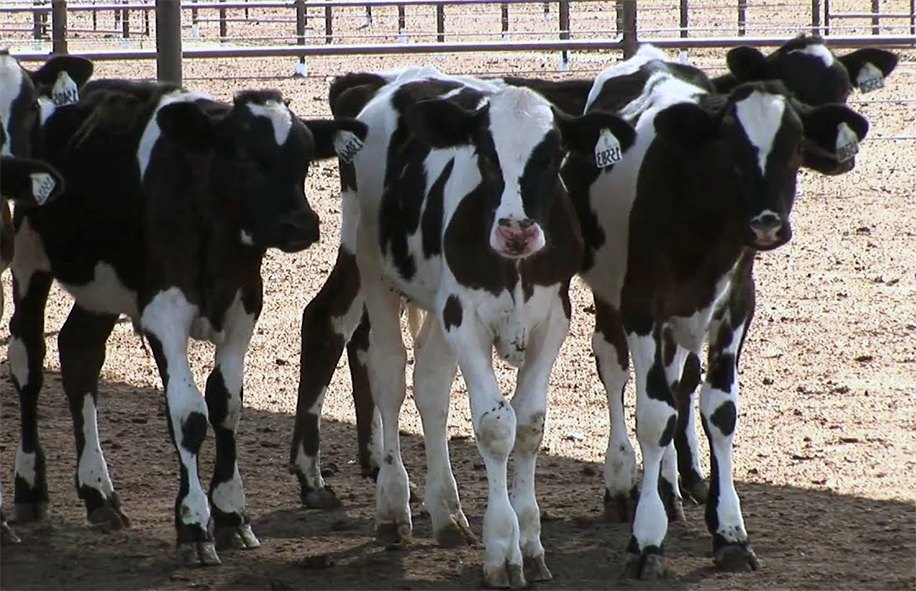 Image of a group of veal calves.
Welcome to FabulousFusionFood's Veal-based Recipes Page — The recipes presented here are all based on veal (calf) meat. Veal is the meat of milk-fed calves and is a product of milk production. Cows do not produce milk unless they have been pregnant and have given birth, but for a milk-producer the calf is a surplus by-product of this process. As such these calves are bought and reared for meat. As they are fed on milk the meat is very pale and has a subtle flavour and is comparable to pork and chicken in its qualities. It is a particularly popular meat in Continental Europe and many of the recipes here originate in Germany, Italy, Spain and Eastern Europe.
Veal has often had a very bad press and for the most part this has been well deserved, as veal calves, in the past at least, were reared intensively in very cramped conditions. This gave a very pale meat, but was very bad for the calf's welfare.
In Britain, at least, veal calf welfare is of a much higher standard and the calves are well looked after and have plenty of room to move about. This gives a redder and more flavoursome meat, often called 'rosé veal'. Yet the market for rose veal has tended to be quite small, mostly due to veal's bad press in the past. However, calves reared as rose veal at least have 8 1/2 month's quality life rather than being shot almost immediately after birth as a waste product of milk production.
Veal can be produced from a calf of either sex and any breed; however, most veal comes from young male calves of dairy breeds which are not used for breeding. Generally, veal is more expensive by mass than beef from older cattle. Veal production is a way to add value to dairy bull calves and to utilize whey solids, a byproduct from the manufacturing of cheese.[
In Italian, French and other Mediterranean cuisines, veal is considered a delicacy, often in the form of cutlets, such as the Italian cotoletta or the famous Viennese dish Wiener schnitzel. Some classic French veal dishes include fried escalopes, fried veal grenadines (small, thick fillet steaks), stuffed paupiettes, roast joints, and blanquettes. Because veal is lower in fat than many meats, care must be taken in preparation to ensure that it does not become tough. Veal is often coated in preparation for frying or eaten with a sauce. Veal parmigiana is a common Italian-American dish made with breaded veal cutlets.
In addition to providing meat, the bones of calves are used to make a stock that forms the base for sauces and soups such as demi-glace. Calf stomachs are also used to produce rennet, which is used in the production of cheese. Calf offal is also widely regarded as the most prized animal offal.
Cuts of Beef (British, Irish, Australian, South African and New Zealand terms):
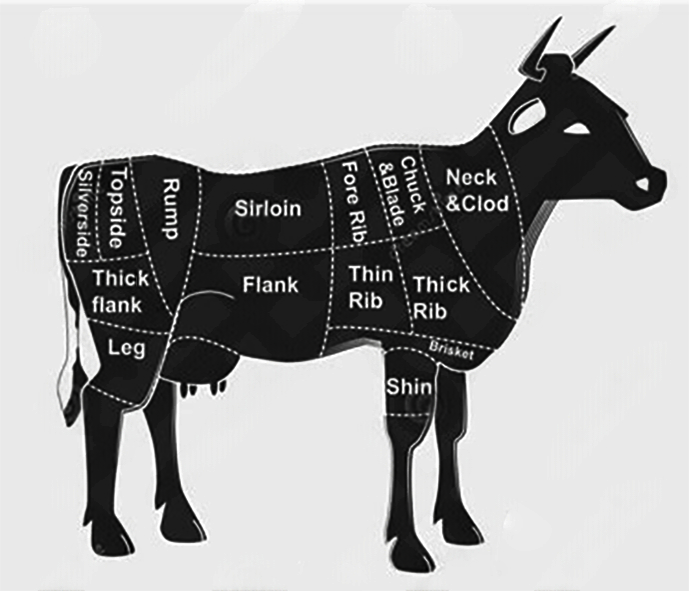 Cuts of Beef:
Tongue — boiling, pickling, roasting or braising
Neck and clod — stewing, slow smoking or braising
Chuck steak & blades — mincing, braising, slow roasting
Sirloin — Frying, roasting, barbecuing
Rump — Frying, barbecuing
Silverside — Roasting
Topside — Roasting, pies, air drying
Fore rib — Roasting
Thick rib — Braising, barbecuing, roasting
Thin rib — Braising, barbecuing
Brisket (Skirt steak) — Baking, boiling, roasting, braising
Shin and leg — Mince, slow stewing, braising
Flank — Barbecued, grilled, braised
Thick flank — Barbecued, grilled, braised
Feather blade — Frying, braising
Oxtail — Stew, braising
Offal — typically liver, heart, stomach, intestines and kidneys
The alphabetical list of all the veal-based recipes on this site follows, (limited to 100 recipes per page). There are 146 recipes in total:
Page 2 of 2
| Rich Raised Pie Origin: Britain | Sweetbread Croquets Origin: British | Veal Pilaf Origin: Fusion |
| Rich Strong Stock Origin: British | Tartlettes/Tartletes (Tartlets) Origin: England | Veal Stock Origin: Britain |
| Rieslingspaschtèit (Riesling Wine and Meat Pie) Origin: Luxembourg | The Stock-pot Origin: Britain | Veau à l'indienne (Indian-style veal) Origin: France |
| Roast Breast of Veal Origin: British | To boil a chine of veal, or a chicken in sharp broth with herbs Origin: Britain | Veau Roulé aux Herbes Sauvage (Rolled Breast of Veal with Wild Greens Stuffing) Origin: Switzerland |
| Roast Veal Loin with Garlic, Rosemary and Lemon Pesto Origin: Britain | To Fricasey White Meat Origin: Britain | Vele in Bokenade (Veal in Sauce) Origin: England |
| Rolled Breast of Veal Origin: British | To make a florentine of veal Origin: Britain | Vine Leaves Stuffed with Fennel, Salami and Eggs Origin: Albania |
| Rossolye (Salad with Herring and Beetroot) Origin: Estonia | To make a Haggas Pudding. Origin: Britain | Vitellina fricta (Fried Veal) Origin: Roman |
| Sült (Estonian Brawn) Origin: Estonia | To mince veal Origin: British | Vitellina Fricta (Fried Veal) Origin: Roman |
| Saltimbocca alla Romana (Fried Veal Strips with Butter, Ham and Sage) Origin: Vatican City | Tourtes parmeriennes (Parmesan Pies) Origin: France | Vitulinam sive Bubulam cum Porris (Veal or Beef with Leeks) Origin: Roman |
| Sarajevo Okra Soup Origin: Bosnia | Traditional Roast Veal Origin: Britain | White Veal Stock Origin: Britain |
| Sarma (Stuffed Cabbage Leaves) Origin: Serbia | Veal Chops Valentino Origin: Britain | Wiener Schnitzel (Breaded Veal Cutlets) Origin: Austria |
| Schwalbennester (Bavarian Veal) Origin: Germany | Veal Curry with Bananas Origin: Uganda | Wiener Schnitzel (Breaded Veal Cutlets) Origin: Vatican City |
| Scotch Collops Origin: Scotland | Veal Forcemeat Origin: France | Zürcher Geschnetzeltes (Cut Meat, Zürich Style) Origin: Switzerland |
| Serbian Burek Origin: Serbia | Veal in Tomato Sauce Origin: Andorra | Zürchner Geschnetzeltes (Zurich-style Ragout) Origin: Switzerland |
| Sic Farcies eam Sepiam Coctam (Stuffed and Cooked Cuttlefish) Origin: Roman | Veal Involtini alla Siciliana Origin: American | |
| Sikotaki Moscharisio (Calf's Liver) Origin: Cyprus | Veal or Mutton Gravy Origin: Britain |
Page 2 of 2