FabulousFusionFood's Meat-based Recipes 53th Page
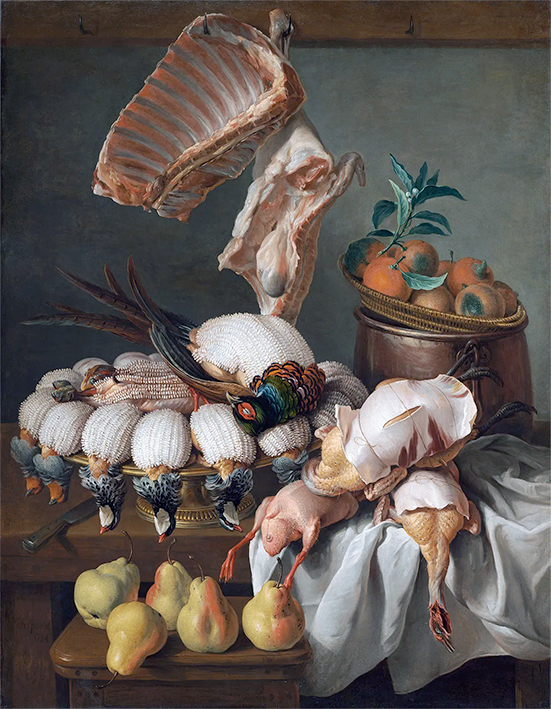
Painting of 'Still Life with Dressed Game, Meat, and Fruit' by Alexandre-François Desportes. Painting of 'Still Life with Dressed Game, Meat, and Fruit' by
Alexandre-François Desportes.
Welcome to FabulousFusionFood's Meat-based Recipes Page — Meat is animal tissue, often muscle, that is eaten as food. Humans have hunted and farmed other animals for meat since prehistory. The Neolithic Revolution allowed the domestication of vertebrates, including chickens, sheep, goats, pigs, horses, and cattle, starting around 11,000 years ago. Since then, selective breeding has enabled farmers to produce meat with the qualities desired by producers and consumers.


The word meat comes from the Old English word mete, meaning food in general. In modern usage, meat primarily means skeletal muscle with its associated fat and connective tissue, but it can include offal, other edible organs such as liver and kidney. The term is sometimes used in a more restrictive sense to mean the flesh of mammalian species (pigs, cattle, sheep, goats, etc.) raised and prepared for human consumption, to the exclusion of fish, other seafood, insects, poultry, or other animals.

Here I've used a broader definition of 'meat' to include the flesh of animals, birds and insects. Fish, shellfish, aquatic crustaceans and seafood are excluded and have their own section on this site as Fish and Seafood. Insects are now included in their own section as I will be increasing the number of insect-based recipes on this site over the coming months.

As this site also includes historic recipes, there will be some unusual animals in the lists (like crane and flamingos from ancient Roman cookery) also game meats (or bushmeat) will include agouti, and capybara from South America, snakes from many cultures, antelopes and cane rats from Africa. Also the culinary sub-types of birds, poultry for domesticated birds, game for game birds and fowl for Galliforms (chicken-like) and Anseriformes (waterfowl). Offal, the internal organs, feet and heads of animals also has its own section.


The alphabetical list of all the meat-based recipes on this site follows, (limited to 100 recipes per page). There are 5686 recipes in total:

Page 53 of 57


Tiopu Kuru
(Breadfruit Stew)
     Origin: Cook Islands
To dress a fillet of veal with collops
     Origin: British
To make Collar'd Beef
     Origin: British
Tishreeb Hummus
(Chickpea Casserole)
     Origin: Iraq
To Dress a Hen, Mutton or Lamb the
Indian Way

     Origin: England
To make collops of cold beef
     Origin: British
Tjauw Min
(Chowmein)
     Origin: Suriname
To dress a lamb's head
     Origin: British
To Make Currey the Indian Way
     Origin: Britain
Tlayuda
     Origin: Mexico
To Dress a Sheep's Head
     Origin: British
To Make Force-meat Balls
     Origin: British
To bake a calf's head
     Origin: British
To dress cold fowl or pigeon
     Origin: British
To make gravy
     Origin: British
To Bake a Ham
     Origin: British
To Dress Pig's Fry
     Origin: British
To make madling cakes
     Origin: British
To bake a leg of beef
     Origin: British
To Dress Scotch Collops
     Origin: British
To make most rare Sausages without
skins.

     Origin: British
To bake a sheep's head
     Origin: British
To Dress Tripe
     Origin: British
To Make Pellow the Indian Way
     Origin: British
To bake an ox's head
     Origin: British
To dress white Scotch collops
     Origin: British
To Make Pyes
     Origin: British
To bake chickens in like paste
     Origin: British
To Dry Pigs' Cheeks
     Origin: Britain
To Make Sausages
     Origin: British
To boil a Capon in white broth
     Origin: British
To force a large fowl
     Origin: British
To make Shropshire pie
     Origin: British
To boil a Capon or Hen with Oysters
     Origin: British
To force a leg of lamb
     Origin: British
To make stocke fritures
     Origin: British
To boil a chine of veal, or a chicken
in sharp broth with herbs

     Origin: Britain
To fricasey rabbits, lamb,
sweetbreads, or tripe

     Origin: British
To make Umble-Pies.
     Origin: England
To Boil a Ham
     Origin: British
To Fricasey White Meat
     Origin: Britain
To make Vautes
     Origin: British
To boil a ham
     Origin: British
To fry cold veal
     Origin: British
To Make White Fricasey
     Origin: Britain
To boil a leg of lamb
     Origin: British
To fry tripe
     Origin: British
To Melt Lard
     Origin: British
To boil a leg of Mutton after the
French fashion

     Origin: British
To Glaze Ham
     Origin: British
To mince veal
     Origin: British
To boil a tongue
     Origin: British
To hash a calf's head
     Origin: British
To Pickle and Dress a Tongue to Eat
Cold

     Origin: British
To Boil Pickled Pork
     Origin: British
To hash a calf's head white
     Origin: British
To Pickle Pork
     Origin: Britain
To boil pickled pork
     Origin: British
To hash cold mutton
     Origin: British
To ragoo a breast of veal
     Origin: British
To boil Pigeons
     Origin: British
To hash mutton like venison
     Origin: British
To ragoo a leg of mutton
     Origin: British
To boil Pigeons with rice
     Origin: British
To make a brown fricasey
     Origin: British
To ragoo a neck of veal
     Origin: British
To Boil Sparrows or Larks
     Origin: British
To make a Chicken-Pie
     Origin: British
To ragoo hogs feet and ears
     Origin: British
To Broil a Pigeon
     Origin: British
To make a Chiveridge Pudding.
     Origin: England
To Ragout a Knuckle of Veal
     Origin: British
To Broil Steaks
     Origin: British
To make a Collar of Brawn of a Breast
of Pork

     Origin: Britain
To Roast a Hare
     Origin: British
To Candy Goos-berries.
     Origin: England
To make a florentine of veal
     Origin: Britain
To Roast a Pigeon
     Origin: British
To collar a breast of mutton
     Origin: British
To make a Frose
     Origin: England
To roast a rabbit hare fashion
     Origin: British
To collar a breast of veal
     Origin: British
To make a grand Sallet of minced
Capon, Veal, roast Mutton, Chicken or
Neats tongue.

     Origin: British
To roast a tongue or udder
     Origin: British
To Cure Back Bacon in the Wiltshire
Way

     Origin: Britain
To make a Pasty of a Breast of Veal
     Origin: British
To roast rabbits
     Origin: Britain
To Cure Hams
     Origin: Britain
To Make a Pie of Aloes
     Origin: British
To Roast Woodcocks and Snipes
     Origin: British
To Cure Tongues I
     Origin: Britain
To make a Pigeon-Pie
     Origin: British
To Salt Beef
     Origin: British
To Cure Tongues II
     Origin: Britain
To make a tarte of goseberies
     Origin: British
To Salt Hams
     Origin: Britain
To draw mutton, beef, or veal gravy
     Origin: British
To make a Yorkshire Christmas Pie
     Origin: British
To Dress a Bullock's Heart
     Origin: British
To make Blewe manger
(To make Blancmange)
     Origin: British

Page 53 of 57