FabulousFusionFood's Pickle Recipes 6th Page
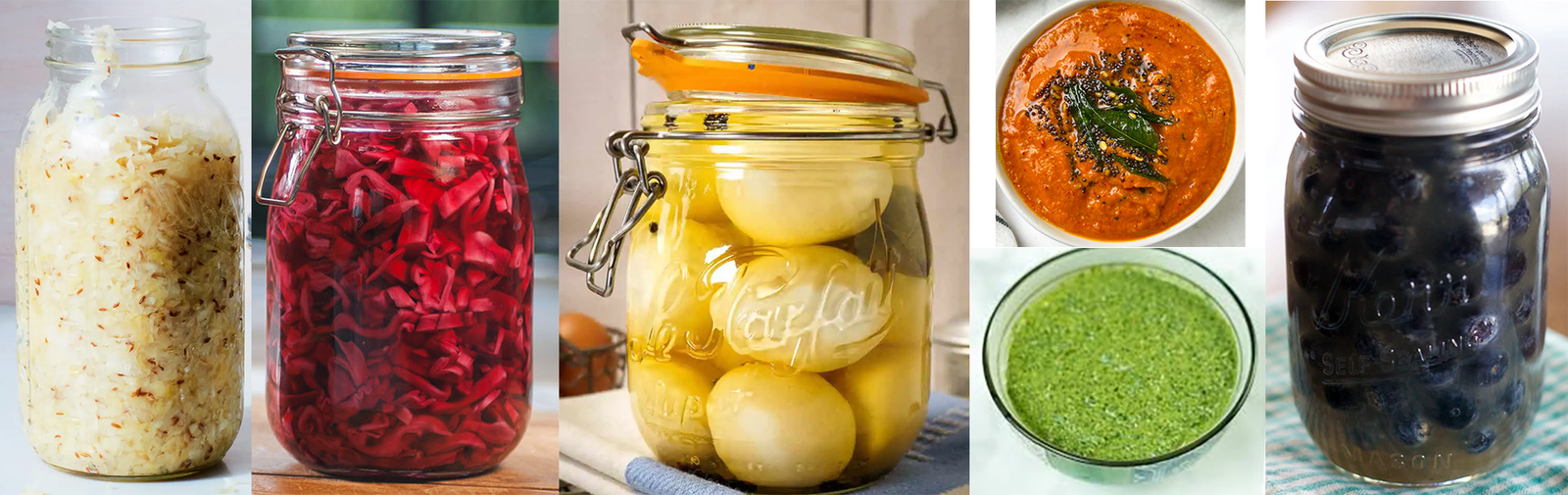
Jam, jelly, marmalade, curd. Four different fruit preserve types. Left to right: sauerkraut, pickled red cabbage,
pickled eggs, Indian tomato and coriander chatnis and sweet pickled bilberries.
Welcome to FabulousFusionFood's Pickled Recipes Page — Pickling is the process of preserving or extending the shelf life of food by either anaerobic fermentation in brine or immersion in vinegar. The pickling procedure typically affects the food's texture and flavour. The resulting food is called a pickle, or, if named, the name is prefaced with the word pickled". Foods that are pickled include vegetables, fruit, mushrooms, meats, fish, seafood, dairy and eggs.


Pickling solutions are typically highly acidic, with a pH of 4.6 or lower, and high in salt, preventing enzymes from working and micro-organisms from multiplying. Pickling can preserve perishable foods for months, or in some cases years. Antimicrobial herbs and spices, such as mustard seed, garlic, cinnamon or cloves, are often added. If the food contains sufficient moisture, a pickling brine may be produced simply by adding dry salt. For example, sauerkraut and Korean kimchi are produced by salting the vegetables to draw out excess water. Natural fermentation at room temperature, by lactic acid bacteria, produces the required acidity. Other pickles are made by placing vegetables in vinegar. Like the canning process, pickling (which includes fermentation) does not require that the food be completely sterile before it is sealed. The acidity or salinity of the solution, the temperature of fermentation, and the exclusion of oxygen determine which microorganisms dominate, and determine the flavour of the end product.

Pickling with vinegar likely originated in ancient Mesopotamia around 2400 BCE. There is archaeological evidence of cucumbers being pickled in the Tigris Valley in 2030 BCE. Pickling vegetables in vinegar continued to develop in the Middle East region before spreading to the Maghreb, to Sicily and to Spain. From Spain it spread to the Americas. On the other hand, fermented salt pickling reportedly has its origins in China.

The English term "pickle" first appears around 1400 CE. It is from Middle English pikel, a spicy sauce served with meat or fish, borrowed from Middle Dutch or Middle Low German pekel ("brine") but later referred to preserving in brine or vinegar. Pickle recipes in English were first published in the middle ages, with an example being a mixed pickle from the 15 century found in Curye on Inglysch, IV. 103.

In Britain, pickled onions and pickled eggs are often sold in pubs and fish and chip shops. Pickled beetroot, walnuts, and gherkins, and condiments such as Branston Pickle and piccalilli are typically eaten as an accompaniment to pork pies and cold meats, sandwiches or a ploughman's lunch. Other popular pickles in the UK are pickled mussels, cockles, red cabbage, mango chutney, sauerkraut, and olives. Rollmops are also quite widely available under a range of names from various producers both within and out of the UK

This page is a continuation of the list of recipes from the Pickling process held on the FabulousFusionFood site. If you are specifically looking for this site's brief information about pickling then please go back to the First Page of the Pickles Recipes entry on this site.


The alphabetical list of all the Pickle recipes on this site follows, (limited to 100 recipes per page). There are 583 recipes in total:

Page 6 of 6


Smoked, Preserved, Mussels
     Origin: Britain
Sweet Pickled Bilberries
     Origin: Britain
To Preserve Cucumbers
     Origin: Britain
Smoked, Preserved, Oysters
     Origin: Britain
Sweet Pickled Reedmace Hearts and
Fennel

     Origin: Britain
To prserve Apricockes.
     Origin: England
Smoked, Preserved, Scallops
     Origin: Britain
Sweet-pickled Fiddleheads
     Origin: Canada
Tomato Achar
     Origin: Guyana
Solyanka
(Siberian Sweet and Sour Meat Soup)
     Origin: Siberia
Taiwan Pickled Cabbage
     Origin: Taiwan
Tomato and Peanut Relish
     Origin: Zambia
Solyanka
(Russian Sweet and Sour Meat Soup)
     Origin: Russia
Tarragon Vinegar II
     Origin: Britain
Tomato Ketchup
     Origin: Britain
Soused Cornish Sardines
     Origin: England
Tartare d'algues
fraîches

(Tartare of Fresh Seaweed)
     Origin: France
Tomato Relish
     Origin: Britain
Soused Herrings
     Origin: Scotland
The Most Kindely Way to Preserve
Plums, Cherries, Gooseberries, &c.

     Origin: England
Torta di patate e Funghi selvatici
(Wild Mushroom and Potato Cake)
     Origin: Italy
Soused Mackerel
     Origin: British
Thee Sone Thanut
(Vegetable Pickle)
     Origin: Myanmar
Traditional Mincemeat
     Origin: Britain
Spee Chrout
(Mustard Green Pickle)
     Origin: Cambodia
Three-cornered Leek Giardiniera
     Origin: Britain
Tyros eis Halmen
(Pickled Cheese)
     Origin: Roman
Spice Pickled Burdock Root
     Origin: Britain
To Candy Flowers for Sallets, as
Violets, Cowslips, Clove-gilliflowers,
Roses, Primroses, Borrage, Bugloss,
&c.

     Origin: Britain
Tyttebærsyltetøy
(Norwegian Lingonberry Jam)
     Origin: Norway
Spice Pickled Jelly Ear Mushrooms
     Origin: Britain
To Candy Goos-berries.
     Origin: England
Unakkameen Thenga Chammanthy
(Dry Fish Chutney)
     Origin: India
Spiced Ash Key Pickle
     Origin: Britain
To Drie Apricocks, Peaches, Pippins or
Pearplums

     Origin: England
Universal Pickle
     Origin: British
Spiced Crab Apples
     Origin: Britain
To Dry Fruit Pulp
     Origin: Britain
Uruguayan Salsa Criolla
     Origin: Uruguay
Spiced Crab-apples II
     Origin: Britain
To make Conserve of Red Roses
     Origin: British
Victorian Jujube Long Plum Pickle
     Origin: Anglo-Indian
Spiced Japanese Knotweed Pickles
     Origin: Britain
To make India pickle
     Origin: British
Victorian Pickled Vindaloo
     Origin: Anglo-Indian
Spicy Medlar Chutney
     Origin: Britain
To make most rare Sausages without
skins.

     Origin: British
Victorian Tamarind Chutney
     Origin: Anglo-Indian
Spicy Plum and Shiraz Relish
     Origin: Britain
To make Mustard divers ways.
     Origin: British
Victorian Tomato Chutney
     Origin: Anglo-Indian
Spiral Wrack Capers
     Origin: Britain
To make Orange or Limon Chips
     Origin: British
Vinegar and Oil Pickled Mushrooms
     Origin: Britain
Sprats Moju
     Origin: Sri Lanka
To Make Paco Lilla or Indian Pickle
     Origin: Britain
Waatlemoenkonfyt
(Watermelon Preserve)
     Origin: South Africa
St Helena Tamarind Jam
     Origin: St Helena
To make Syrup of Violets
     Origin: Britain
Weihnachtlich Eingelegter
Kürbis

(Christmas Pickled Pumpkin)
     Origin: Germany
Staghorn Sumac Jelly
     Origin: America
To make Verjuyce.
     Origin: Britain
Whole Naartjie Preserve
     Origin: South Africa
Strawberry Jelly
     Origin: England
To pickle any kind of Flowers.
     Origin: Britain
Wild Carrot Greens Pickle
     Origin: Britain
Stuffed Mallow Leaves
     Origin: Britain
To Pickle Eggs
     Origin: Britain
Wild Greens Kimchi
     Origin: Fusion
Suet-less Mincemeat
     Origin: Britain
To Pickle or Bake Mackerel to Keep all
the Year

     Origin: British
Wild Mushroom Stuffed Potato Cakes
     Origin: Britain
Summer Truffle Paste
     Origin: Britain
To Pickle Pork
     Origin: Britain
Wild Plum Ketchup
     Origin: Fusion
Superlative Mincemeat
     Origin: Britain
To pickle Samphire, Broom-buds,
Kitkeys, Crucifix Pease, Purslane, or
the like Otherways.

     Origin: Britain
Wild Plum Sauce for Roast Pork
     Origin: Britain
Sur kirsebærsyltetøy
(Sour Cherry Jam)
     Origin: Norway
To Preserve Broom Capers
     Origin: Britain
Wisteria Flower Jam
     Origin: Britain
Sweet Pickle Relish
     Origin: American
To preserve Cherries.
     Origin: England

Page 6 of 6