FabulousFusionFood's Pork-based Recipes 5th Page
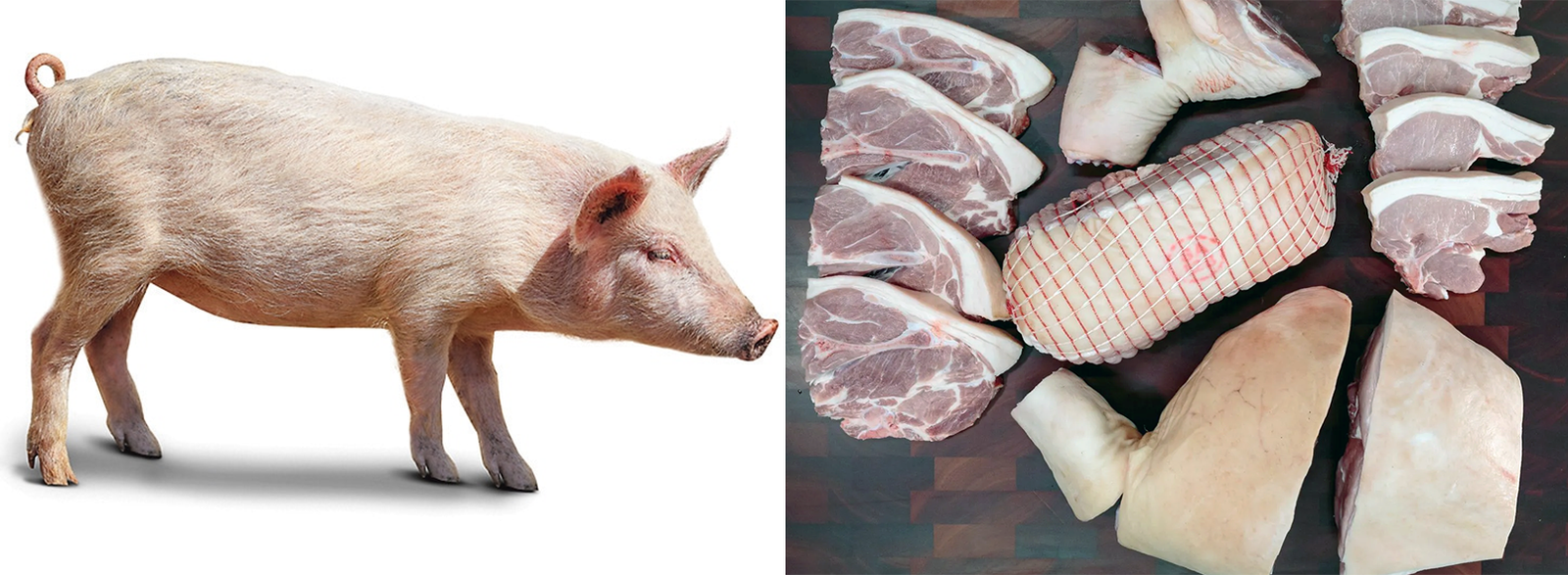 Image of a pig and a selection of pork cuts.
Welcome to FabulousFusionFood's Pork-based Recipes Page — The recipes presented here are all based on pig meat. Pork is the culinary name for the meat of the pig (Sus domesticus). It is the most commonly consumed meat worldwide, with evidence of pig husbandry dating back to 5000 BCE.
Pork is eaten both freshly cooked and preserved; curing extends the shelf life of pork products. Ham, gammon, bacon, and pork sausage are examples of preserved pork. Charcuterie is the branch of cooking devoted to prepared meat products, many from pork.
Pork is eaten both freshly cooked and preserved; curing extends the shelf life of pork products. Ham, gammon, bacon, and pork sausage are examples of preserved pork. Charcuterie is the branch of cooking devoted to prepared meat products, many from pork.
Archaeological evidence shows that pigs were domesticated from wild boar in the Near East in or around the Tigris Basin, being managed in a semi-wild state much as they are managed by some modern New Guineans. There were pigs in Cyprus more than 11,400 years ago, introduced from the mainland, implying domestication in the adjacent mainland by then. Pigs were separately domesticated in China, starting some 8,000 years ago. In the Near East, pig husbandry spread for the next few millennia. It reduced gradually during the Bronze Age, as rural populations instead focused on commodity-producing livestock, but it was sustained in cities.
Domestication did not involve reproductive isolation with population bottlenecks. Western Asian pigs were introduced into Europe, where they crossed with wild boar. There appears to have been interbreeding with a now extinct ghost population of wild pigs during the Pleistocene. The genomes of domestic pigs show strong selection for genes affecting behaviour and morphology. Human selection for domestic traits likely counteracted the homogenizing effect of gene flow from wild boars and created domestication islands in the genome. Pigs arrived in Europe from the Near East at least 8,500 years ago. Over the next 3,000 years they interbred with European wild boar until their genome showed less than 5% Near Eastern ancestry, yet retained their domesticated features.
Cuts of Pork:
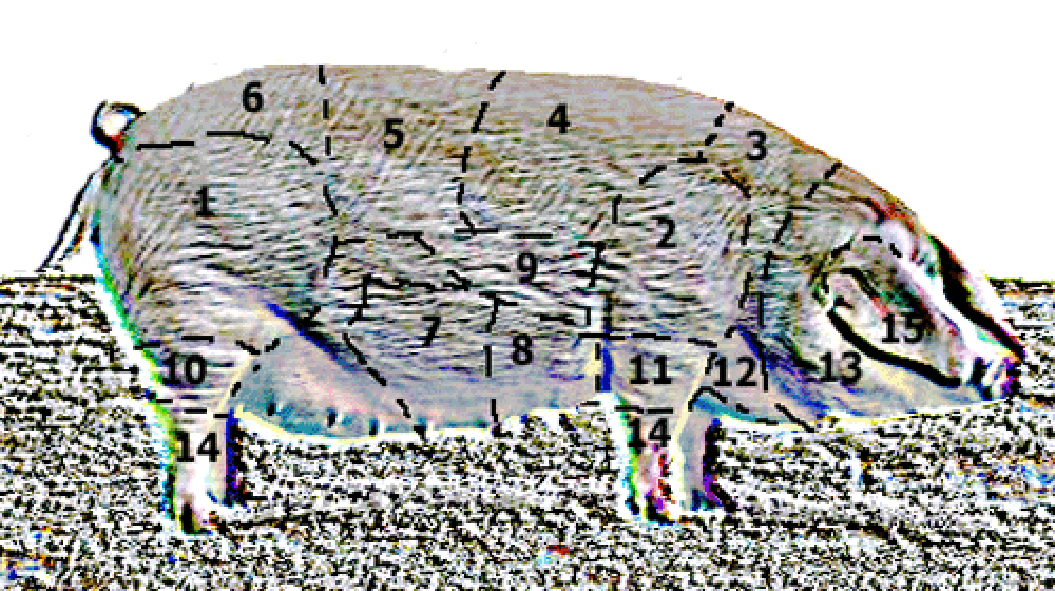 Cuts of Pork:
1 — Ham; typically preserved, boiled or roasted.
2 — Shoulder; typically roasted.
3 — Neck; a more economical cut that can be minced for frying or can be slowly braised.
4 — Spare Rib Rast; for roasting.
5 — Fillet; a tender cut for flash-frying or briefly roasting.
6 — Loin or Chump; a succulent cut for roasting.
7 — Belly; a fatty cut that needs to be slowly roasted or braised, excellent for Chinese braised dishes.
8 — Belly Spare Ribs; excellent for marinating and grilling or barbecuing.
9 — Flank; for roasting or stir-frying.
10 — Hind Leg; a large joint for roasting.
11 — Foreleg; a joint for roasting or steaks.
12 — Throat; for mincing and frying.
13 — Head; for boiling or making brawn.
14 — Trotters; for braising or making jellies.
15 — Ears/Tail; for braising and flavouring other dishes
The alphabetical list of all the pork-based recipes on this site follows, (limited to 100 recipes per page). There are 872 recipes in total:
Page 5 of 9
| Karjalanpaisti (Karelian Stew) Origin: Finland | Leeky Larrup Origin: England | Microwave French Country Pâté Origin: Britain |
| Karnache (Bulgarian Pork Sausage Rings) Origin: Bulgaria | Leftover Ham Vindhalo Origin: Britain | Microwave Honey-glazed Pork Chops Origin: Britain |
| Katsu-karē (Cutlet Curry with Black Curry Sauce) Origin: Japan | Leftover Vegetable Curry with Tofu Origin: Britain | Microwave Pasta alla Carbonara Origin: Britain |
| Kau See Soup (Matrimony Vine Leaf Soup with Goji Berries) Origin: China | Leftovers Pie Origin: Britain | Microwave Polenta and Sausage Origin: American |
| Kebapcheta (Bulgarian Barbecue Sausage) Origin: Bulgaria | Lemongrass Pork with Rice Noodles Origin: Australia | Microwave Spaghetti with Garlic Sausage Origin: Britain |
| Keftedhakia (Fried Small Meatballs) Origin: Cyprus | Lenticula ex Sphondylis (Lentils and Parsnips) Origin: Roman | Microwave Spicy Pork Stroganoff Origin: Britain |
| Keke Pu'a (Steamed Pork Buns) Origin: American Samoa | Lentil Stew With Sausage Origin: Italy | Milanese Sauce Origin: France |
| Kewa Phagsha (Spicy Pork with Potatoes) Origin: Bhutan | Les Bouchons (Pork Dumplings) Origin: Reunion | Mince Pie Tiffin Bites Origin: Britain |
| Khorovats (Armenian Shish Kebabs) Origin: Armenia | Les Pais au Four (Jersey Bean Crock) Origin: Jersey | Minutal Apicianum (Ragout à la Apicius) Origin: Roman |
| Kig ha Farz (Meat with Stuffing) Origin: France | Liberian Spaghetti Origin: Liberia | Minutal Dulce ex Citriis (Sweet Citron Ragout) Origin: Roman |
| Kilmeny Kail Origin: Scotland | Licky Pie Origin: England | Minutal ex Iecineribus et Pulmonibus Leporis (Hare's Liver and Lights Ragout) Origin: Roman |
| Kilmeny Kail Origin: Scotland | Limerick Ham Origin: Ireland | Minutal ex Praecoquis (Apricot Ragout) Origin: Roman |
| Kingdom of Fife Pie Origin: Scotland | Lincolnshire Haslet Origin: England | Minutal ex Rosis (Ragout of Roses) Origin: Roman |
| Koenigsberger Klopse (German Meatballs) Origin: Germany | Locro Argentino (Beef and Hominy Stew) Origin: Argentina | Minutal Matianum (Pork with Apples) Origin: Roman |
| Kolokasi (Greek Cypriot Taro with Pork) Origin: Cyprus | Lombo Enrolado (Stuffed and Rolled Pork Loin) Origin: Brazil | Minutal Terentinum (Terentine Ragout) Origin: Roman |
| Kondré de Porc (Kondré of Pork) Origin: Cameroon | Lomo de Cerdo Relleno (Stuffed Pork Loin) Origin: Spain | Mititei (Romanian Minced Meat Sausages) Origin: Romania |
| Koroke (Taro Croquettes) Origin: Palau | Lorne Sausage Origin: Scotland | Mitten of Pork Origin: Britain |
| Kotlet Schabowy (Polish Breaded Pork Cutlet) Origin: Poland | Lountza (Smoked Pork Loin) Origin: Cyprus | Mofongo Origin: Puerto Rico |
| Koupepia (Dolmades) Origin: Cyprus | Lū (Baked Taro Leaf Parcels) Origin: Tonga | Mojo Marinade Origin: Cuba |
| Koupepia (Stuffed Vine Leaves) Origin: Cyprus | Lū (Baked Taro Leaf Parcels) Origin: Wallis Futuna | Mokoto Origin: Benin |
| Krea Tarikhera (Ham in Red Wine Sauce) Origin: Roman | Lu Rou Fan (Taiwanese Braised Pork Rice Bowl) Origin: Taiwan | Mollag (Manx Christmas Haggis) Origin: Manx |
| Kypriaka Loucanika (Cypriot Smoked Sausages) Origin: Cyprus | Macanese Minchi (Minced Meat Potato Hash) Origin: Macau | Montserratian Souse Origin: Montserrat |
| Kyufteta (Barbecued Pork and Beef Patties) Origin: Bulgaria | Madeiran Carne Vinha d'Alhos (Pork Marinated in Garlic and Wine) Origin: Portugal | Moo Shu Pork Origin: China |
| Lækker mørbradgryde (Pork Tenderloin Casserole) Origin: Denmark | Makaronia Pastitsio (Macaroni with Minced Meat and Bechamel Sauce) Origin: Cyprus | Morels with Yellow Bell Peppers Origin: Britain |
| Lafet Time (Honey-glazed Pork with Salad) Origin: Vanuatu | Mallow Leaf Gumbo Origin: Britain | Mortrews (Pounded Meat Custard) Origin: England |
| Lampara Curry Origin: Sri Lanka | Manos de Cerdo a la Peruana (Peruvian-style Pig's Trotters) Origin: Peru | Mortrews Blank (Meat in White Sauce) Origin: England |
| Laridi Coctura (Ancient Roman Boiled Bacon) Origin: Roman | Manx Broth for a Wedding Origin: Manx | Mumu Origin: Papua New Guinea |
| Le Chao Men (New Caledonian Chaw Mein) Origin: New Caledonia | Meatballs on Sticks Origin: Britain | Murphy’s Guts Origin: Ireland |
| Le Rougail Boucané (Smoked Pork Rougail) Origin: Reunion | Meatloaf with Indian Seasonings Origin: Fusion | Mushrooms with Parsley and Garlic Origin: Britain |
| Leche Lumbard (Lombardy Cream) Origin: England | Mexican Pork'n'Beans Origin: American | Mustard Pork Loin Chops with Butternut Squash Roast Origin: Britain |
| Lechon (Roasted Pig) Origin: Philippines | Mexican-style Chilli Ribs Origin: South Africa | Nactamales Origin: Nicaragua |
| Lechón (Puerto Rican Roast Pork) Origin: Puerto Rico | Mici (Garlicky Skinless Grilled Sausages) Origin: Romania | Nane Flor (Pig's Feet Stew) Origin: Ghana |
| Lechon Kawli (Oven-roasted Pork) Origin: Philippines | Microwave Barbecued Spareribs Origin: Britain | |
| Leek and Tripe Soup Origin: England | Microwave Corn Chowder Origin: American |
Page 5 of 9