FabulousFusionFood's Cinco de Mayo Recipes Home Page
 Dancing Chilli banner for Cinco de Mayo.
Welcome to the Cinco de Mayo Information and Recipes Page — Cinco de Mayo, literally the 'Fifth of May' in Spanish is a Mexican/American holiday that has evolved into a more generalized celebration of Mexican-American culture.
Cinco de Mayo (literally ‘the fifth of May’ in Spanish) and also called El Día de la Batalla de Puebla (the day of battle of Puebla) is a Mexican/American holiday commemorating Mexico's victory over the Second French Empire at the Battle of Puebla in 1862, Mexican forces were led by General Ignacio Zaragoza. Zaragoza who died months after the battle from an illness. As is often the case in history, a larger French force ultimately defeated the Mexican army at the Second Battle of Puebla and then occupied Mexico City. Following the end of the American Civil War in 1865, the United States began lending money and guns to the Mexican Liberals, pushing France and Mexican Conservatives to the edge of defeat. This ultimately led to Napoleon III announcing at the opening of the French chambers in January 1866 that he would withdraw French troops from Mexico.
Today, the celebrations are more popular in the USA than Mexico and has evolved into more generalized celebration of Mexican-American culture. Indeed, celebrations began in Columbia, California, where they have been observed annually since 1862. The day gained nationwide popularity beyond those of Mexican-American heritage in the 1980s due to advertising campaigns by beer, wine, and tequila companies; today. In Mexico, the commemoration of the battle continues to be mostly ceremonial, such as through military parades or battle re-enactments. The city of Puebla marks the event with various festivals and re-enactments of the battle.
Today, the commemoration of the battle is not observed as a national holiday in Mexico (i.e. it is not a statutory holiday). However, all public schools are closed nationwide in Mexico on May 5. The day is an official holiday in the State of Puebla, where the Battle took place, and also a full holiday in the neighbouring State of Veracruz.
In Puebla, historical re-enactments, parades, and meals take place to commemorate the battle. Parade participants dress as French and Mexican soldiers to re-enact the battle. Every year the city also hosts the Festival Internacional de Puebla, which gathers national and international artists, traditional musicians and dancers, as well as the Festival Internacional del Mole, with an emphasis on the city's iconic mole poblano.
Time magazine reports that 'Cinco de Mayo started to come into vogue in 1940s America during the rise of the Chicano Movement'. The holiday crossed over from California into the rest of the United States in the 1950s and 1960s but did not gain popularity until the 1980s when marketers, especially beer companies, capitalized on the celebratory nature of the day and began to promote it. It grew in popularity and evolved into a celebration of Mexican culture and heritage, first in areas with large Mexican-American populations, like Los Angeles, Chicago, Houston, New York, followed by Cleveland, Boston, Indianapolis, Raleigh, Dallas, San Antonio, Washington, D.C., Atlanta, Miami, Orlando, Denver, Phoenix, Philadelphia, Tucson, San Francisco, San Jose, and San Diego.
In a 1998 study in the Journal of American Culture it was reported that there were more than 120 official US celebrations of Cinco de Mayo in 21 different states. An update in 2006 found that the number of official Cinco de Mayo events was 150 or more. Los Angeles' Fiesta Broadway has been billed as the largest Cinco de Mayo celebration in the world, which it most certainly was at its peak in the 1990s when it attracted crowds of 500,000 or more.
The May 4, 2023 edition of The Washington Post published an article describing the holiday of Cinco de Mayo as an American holiday with Mexican roots and not necessarily a Mexican holiday.
Events tied to Cinco de Mayo also occur outside Mexico and the United States. As in the United States, celebrations elsewhere also emphasize Mexican cuisine, culture and music. For example, some Canadian pubs play Mexican music and serve Mexican food and drink, and a sky-diving club near Vancouver holds a Cinco de Mayo skydiving event.In the Cayman Islands, in the Caribbean, there is an annual Cinco de Mayo air guitar competition, and at Montego Bay, Jamaica, there is a Cinco de Mayo celebration. The city of Brisbane, Queensland, Australia, holds an annual Mexican Festival to honour the day, and celebrations are held in London and New Zealand. Other celebrations of the day can also be found in Cape Town, South Africa, Lagos, Nigeria, and in Paris, France. Cinco de Mayo is celebrated in Japan in Osaka and in Tokyo's Yoyogi Park Event Space as a celebration of Latin American culture.
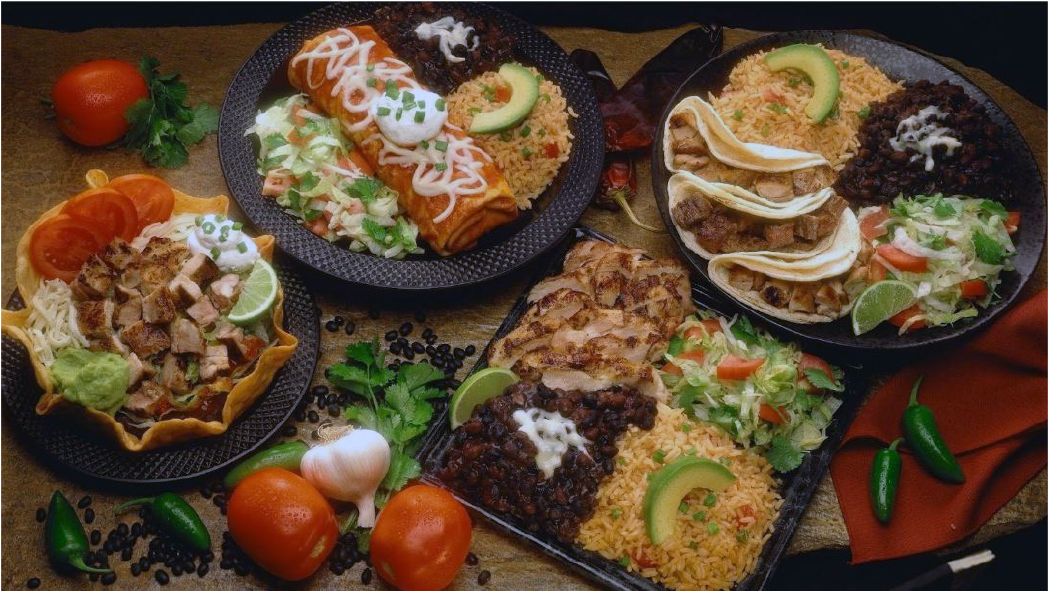
Selection of foods to celebrate Cinco de Mayo.
Traditionally, mole poblano, due to its origins in Puebla is the dish most associated with Cinco de Mayo though many Mexican and Tex-Mex dishes are served at various celebrations. You will also see confections such as candies, cupcakes and muffin decorated with the Mexican flax served at various gatherings.
Cinco de Mayo (literally ‘the fifth of May’ in Spanish) and also called El Día de la Batalla de Puebla (the day of battle of Puebla) is a Mexican/American holiday commemorating Mexico's victory over the Second French Empire at the Battle of Puebla in 1862, Mexican forces were led by General Ignacio Zaragoza. Zaragoza who died months after the battle from an illness. As is often the case in history, a larger French force ultimately defeated the Mexican army at the Second Battle of Puebla and then occupied Mexico City. Following the end of the American Civil War in 1865, the United States began lending money and guns to the Mexican Liberals, pushing France and Mexican Conservatives to the edge of defeat. This ultimately led to Napoleon III announcing at the opening of the French chambers in January 1866 that he would withdraw French troops from Mexico.
Origins of the Festival:
The Battle of Puebla was significant, both nationally and internationally, for several reasons. First, ‘This battle was significant in that the 4,000 Mexican soldiers were greatly outnumbered by the well-equipped French army of 8,000 that had not been defeated for almost 50 years.’ Second, since the overall failed French intervention, no country in the Americas has subsequently been invaded by any other military force from another continent.Today, the celebrations are more popular in the USA than Mexico and has evolved into more generalized celebration of Mexican-American culture. Indeed, celebrations began in Columbia, California, where they have been observed annually since 1862. The day gained nationwide popularity beyond those of Mexican-American heritage in the 1980s due to advertising campaigns by beer, wine, and tequila companies; today. In Mexico, the commemoration of the battle continues to be mostly ceremonial, such as through military parades or battle re-enactments. The city of Puebla marks the event with various festivals and re-enactments of the battle.
Today, the commemoration of the battle is not observed as a national holiday in Mexico (i.e. it is not a statutory holiday). However, all public schools are closed nationwide in Mexico on May 5. The day is an official holiday in the State of Puebla, where the Battle took place, and also a full holiday in the neighbouring State of Veracruz.
In Puebla, historical re-enactments, parades, and meals take place to commemorate the battle. Parade participants dress as French and Mexican soldiers to re-enact the battle. Every year the city also hosts the Festival Internacional de Puebla, which gathers national and international artists, traditional musicians and dancers, as well as the Festival Internacional del Mole, with an emphasis on the city's iconic mole poblano.
Time magazine reports that 'Cinco de Mayo started to come into vogue in 1940s America during the rise of the Chicano Movement'. The holiday crossed over from California into the rest of the United States in the 1950s and 1960s but did not gain popularity until the 1980s when marketers, especially beer companies, capitalized on the celebratory nature of the day and began to promote it. It grew in popularity and evolved into a celebration of Mexican culture and heritage, first in areas with large Mexican-American populations, like Los Angeles, Chicago, Houston, New York, followed by Cleveland, Boston, Indianapolis, Raleigh, Dallas, San Antonio, Washington, D.C., Atlanta, Miami, Orlando, Denver, Phoenix, Philadelphia, Tucson, San Francisco, San Jose, and San Diego.
In a 1998 study in the Journal of American Culture it was reported that there were more than 120 official US celebrations of Cinco de Mayo in 21 different states. An update in 2006 found that the number of official Cinco de Mayo events was 150 or more. Los Angeles' Fiesta Broadway has been billed as the largest Cinco de Mayo celebration in the world, which it most certainly was at its peak in the 1990s when it attracted crowds of 500,000 or more.
The May 4, 2023 edition of The Washington Post published an article describing the holiday of Cinco de Mayo as an American holiday with Mexican roots and not necessarily a Mexican holiday.
Events tied to Cinco de Mayo also occur outside Mexico and the United States. As in the United States, celebrations elsewhere also emphasize Mexican cuisine, culture and music. For example, some Canadian pubs play Mexican music and serve Mexican food and drink, and a sky-diving club near Vancouver holds a Cinco de Mayo skydiving event.In the Cayman Islands, in the Caribbean, there is an annual Cinco de Mayo air guitar competition, and at Montego Bay, Jamaica, there is a Cinco de Mayo celebration. The city of Brisbane, Queensland, Australia, holds an annual Mexican Festival to honour the day, and celebrations are held in London and New Zealand. Other celebrations of the day can also be found in Cape Town, South Africa, Lagos, Nigeria, and in Paris, France. Cinco de Mayo is celebrated in Japan in Osaka and in Tokyo's Yoyogi Park Event Space as a celebration of Latin American culture.
Foods for Cinco de Mayo:
Selection of foods to celebrate Cinco de Mayo.
Traditionally, mole poblano, due to its origins in Puebla is the dish most associated with Cinco de Mayo though many Mexican and Tex-Mex dishes are served at various celebrations. You will also see confections such as candies, cupcakes and muffin decorated with the Mexican flax served at various gatherings.
The alphabetical list of all the Cinco de Mayo recipes on this site follows, (limited to 100 recipes per page). There are 119 recipes in total:
Page 1 of 2
| Agua de Jamaica (Jamaican-style Iced Hibiscus Tea) Origin: Mexico | Chipotle Chicken Tinga Origin: Mexico | Papadzules Origin: Mexico |
| Agua de Sandía (Watermelon Agua Fresca) Origin: Mexico | Chivichanga de Machaga Origin: America | Pasilla Mole Origin: Britain |
| Air Fryer Quesadillas Origin: Britain | Churros Mexicanos (Mexican Churros) Origin: Mexico | Pico de Gallo Origin: Mexico |
| Air-fryer Fajitas Origin: Britain | Confit of Duck Tostadas Origin: Fusion | Pork Tenderloins with Adobo Sauce Origin: American |
| Arroz Rojo (Mexican Red Rice) Origin: Mexico | Corn Tortilla Origin: Mexico | Pulled Firecracker Brisket Origin: Britain |
| Baked Chicken Chimichangas Origin: America | Creamy Buffalo Shrimp Tacos Origin: America | Pulled Pork Tacos Origin: America |
| Baked Spicy Beef and Cheese Empanadas Origin: Mexico | Creamy Tomatillo Ranch Dressing Origin: America | Pumpkin and Chanterelle Tamales Origin: Mexico |
| Barbacoa Origin: Mexico | Crema Mexicana Origin: Mexico | Rajas con Crema Origin: Mexico |
| Beef and Bean Chimichangas Origin: America | Dulce de Leche Churro Cupcakes Origin: American | Red Bean Soup with Guacamole Salsa Origin: Mexico |
| Beef Burritos Origin: America | Elote Origin: Mexico | Relleno de Empanada de Pollo (Chicken Empanada Filling) Origin: Mexico |
| Beef Enchiladas Origin: Britain | Empanadas de Atun Fritas (Fried Tuna Empanadas) Origin: Mexico | Rose and Pistachio Tres Leches Origin: Fusion |
| Beef in Adobo Sauce Origin: America | Empanadas de Carne (Mexican Beef Empanadas) Origin: Mexico | Salmon Tostadas Origin: Fusion |
| Berry Agua Fresca Origin: America | Empanadas de frijoles negros y queso (Black Bean and Cheese Empanadas) Origin: Mexico | Salsa Amarilla (Yellow Cherry Tomato Salsa) Origin: Mexico |
| Best Ever Barbecued Tex-Mex Burgers Origin: Fusion | Empanadas Fritas (Fried Empanadas) Origin: Mexico | Salsa Bandera Origin: Mexico |
| Black Bean Burritos Origin: America | Empanadas Mexicanas de Masa (Mexican Masa Empanadas) Origin: Mexico | Salsa con Tomatillo Verde (Tangy Green Tomatillo Salsa) Origin: Mexico |
| Black Beans Origin: Mexico | Enchilada Pie Origin: Fusion | Salsa de Chile Rojo (Red Chilli Sauce) Origin: Spain |
| Breakfast Burrito Origin: America | Enchiladas de Espinaca (Spinach Enchiladas) Origin: Mexico | Salsa de Chocolate Mexicana (Mexican Chocolate Sauce) Origin: Mexico |
| Carne Asada Origin: Mexico | Esquites (Mexican Street Corn) Origin: Mexico | Salsa de Frutas (Fruit Salsa) Origin: Mexico |
| Carne Seca Origin: Mexico | Esquites II (Mexican Street Corn) Origin: Mexico | Salsa de Mango (Mexican Mango Salsa) Origin: Mexico |
| Carnitas (Mexican Pulled Pork) Origin: Mexico | Fish Tacos Origin: Britain | Salsa de Molcajete (Stone-ground Mexican Salsa) Origin: Mexico |
| Cecina Origin: Mexico | Flan Mexicano (Mexican Flan) Origin: Mexico | Salsa de Rajas Origin: Mexico |
| Charred Spicy Salsa Origin: America | Frijoles Refritos (Refried Beans) Origin: Mexico | Salsa Guacamole (Creamy Guacasalsa) Origin: Mexico |
| Chicken Chimichangas Origin: America | Guacamole Origin: Mexico | Salsa Macha Mole Origin: Mexico |
| Chicken Enchiladas Origin: America | Home-made Tortilla Chips Origin: Mexico | Salsa Roja Origin: Mexico |
| Chicken Nacho Grills Origin: Britain | Hot Enchilada Sauce Origin: America | Salsa Verde (Mexican Green Sauce) Origin: Mexico |
| Chicken Tostadas Origin: Britain | Lightly-spiced Fish Fajitas Origin: Britain | Simple Mole Poblano Origin: Mexico |
| Chicken with Adobo Sauce Origin: American | Limón Pollo (Lemon Chicken) Origin: Mexico | Slow Cooker Barbacoa Beef Origin: Mexico |
| Chilaca Pork Stew Origin: Mexico | Loaded Fish Burritos Origin: Britain | Slow Cooker Pork Adobo Burritos Origin: Mexico |
| Chilaquiles Origin: Mexico | Machaca (Mexican Shredded Beef) Origin: Mexico | Slow Cooker Salsa Chicken Origin: America |
| Chile Japones Salsa Origin: Mexico | Mexican Beef Tostada Origin: Mexico | Sonoran Picadillo Origin: Mexico |
| Chile Verde (Green Chili) Origin: Mexico | Mexican Carne Asada Street Tacos Origin: Mexico | Sopapilla Cheesecake Origin: American |
| Chiltomate Salsa Origin: Mexico | Mexican Rice Origin: America | Sopapillas Origin: American |
| Chimichanga Origin: America | Mole Negro Origin: Mexico | |
| Chipotle Chicken Tacos with Pineapple Salsa Origin: Britain | Oven-baked Taco Shells Origin: Mexico |
Page 1 of 2